weeklyAI · Week of 2 October 2026weeklyAI · Semana del 2 de octubre de 2026
Your parentsSus padres
older people and the adult children who look out for thempersonas mayores y los hijos adultos que las cuidan
Ask the weeklyAI chat
Ask me about this section's stories this week, or what a subscriber gets here.
Conversations are saved for as long as weeklyAI exists, to improve the publication. Answers come in the language you write in.
Pregunte al chat de weeklyAI
Pregúnteme por las notas de esta sección esta semana, o qué recibe aquí quien se suscribe.
Las conversaciones se guardan mientras exista weeklyAI, para mejorar la publicación. Se responde en el idioma en que usted escribe.
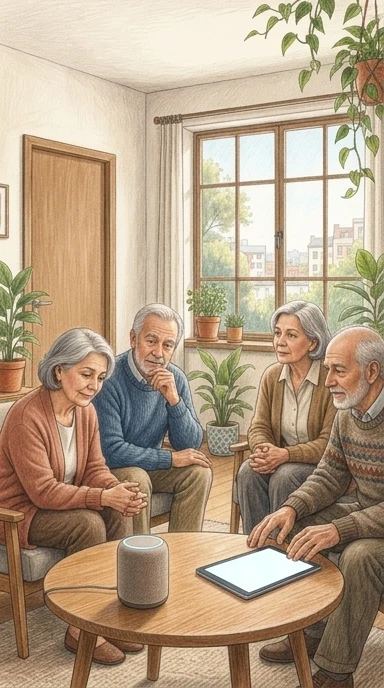
- Older Adults Helped Design the Voice Assistant They Want. It Doesn't Exist Yet. free short + detailed Twenty-nine people living alone in subsidized housing in one US city designed seven smart speaker scenarios. Nothing was built or tested, and the study covered one city. You live alone. The people who check on you may be far away, or hard to reach on a bad day. Researchers in Richmond, Virginia, worked for a year with 29 older adults who live alone in affordable housing. They were all older than 55, and the average age was 70. The residents helped design features for a smart speaker, the kind of device that answers to your voice from across the room. The residents asked for four kinds of help. A way to check on a neighbor and to be checked on.Adultos mayores diseñaron cómo quieren que les hable su altavoz inteligente gratis breve + detallada En un estudio pequeño, 29 residentes de vivienda de bajo costo en una sola ciudad de Estados Unidos pidieron funciones para acompañarse y cuidarse, con control claro sobre quién los contacta y qué datos se comparten. Son prototipos, no un producto disponible. Usted vive solo y las personas que lo cuidan están lejos o no siempre pueden llegar. Investigadores de varias universidades de Estados Unidos reunieron a 29 adultos mayores que vivían solos en edificios de vivienda de bajo costo en Richmond, Virginia, para diseñar cómo un altavoz inteligente podría ayudarlos en esa situación. El estudio se hizo entre abril de 2021 y abril de 2022, y cada persona participó en una o más reuniones.
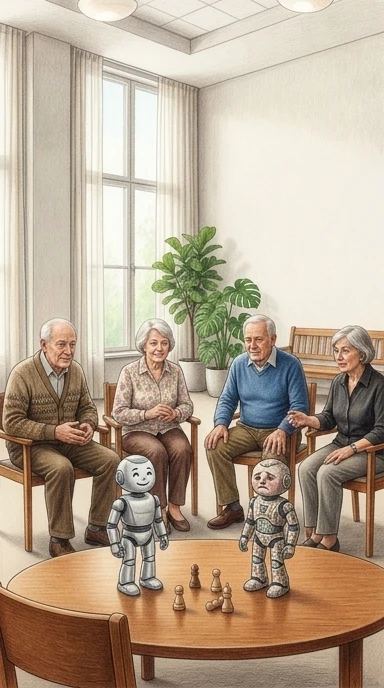 The Robots Took Turns Badly. The Older Adults Kept It Fair. subscribe short + detailed A small study in Taiwan found that a happy robot face went with warmer feelings, especially when the robot shared turns rarely. The study ran one short session, so it cannot say how a robot would wear over months at home. That line comes from a woman in a study of 53 older adults in Taiwan.Una participante le dio el turno al robot que no se lo daba a ella suscríbase breve + detallada En un juego de laboratorio con 53 adultos mayores en Taiwán, los robots con cara feliz generaron más confianza que los de cara triste, sobre todo cuando el robot casi no compartía los turnos. El estudio fue una sola sesión corta y con voluntarios sanos.
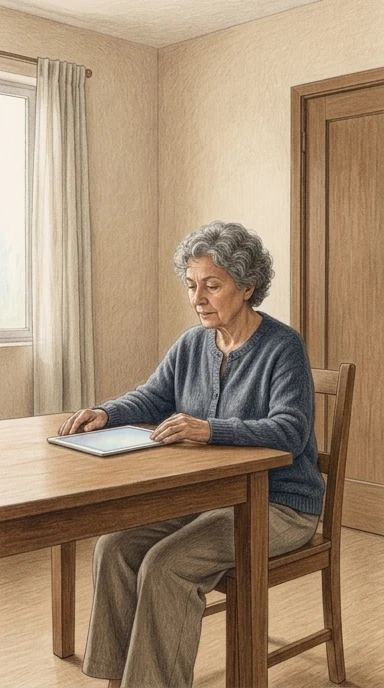 A Tablet at Home, and a Better Score on One Thinking Test subscribe short + detailed In a small study in South Korea, 31 of 33 older adults with mild memory problems reached a higher score after five weeks. The study cannot say the gains last, and other tests of thinking did not improve.Un programa de tablet en casa subió el puntaje cognitivo de 31 de cada 33 adultos mayores suscríbase breve + detallada El estudio duró cinco semanas y se hizo en Corea del Sur con personas en la etapa más leve del problema, así que no muestra que prevenga la demencia. Ninguno de los 29 que esperaron sin tratamiento llegó a esa marca. Los repartieron al azar en dos grupos: uno empezó de inmediato y el otro esperó.
 A Chatbot Answered 90 Questions About Depression After 65. It Missed the Urgent Ones. subscribe short + detailed In a test written and scored by psychiatrists, three popular chatbots gave acceptable answers most of the time on everyday questions, and slipped as the danger rose. The questions were not asked by patients. They covered low mood, memory changes, medicines, self-neglect and thoughts of suicide.Tres chatbots contestaron 90 preguntas sobre la depresión después de los 65; el más flojo falló cuatro de cada diez suscríbase breve + detallada En las treinta preguntas de riesgo alto, las respuestas aceptables bajaron a 63.3%, 50.0% y 36.7%. Un grupo de investigadores escribió 90 preguntas sobre la depresión en la vejez. Tocaban el ánimo, la memoria, los medicamentos, el abandono del cuidado propio y el riesgo de suicidio.
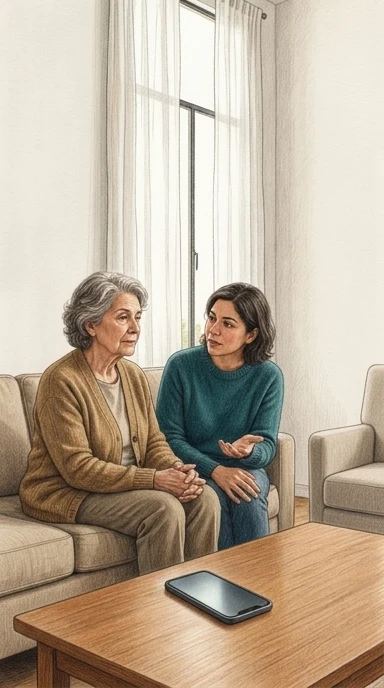 They Doubt the News, but Trust the Old Name. Checking Is Another Matter. subscribe short + detailed A small study in Spain found that older adults trust familiar outlets and check facts by waiting and asking family, not with apps. You may doubt what the news says, and still turn to the same newspaper or channel you have watched for years. That habit has been written down and studied.Desconfían de las noticias, pero le creen al diario de siempre suscríbase breve + detallada Un estudio conversó con personas mayores en España en dos grupos y en 17 entrevistas a fondo. No puede decir qué tan comunes son esas costumbres ni si sirven para detectar una noticia falsa. Encontraron una mezcla llamativa. Esa confianza no salía de una verificación cuidadosa.
Todas las notas de todas las secciones, breves y detalladas, la edición completa por correo cada semana y todas las ediciones pasadas: $9.95 al mes, sólo mensual, cancele cuando quiera.
Vea lo que recibe¿Ya está suscrito? Entre aquí.
Every story of every section, short and detailed, the whole edition by email every week, and every past edition: $9.95 a month, monthly only, cancel whenever you like.
See what you getAlready a subscriber? Sign in.