Weekly AI Watch
Every week, what changed and what it means for you. No hurry, no alarm.
Observatorio de la
Inteligencia Artificial
Cada semana, qué cambió y qué significa para usted. Sin prisa y sin alarma.
weeklyAI · Week of 20 November 2026weeklyAI · Semana del 20 de noviembre de 2026
Your parentsSus padres
older people and the adult children who look out for thempersonas mayores y los hijos adultos que las cuidan
Ask the weeklyAI chat
Ask me about AI in your life: I point you to the stories weeklyAI has published on it, this week and before.
Conversations are saved for as long as weeklyAI exists, to improve the publication. Answers come in the language you write in.
Pregunte al chat de weeklyAI
Pregúnteme sobre la IA en su vida: le señalo las notas que weeklyAI ha publicado sobre el tema, esta semana y antes.
Las conversaciones se guardan mientras exista weeklyAI, para mejorar la publicación. Se responde en el idioma en que usted escribe.
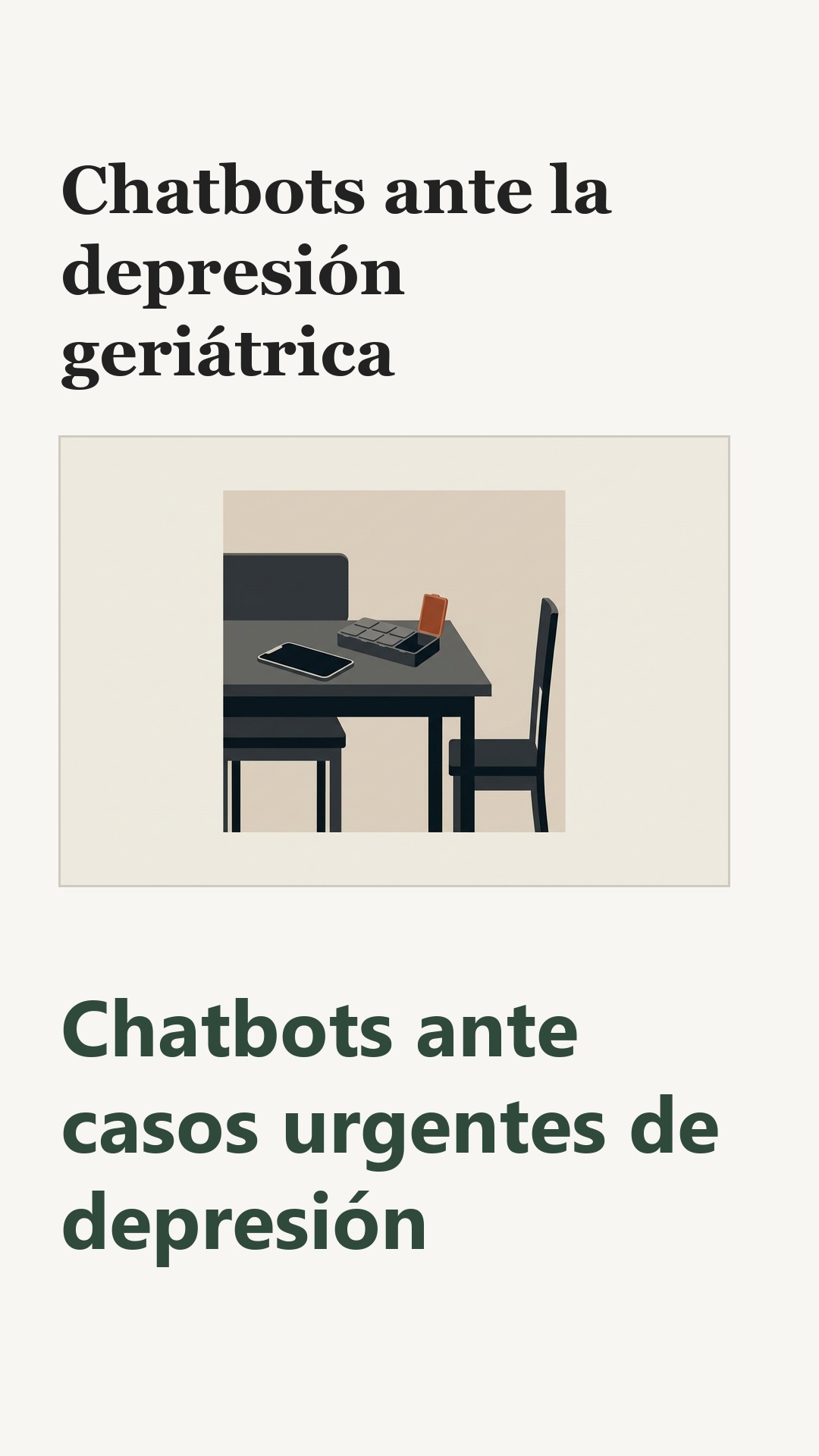
- Three Chatbots, Ninety Hard Questions, and the Answers That Fell Short free short + detailed In a test of how three AI chatbots answer questions about depression in later life, the best one gave a clinically acceptable answer to about three in four questions, and to fewer than two in three when the situation was urgent. Take 90 questions, the kind an older person or an adult son or daughter might type into a phone at a kitchen table, about low mood, memory that has slipped, a medicine that seems to be causing trouble, a parent who has stopped eating.A los bots les va bien con lo sencillo y fallan cuando la pregunta es urgente gratis breve + detallada En una prueba con 90 preguntas escritas sobre depresión en la vejez, entre el 37% y el 63% de las respuestas a los casos más delicados pasaron el filtro. Eran guiones, en inglés, y no personas reales. Tres modelos de chat contestaron 90 preguntas sobre la depresión en personas mayores. En los casos más urgentes, a los tres les fue peor.
- "The Words Are Too Small": What 16 Older Adults Said About Asking AI for Health Advice subscribe short + detailed A small interview study from eastern China found that chatbots can steady people juggling several illnesses, and that one bad answer can end the habit. It recorded what people said, not whether their health improved. "The words are too small. I have to lean very close even with reading glasses, and sometimes I press the wrong button and don't know how to go back."Me da ansiedad": lo que 16 personas mayores dijeron de pedirle consejo de salud a un chatbot suscríbase breve + detallada El estudio entrevistó a 16 personas con varias enfermedades crónicas en un solo distrito urbano de China. Recogió lo que dicen que vivieron, no si su salud mejoró. "The words are too small. I have to lean very close even with reading glasses, and sometimes I press the wrong button and don't know how to go back. It makes me sweat with anxiety. Lo dijo una de las participantes. Ella y otras 15 personas, de 64 a 78 años, aceptaron hablar cara a cara en un centro de salud comunitario de una ciudad del este de China. Cada una tenía dos o más enfermedades crónicas.
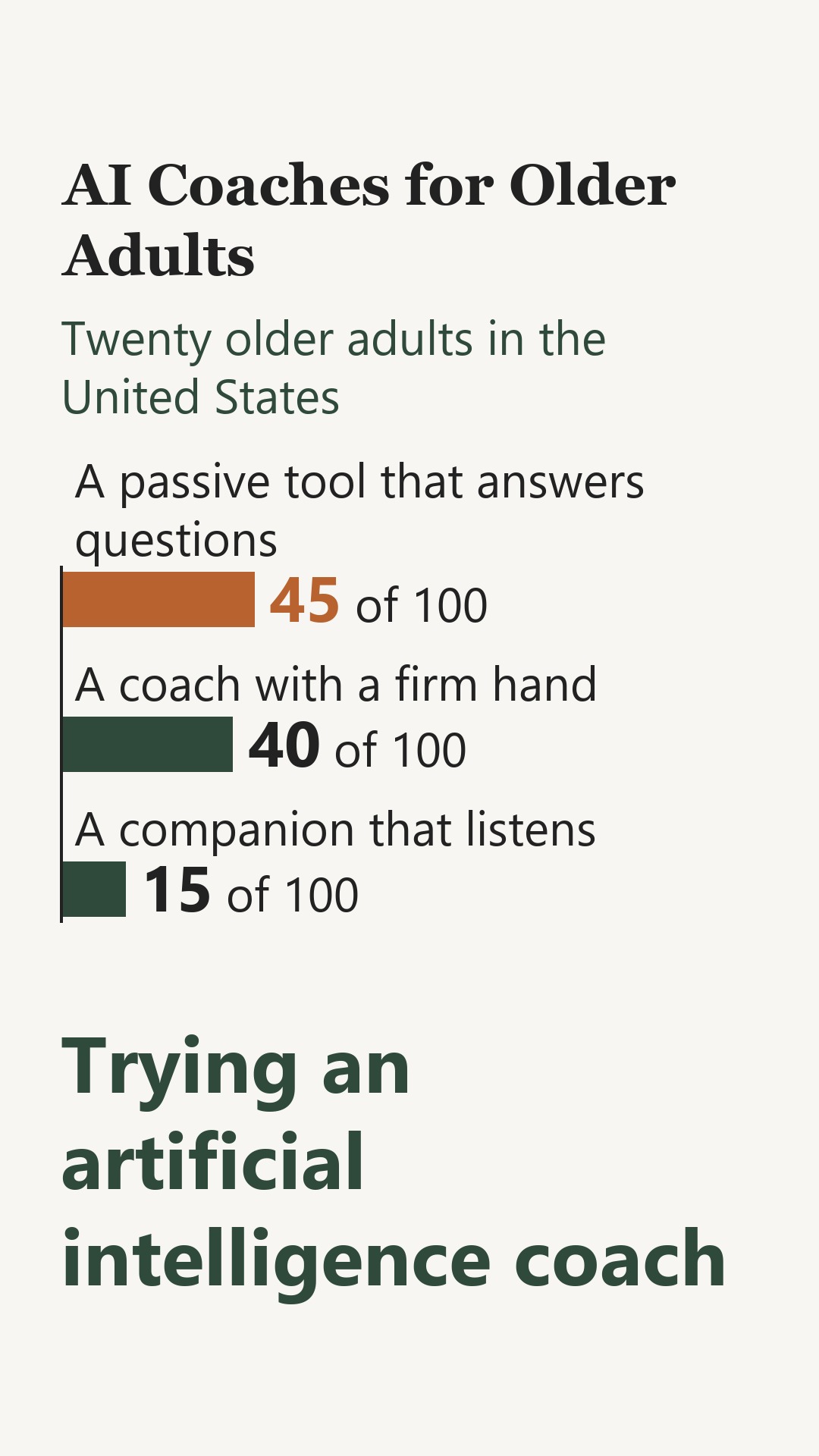
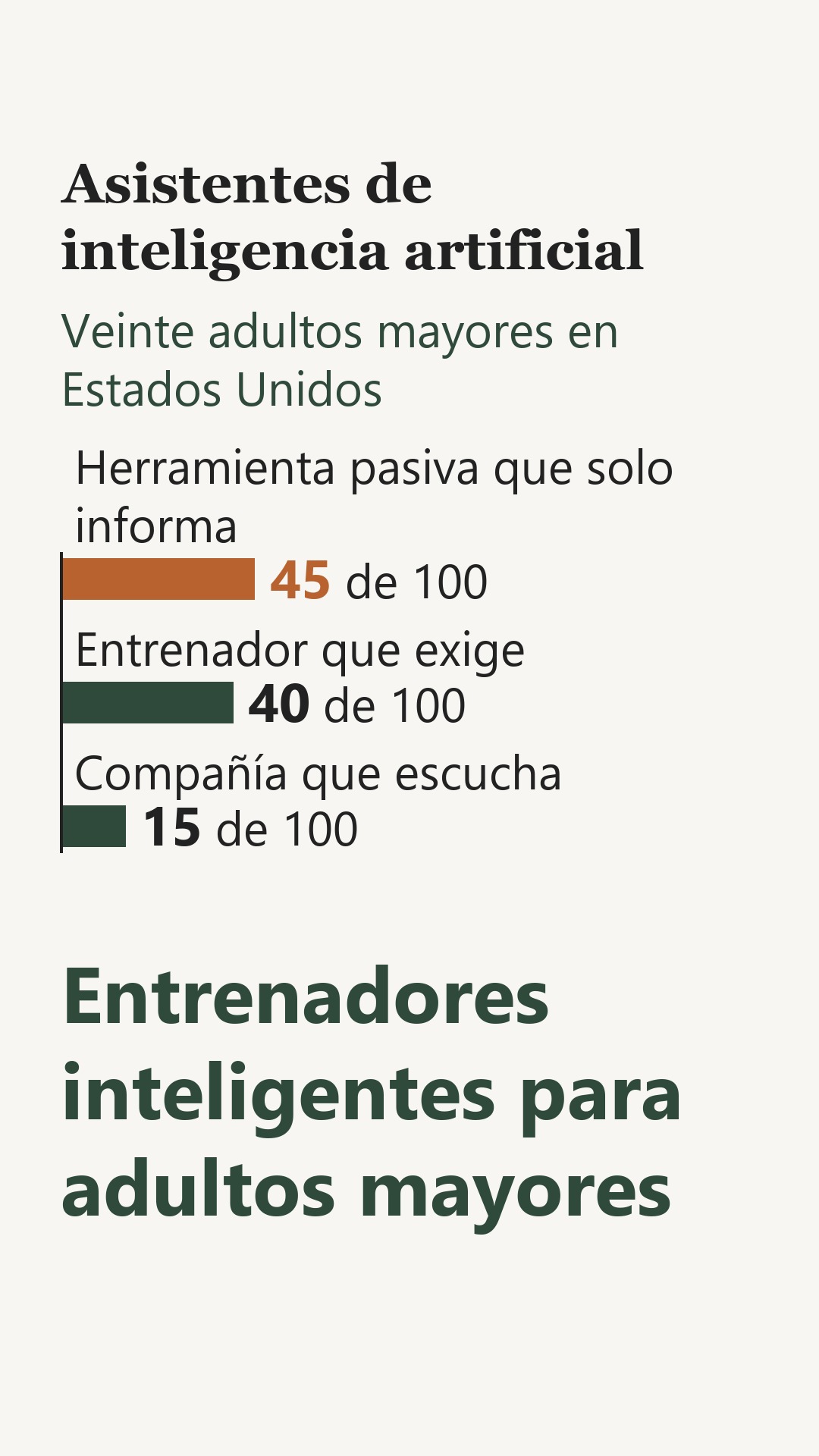
- They'd Try the AI Coach. They'd Want the Receipts. subscribe short + detailed In hour-long interviews, 14 of 20 US older adults said they were willing to try AI help for exercise. The 20 were highly educated, all white, and reacting to pictures, not a working app. Researchers at the University of Illinois Urbana-Champaign and the City University of New York sat down with 20 Americans aged 65 and over, about an hour each, by video call, between May 2024 and January 2025. Seven were men and 13 were women. All had at least an undergraduate degree, and all were white.Quisieran una aplicación que los acompañe a caminar, pero piden cuentas claras suscríbase breve + detallada Veinte personas de 65 años o más en Estados Unidos contaron qué esperan de un asistente con inteligencia artificial. La mayoría lo probaría, aunque casi nadie lo usó de verdad. Entre mayo de 2024 y enero de 2025, investigadores de la Universidad de Illinois y de universidades de la ciudad de Nueva York entrevistaron a 20 personas de 65 años o más que viven en Estados Unidos. Cada charla duró cerca de una hora. Les preguntaron qué los mueve a moverse, qué aparatos usan y qué les estorba.
- The Robot Came Every Morning. The Husband Still Did the Caring. subscribe short + detailed In five couples who tried a talking home robot, spouses said it could help with routines. It was not built to take their place, and the trial could not show that it helps most families."Los robots no nos pueden reemplazar": lo que cinco parejas aprendieron con un robot en casa suscríbase breve + detallada El robot ayudó con recordatorios de medicinas y rutinas, pero se atoraba en los tapetes y exigía supervisión. Eran cinco parejas voluntarias, sin grupo de comparación. "Los robots no pueden reemplazarnos". Lo dijeron los cónyuges que cuidaban a su pareja con Alzheimer en un estudio de la Universidad de New Hampshire, en Estados Unidos. Para ellos, cuidar es algo humano. El robot era una herramienta que podía acompañar su labor, no sustituirla.
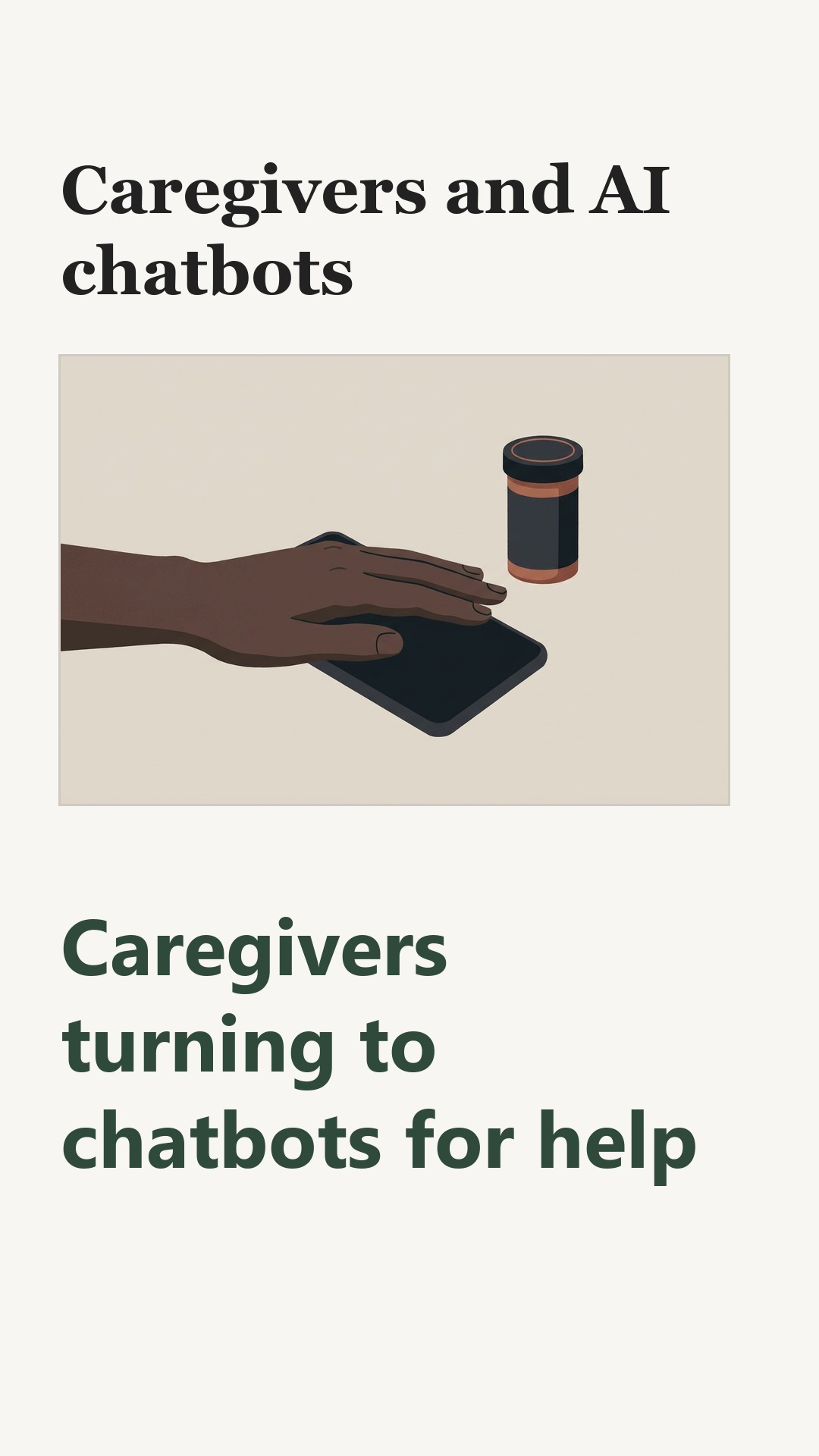
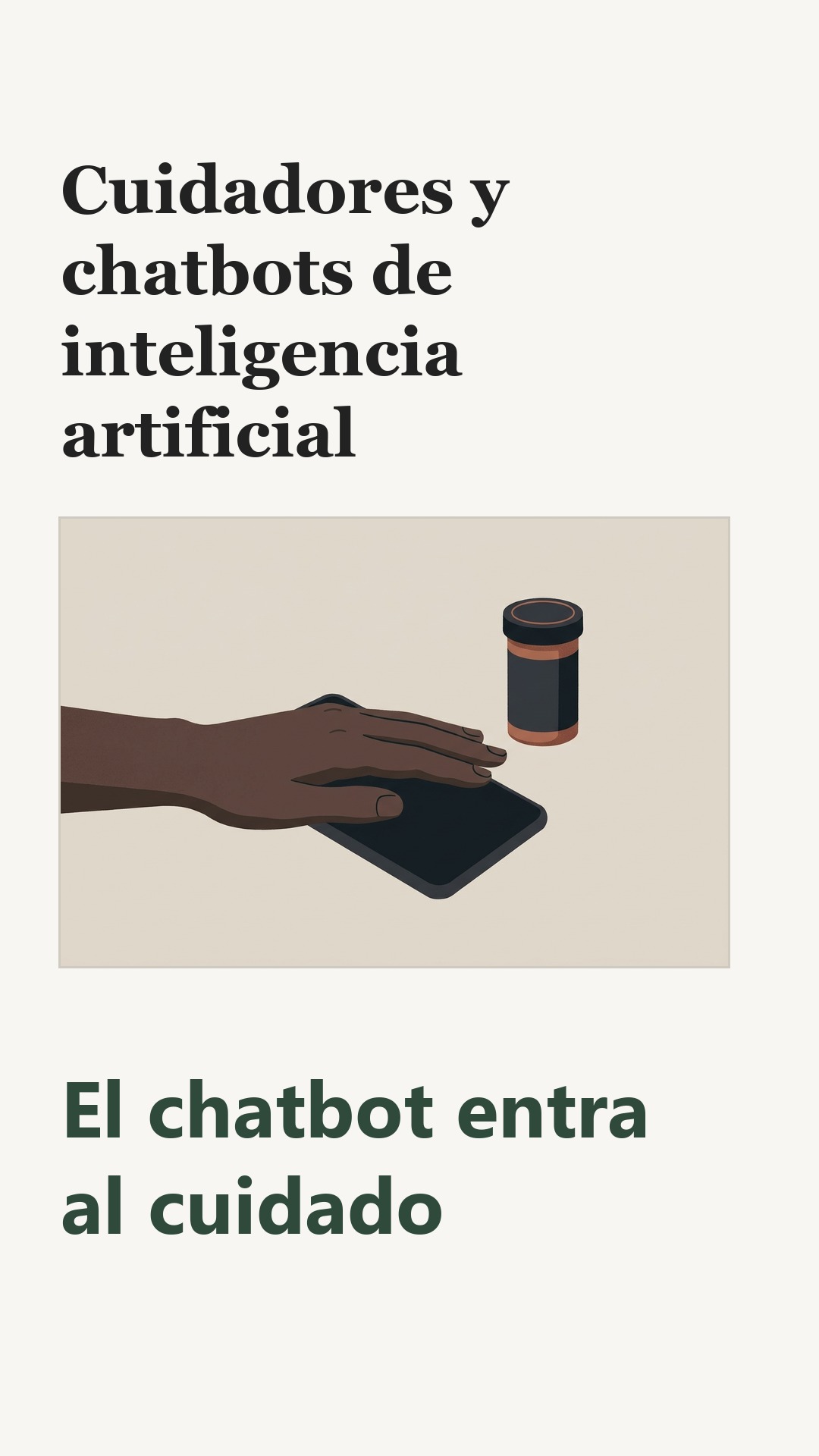
- A Quarter of Caregivers Who Use Chatbots Ask Them About Care subscribe short + detailed In a U.S. survey of 1,300 caregivers, one in four chatbot users said they used it for caregiving, mostly to look things up. The study was a single snapshot and cannot show that it helps. The questions come faster than the appointments. What does this medicine do? Is this symptom normal? Who do I call about the bill? You are helping a parent or a spouse with daily tasks, and the answers are not always within reach.Uno de cada cuatro cuidadores que usan un chatbot de IA lo consulta sobre el cuidado suscríbase breve + detallada El dato viene de 1,300 cuidadores de Estados Unidos encuestados una sola vez, entre agosto y octubre de 2025, y no muestra si el chatbot ayuda. Ayudar a un papá o a una esposa con la comida, las medicinas y las citas al doctor deja preguntas que el consultorio no alcanza a contestar. Algunos cuidadores ya le preguntan a un programa que conversa por escrito, como ChatGPT, Gemini o Copilot.
Todas las notas de todas las secciones, breves y detalladas, la edición completa por correo cada semana y todas las ediciones pasadas: 199 MXN al mes, cancele cuando quiera; o seis meses o un año en un único pago.
Vea lo que recibe¿Ya está suscrito? Entre aquí.
Every story of every section, short and detailed, the whole edition by email every week, and every past edition: $9.95 a month, cancel whenever you like; or six months or a year paid once.
See what you getAlready a subscriber? Sign in.