Weekly AI Watch
Every week, what changed and what it means for you. No hurry, no alarm.
Observatorio de la
Inteligencia Artificial
Cada semana, qué cambió y qué significa para usted. Sin prisa y sin alarma.
weeklyAI · Week of 23 October 2026weeklyAI · Semana del 23 de octubre de 2026
Your voteSu voto
every voter, and the poll worker, the teacher and the local reporter beside themtodo votante, y quien trabaja en la casilla, el maestro y el reportero local a su lado
Ask the weeklyAI chat
Ask me about this section's stories this week, or what a subscriber gets here.
Conversations are saved for as long as weeklyAI exists, to improve the publication. Answers come in the language you write in.
Pregunte al chat de weeklyAI
Pregúnteme por las notas de esta sección esta semana, o qué recibe aquí quien se suscribe.
Las conversaciones se guardan mientras exista weeklyAI, para mejorar la publicación. Se responde en el idioma en que usted escribe.
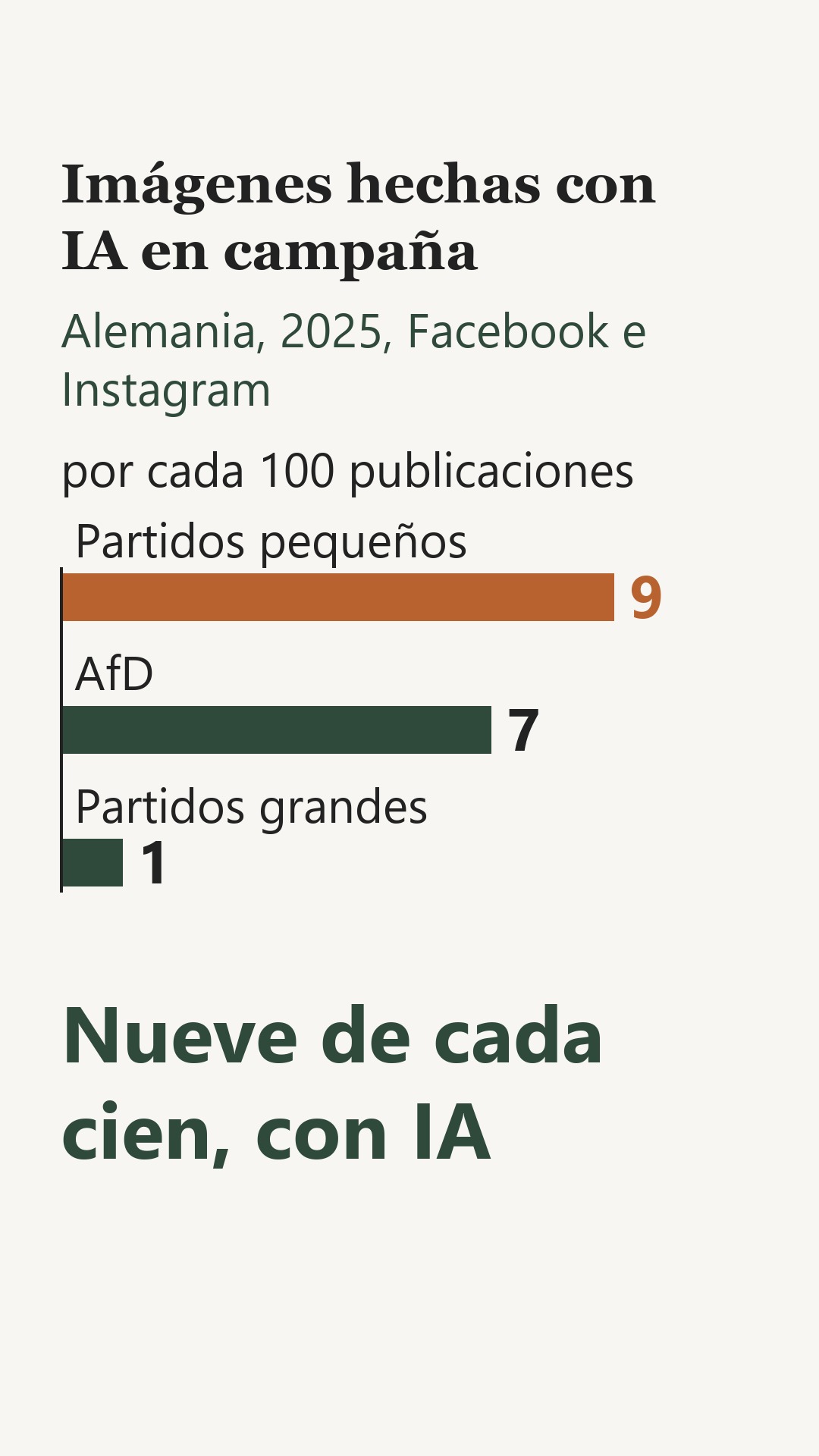
- Small German parties used AI-made campaign images more often than big parties free short + detailed In the four weeks before Germany's federal election, on February 23, 2025, political parties posted on Facebook and Instagram. About 1.4 out of every 100 posts carried an AI-generated image or video, and the authors say that figure is a floor, so the real share is higher. Small parties used these visuals much more (about 9 in 100 posts) than big parties (about 1 in 100), with one major party, the AfD, at about 7 in 100. About 11 in 100 of these AI posts carried a label inside the image or video, and about 2 in 100 carried one in the post text. The article names no way for you to check a specific German campaign post yourself. It does point to CampAIgnTracker.de, a site the authors say they helped build to make detected AI campaign images public.Los partidos pequeños usaron imágenes hechas con IA más que los grandes en la campaña alemana de 2025 gratis breve + detallada De las 945 publicaciones con imágenes o videos hechos con IA que el equipo confirmó, solo el 11.2% llevaba un aviso dentro de la imagen o el video, y solo el 1.9% lo llevaba en el texto del post. Un equipo revisó unas 69,000 publicaciones de 37 partidos en las cuatro semanas previas a la elección federal alemana del 23 de febrero de 2025.
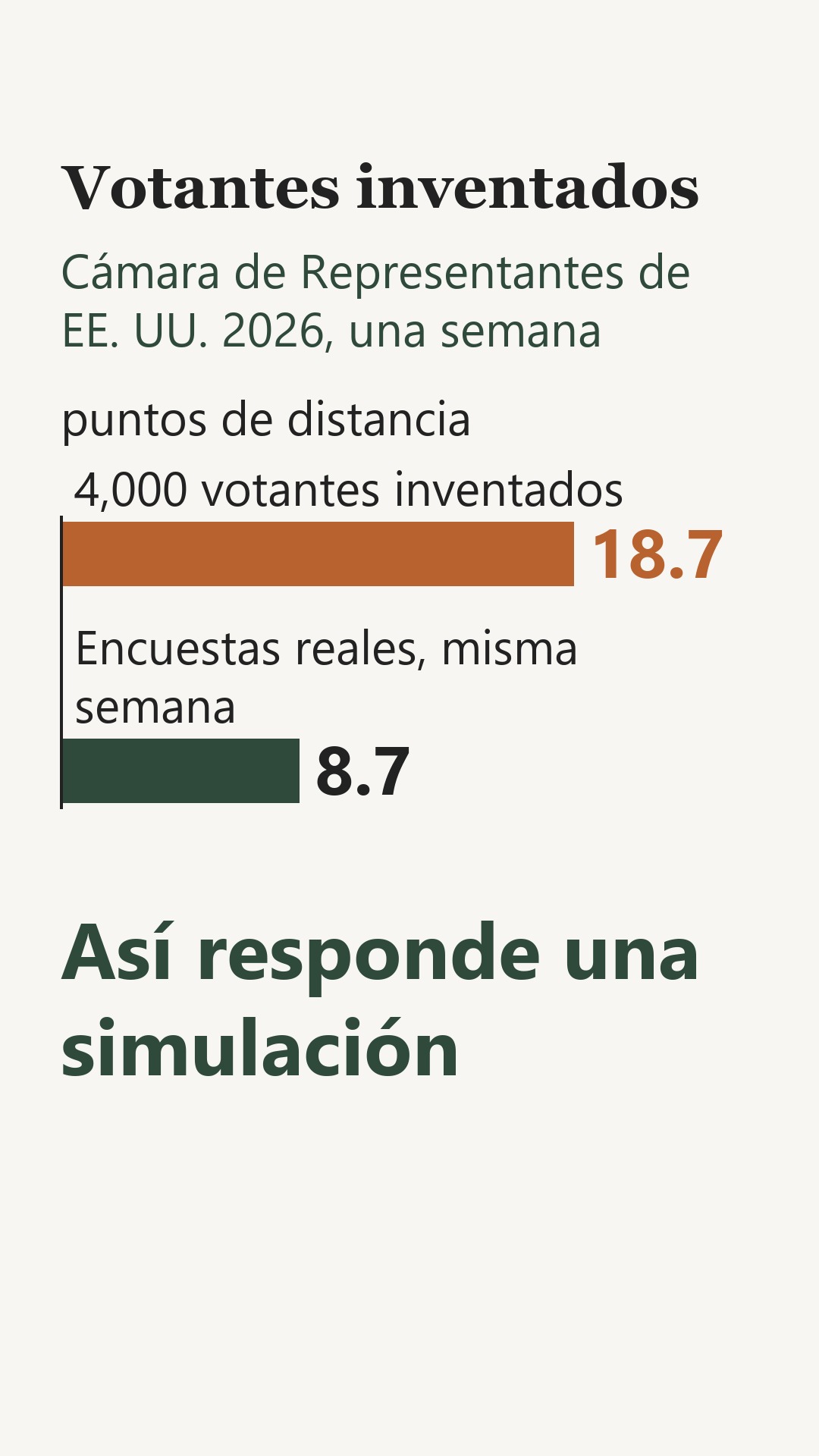
- A simulation of 4,000 fake voters put one party about ten points higher than real polls, and its authors say it does not prove the method can predict an election. free short + detailed Researchers at the University of Amsterdam and Oxford built 4,000 made-up voters using a chatbot, each with an invented biography and a memory of recent events, and had them answer turnout and vote-choice questions for the 2026 US House elections in one week, August 31 to September 6. Some of the fake voters were also given news to read, and others were not. The fake voters gave Democrats 58.4 percent to Republicans' 39.8. The polling average for that week put the gap at 8.7 points. The authors call their district comparisons sanity checks, not tests against 2026 results. The document names no way for a voter to check this.Un sondeo hecho por un chatbot le dio 18.7 puntos de ventaja al Partido Demócrata, pero así responde una simulación, no votantes reales. gratis breve + detallada 1. Un equipo de la Universidad de Ámsterdam y de Nuffield College, Oxford, creó 4,000 votantes falsos con un modelo de lenguaje (gpt-oss-120B) para simular la intención de voto en las elecciones de 2026 a la Cámara de Representantes de Estados Unidos. La semana del 31 de agosto al 6 de septiembre, esos personajes respondieron sobre su participación y su candidato. El resultado les dio a los demócratas 58.4% frente a 39.8% de los republicanos, una ventaja de 18.7 puntos, cuando el promedio de las encuestas de esa semana marcaba 8.7. Los propios autores dicen que esos números exactos probablemente no se cumplan y que sus rangos de confianza son demasiado estrechos: la duda real es mayor de lo que se imprime. Además, sus personajes no podían responder "indeciso".
- Nigeria's deepfake laws leave people exposed, a legal review finds. free short + detailed Nigeria's Cybercrimes Act 2015, amended in 2024, does not mention deepfakes or synthetic media, a legal review published in 2026 found. The review says the law catches a faked voice used to move money, an impersonation for gain, and AI-made child sexual abuse imagery. It notes a clip shared before the 2023 presidential election, which fact-checkers found used AI-generated voices. It also notes a May 2025 video of Peter Obi. Fact-checkers found that manipulated audio had been laid over real footage. When the video was reported on, it stayed online. The authors judge the law has no offence for making a realistic image of an adult without consent, no duty to take deepfakes down, and no rule letting a court order a forensic check of a disputed file. That judgment is the authors' own, not a count.Un video falso de un candidato puede circular y quedarse en línea. La ley nigeriana no tiene una salida clara para usted. gratis breve + detallada 1. El artículo recoge un caso de antes de las elecciones de 2023 en Nigeria: circuló un audio que decía ser de tres políticos hablando de cómo torcer la votación, y los verificadores hallaron voces generadas con inteligencia artificial. El artículo recoge otro caso de 2024: apareció un video del presidente Tinubu hablando de comprar un club de fútbol, algo que nunca dijo. El artículo recoge también un caso de mayo de 2025: un video de 49 minutos que decía mostrar a Peter Obi tenía más de 136,000 vistas hasta finales de junio. El artículo recoge que, después, Dubawa reveló que le habían puesto audio manipulado sobre imágenes reales. Los autores revisaron las leyes vigentes y concluyeron que cubren la estafa y la suplantación, y las imágenes sexuales de menores, pero no definen qué es un video sintético ni castigan crearlo sin consentimiento. Tampoco obligan a bajarlo.
- A proposed tool against tailored political ads was only shown as a video, and the voters who saw it were not sure about it free short + detailed Researchers at TU Delft interviewed twenty Indonesian voters and four political actors during Indonesia's 2024 election, mostly about Twitter. They showed the voters a two-minute video of a proposed tool called APP-AI. One part told people how AI had profiled their political preferences. The other put deliberate typos in their posts to confuse the profiling. Voters welcomed the first part. They split on the typos. Some worried that frequent typos would make other people see them as less credible, and one said current AI reads past typos easily. The interviews yielded design principles for deliberation tools. Nothing was built or tested.Votantes de Indonesia vieron en un video una herramienta que no existe: solo un estudio de entrevistas gratis breve + detallada Investigadores de la Universidad de Delft, en Países Bajos, entrevistaron a veinte votantes indonesios y a cuatro actores políticos durante las elecciones de 2024 en Indonesia. Les mostraron un video de dos minutos sobre una herramienta propuesta, llamada APP-AI, que avisaría a la persona cómo la inteligencia artificial adivina sus preferencias políticas y agregaría errores de escritura a sus publicaciones para confundir a quien la perfila. La herramienta nunca se construyó ni se probó. Algunos entrevistados dudaron de que los errores de escritura engañen a los sistemas actuales, y otros temieron perder credibilidad ante los demás. Los autores concluyen que la privacidad por sí sola no basta para que alguien vote con reflexión.
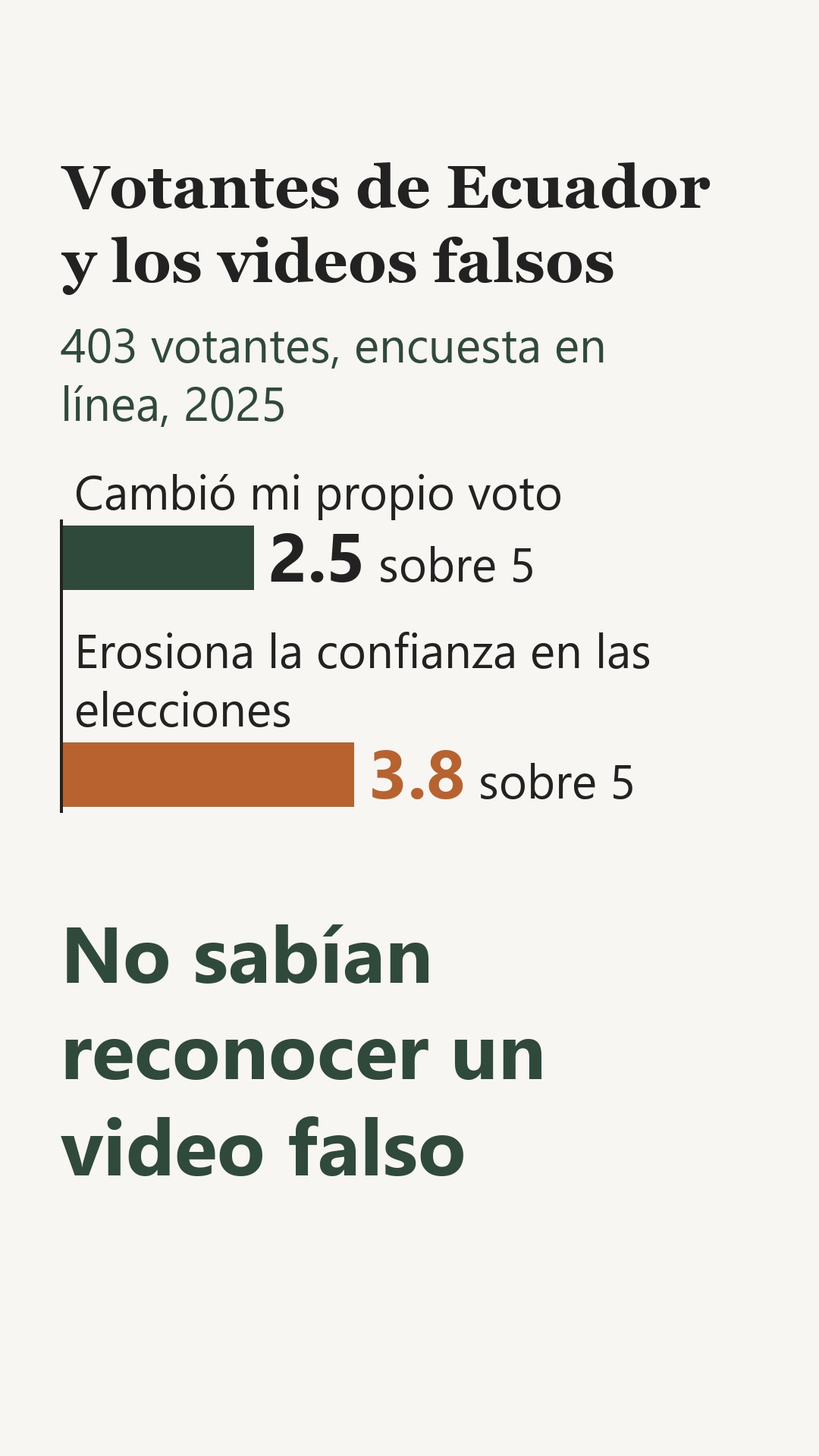
- Rural Ecuadorians in the study said they could not tell when election clips were faked free short + detailed During Ecuador's 2025 presidential campaign, altered images and audio of candidates Noboa and González spread on social media. The EU's election observation mission reported AI-generated and AI-manipulated content, including paid content. In a survey of 403 voters, asked whether disinformation changed their own vote, the average answer was 2.52 on a 1-to-5 scale, below the midpoint. The same respondents agreed, on average 3.83, that it erodes trust in elections. The survey ran online from late August to late October 2025, so it under-represents the least-connected voters. Rural and older participants, mostly in focus groups, said they could not detect fakes. "Nobody has ever explained it to me," one rural participant said.Antes de votar circularon imágenes y audios alterados con IA sobre candidatos en Ecuador; el estudio no puede decir si cambiaron algún voto. gratis breve + detallada En la campaña presidencial de Ecuador de 2025 se documentaron fotos de Noboa y González alteradas con inteligencia artificial, videos falsos de un candidato y un noticiero inventado que elogió a Luisa González. La encuesta del estudio, hecha en línea entre agosto y octubre de 2025 a 403 personas, no representa a todo el electorado. En los grupos de discusión, los habitantes de zonas rurales dijeron que no se sienten capaces de detectar la información falsa. Los especialistas entrevistados señalaron que los adultos mayores son un grupo vulnerable. El estudio no nombra una forma para que usted verifique esto.

Todas las notas de todas las secciones, breves y detalladas, la edición completa por correo cada semana y todas las ediciones pasadas: 199 MXN al mes, cancele cuando quiera; o seis meses o un año en un único pago.
Vea lo que recibe¿Ya está suscrito? Entre aquí.
Every story of every section, short and detailed, the whole edition by email every week, and every past edition: $9.95 a month, cancel whenever you like; or six months or a year paid once.
See what you getAlready a subscriber? Sign in.