other · Quantitative imaging in medicine and surgery · la publicación, 10 ago 2026 · gratis
Un programa de inteligencia artificial para leer mamografías subió su precisión en Moscú tras dos años y medio de pruebas
El estudio se hizo en una sola ciudad y con un solo centro de datos, y no midió si las pacientes vivieron más o se enfermaron menos.
Versión breve · la versión detallada sigue, unos 8 min
Pregunte al chat de weeklyAI
Pregúnteme por este estudio: a quiénes se estudió, qué encontró y qué no dice.
Las conversaciones se guardan mientras exista weeklyAI, para mejorar la publicación. Se responde en el idioma en que usted escribe.
- El estudio, de un vistazo
- Quiénes
- mujeres a las que se les hizo una mamografía
- Cuántos
- 404,502 mamografías
- Dónde
- Moscú, Rusia
- Cuándo
- el seguimiento duró 2 años y 5 meses
- Tipo de estudio
- análisis de lo que hicieron los médicos y las máquinas en la práctica real
- Quién lo hizo
- Centro de Diagnóstico y Telemedicina del Departamento de Salud de Moscú y la empresa desarrolladora
- El límite que importa
- No midió si las pacientes vivieron más o se enfermaron menos.
Estos son los cambios porcentuales en las medidas del sistema a lo largo de 2 años y 5 meses; no miden si las pacientes vivieron más o se enfermaron menos.
El estudio no midió si las pacientes tuvieron mejores resultados.
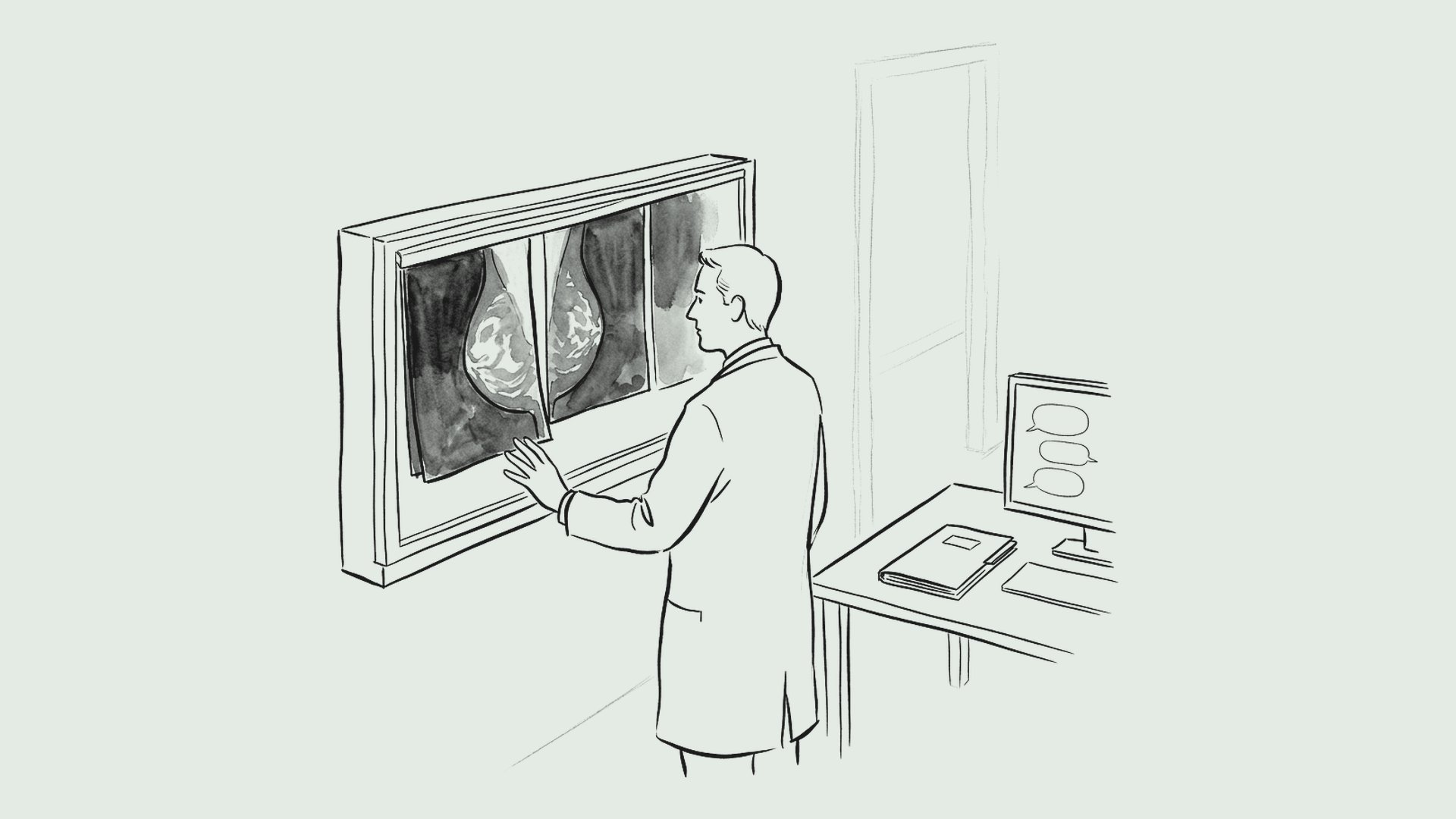
En Moscú, un equipo del Centro de Diagnóstico y Telemedicina del Departamento de Salud probó un sistema de inteligencia artificial que lee mamografías. Usaron 404,502 estudios de 206 organizaciones médicas y participaron 336 radiólogos.
Empezaron con pruebas básicas de funcionamiento. Después vinieron las pruebas de calibración, con 100 mujeres: la mitad tenía cáncer de mama confirmado y la otra mitad no. Las dos primeras pruebas de calibración no alcanzaron el mínimo de acierto que los investigadores se habían fijado, el 80%.
Los desarrolladores corrigieron el sistema. La tercera prueba pasó. Durante 2 años y 5 meses de seguimiento, la capacidad del sistema para distinguir un caso de otro subió de 0.83 a 0.92, y su capacidad para descartar el cáncer cuando no estaba pasó de 0.70 a 0.91.
Durante la parte del estudio en que se siguió a las pacientes en la práctica real, la inteligencia artificial leyó primero y el radiólogo revisó después. El diagnóstico final lo firmó siempre un radiólogo, y los resultados de la máquina llevaban la etiqueta "sólo para investigación".
El estudio no midió si las pacientes tuvieron mejores resultados. Comparó si lo que leía la máquina coincidía con lo que leían los médicos, y también midió su acierto, sus fallas técnicas y cómo la evaluaron los médicos.
En junio de 2023, el sistema entró al programa de seguro médico obligatorio de Moscú. Allí ayuda a procesar mamografías.
El trabajo tiene límites que conviene decir. Se hizo en el sistema de salud de una sola ciudad, con datos de un solo centro de referencia. Puede que no funcione igual en otros sistemas de salud y otras regiones. La muestra con la que se calibró fue de 100 mujeres, y no se probó el sistema con datos independientes de otras regiones o países. Tampoco se evaluó cuánto cuesta ni cómo cambia el trabajo diario en el hospital.
Si usted oye hablar de una inteligencia artificial que lee mamografías donde vive, pregunte si fue probada en su propio sistema de salud, si un radiólogo sigue dando el diagnóstico final, y si alguien midió si las pacientes salieron mejor.
Qué significa para usted
Si usted oye de un programa así donde vive, pregunte si lo probaron en su propio sistema de salud y si un radiólogo sigue firmando el diagnóstico final. El estudio tampoco midió si las pacientes vivieron más o se enfermaron menos, así que todavía no puede decir que eso ocurra.
Vasilev, Y., Rumyantsev, D., Vladzymyrskyy, A. et al. (2026). Implementation of an artificial intelligence-based system for mammography in the compulsory medical insurance program: results of a 3-year study. Quantitative Imaging in Medicine and Surgery. https://doi.org/10.21037/qims-2026-0864
Quién pagó: El estudio fue financiado por el Departamento de Salud de Moscú como parte de un esfuerzo de investigación y desarrollo; cuatro autores son empleados de Third Opinion Platform, el desarrollador del sistema de IA evaluado, y proporcionaron información sobre el sistema pero no participaron en la realización del estudio, el análisis de datos ni la interpretación de los resultados.
No tome esto como consejo médico profesional.
Versión detalladaLos pasajes copiados del artículo, las ilustraciones y cada fuente con cuánto leímos de ella · 1534 palabras · unos 8 minLeerla →Cerrar
En Moscú, la inteligencia artificial que lee mamografías mejoró durante tres años dentro del seguro público
El estudio observó el sistema mientras se usaba en la atención real, no lo comparó con la muerte ni con la curación.
Un grupo de investigadores rusos siguió durante dos años y cinco meses un programa de inteligencia artificial para leer mamografías dentro del sistema de seguro médico obligatorio de Moscú. El sistema se llama Third Opinion Mammograms y hace dos cosas a la vez: señala dónde hay algo sospechoso en la imagen y clasifica qué es. Analiza solo imágenes. En total se usaron 404,502 mamografías de 206 organizaciones médicas y de equipos de tres fabricantes distintos; participaron 336 radiólogos. Los autores trabajan en el Centro de Diagnóstico y Telemedicina del Departamento de Salud de Moscú y en la empresa que desarrolló el sistema; el trabajo lo pagó el Departamento de Salud de Moscú, y cuatro de los firmantes son empleados de esa empresa desarrolladora.
Lo que encontraron fue una mejora en los números del propio sistema a lo largo del tiempo. La capacidad de distinguir un caso de otro subió de 0,83 a 0,92; el porcentaje de aciertos pasó de 0,77 a 0,90; la capacidad de no dejar pasar un cáncer subió de 0,84 a 0,88, y la de no dar falsas alarmas pasó de 0,70 a 0,911. Las fallas técnicas del sistema bajaron de 3.0% a 0.8%, y la nota que los radiólogos expertos le pusieron al sistema subió de 54.38% a 80.36%2. Al final, el sistema quedó integrado al programa regional de seguro médico obligatorio3.
Conviene detenerse en qué es y qué no es este resultado. No es que la inteligencia artificial haya causado menos muertes ni diagnósticos más tempranos: el estudio no midió si las pacientes vivieron más o mejor4. Tampoco es que el sistema reemplace al radiólogo. Durante todo el seguimiento, la lectura clínica final la hicieron siempre personas, y los informes de la máquina iban marcados como material de investigación. Lo que se midió fue qué tan de acuerdo estaban las lecturas de la máquina con las de los expertos. Cuando el sistema ya estaba en el seguro público, las discrepancias graves entre la máquina y los radiólogos en la clasificación de los casos fueron de 0.08% en promedio5. Y aquí aparece un dato incómodo: los propios radiólogos expertos coincidían entre sí apenas en 49.9% de los casos6. Es decir, la referencia contra la que se comparaba a la máquina no era un patrón de oro perfecto.
Para entender la magnitud del asunto, hay que empezar por lo que está en juego. El cáncer de mama es el tumor más frecuente en mujeres y la principal causa de muerte por cáncer en ellas; por eso muchos países tienen programas de tamizaje, que buscan detectarlo temprano para reducir la mortalidad7. El problema es que esos programas exigen mucho personal: en muchos lugares la mamografía se lee dos veces, con dos radiólogos por estudio, y los radiólogos escasean mientras el volumen de exámenes crece y el cansancio se acumula8. Además, el factor humano también produce errores: diagnósticos que llegan tarde o biopsias innecesarias en mujeres que no tenían cáncer9.
La idea de fondo es sencilla de explicar. La máquina no "ve" como una persona: recibe la imagen digital, la limpia y la normaliza, y busca patrones que aprendió de unas 4,000 mamografías previas, revisadas por consenso de tres radiólogos expertos, con diversidad de edades, densidades mamarias y equipos10. Con eso produce un mapa de la lesión y una clasificación, más una imagen de apoyo y un informe de texto. El radiólogo recibe eso como una segunda opinión, no como un veredicto.
Este estudio no nació en el vacío. Un repaso de diez años de investigación sobre inteligencia artificial en tamizaje mamográfico —del que solo pudimos leer el resumen, porque el texto completo está detrás de una suscripción— describe cómo el campo pasó de la prueba de concepto a los ensayos aleatorizados en una sola década11. Ese mismo repaso, según su resumen, reunió catorce estudios y más de un millón doscientas mil exploraciones, con un rendimiento global alto pero tan disperso que, en palabras de sus autores, no se puede trasladar a un programa nuevo: cada lugar necesita validar la herramienta antes de usarla12. Su conclusión es que la evidencia respalda a la inteligencia artificial como segunda lectora y como herramienta para ordenar casos, no como sustituto autónomo del radiólogo13.
El artículo describe un estudio en el que la validación externa, en datos de otros lugares, es poco frecuente, y cuando se hace, la precisión puede caer hasta 24% respecto de las pruebas internas14. El artículo describe un estudio que también critica que casi todos los marcos de evaluación existentes tratan a estos sistemas como si fueran estáticos, sin considerar que se reentrenan y cambian, y sin involucrar a los radiólogos en su desarrollo y prueba15. Su propuesta es justamente lo que aplicaron: probar, calibrar, vigilar en la práctica real, actualizar, y volver a probar.
El estudio tiene límites que sus propios autores reconocen y que importan. La prueba de calibración retrospectiva —la que mide la precisión contra casos con diagnóstico confirmado por biopsia— se hizo con apenas 100 mamografías16. Todo ocurrió en una sola institución, en una sola ciudad, y no hubo validación externa en datos de otras regiones o países16. El grupo de radiólogos expertos era tan pequeño que no se pudo evaluar bien cuánto varían entre sí sus lecturas, lo que introduce un posible sesgo del observador. Y el diseño no permite separar el efecto de cada actualización del modelo de otros cambios simultáneos en los datos o en el flujo de trabajo. Tampoco se evaluó formalmente el efecto sobre los resultados clínicos de las pacientes, sobre la organización del trabajo ni sobre los costos4. El artículo describe un estudio en el que el tiempo de doble lectura se redujo 66.4% con el uso del algoritmo17, pero eso es un resultado de otro estudio, no de este.
Así lo leemos nosotros. El patrón que se repite en este tipo de anuncios es que la aprobación de un sistema para uso público se decide sobre todo por umbrales numéricos fijados de antemano —precisión, tasa de fallas, nota clínica— y que la pregunta de quién responde cuando el sistema se equivoca queda en segundo plano. Cabe esperar que, en cualquier país que adopte algo así, el debate público se concentre en si los números alcanzan y no en quién firma cuando hay un error. Sabríamos que nos equivocamos si viéramos estudios que evalúen y publiquen explícitamente la responsabilidad de cada parte y los criterios con los que se decide cuándo el sistema no debe usarse. Mientras tanto, cuando le anuncien que un programa público ya usa inteligencia artificial para leer exámenes, usted puede preguntar quién responde si hay un error, con qué criterios se aprobó el sistema y si esos criterios son públicos. Nada de eso reemplaza un examen indicado por su médico.
También leímos, en otros trabajos sobre este tipo de sistemas, una advertencia que conviene tener presente: la precisión puede variar mucho según el equipo de mamografía que se use, hasta el punto de que algunos programas podrían necesitar umbrales distintos para cada marca o incluso dejar de usar la herramienta en ciertos aparatos. Eso no cuestiona lo que ocurrió en Moscú, donde se usaron equipos de tres fabricantes; es una advertencia sobre cuánto de ese resultado se puede trasladar a otro lugar con otros aparatos. Y como todo esto se apoya en comparaciones con lo que hacen los radiólogos, vale preguntar si el sistema que leen sus exámenes fue comparado con varios profesionales y no con uno solo, y si se sabe qué tan de acuerdo están esos profesionales entre ellos.
¿Qué falta para que algo así llegue a donde usted vive? Los propios autores dicen que su próximo paso es ampliar la base de calibración retrospectiva y llevar el enfoque a escala nacional dentro del sistema de seguro obligatorio ruso18. Es decir, todavía están en la etapa de aprender cómo hacerlo bien en su propio país. Para que un sistema de estos se use en una clínica de América Latina, de Estados Unidos o de Canadá, tendría que probarse en esa población, con esos equipos y ese personal, y con un seguimiento que mida si las pacientes realmente salen mejor: menos diagnósticos tardíos, menos biopsias innecesarias, tiempos de espera distintos. Nada de eso está en este estudio.
Aquí es donde termina lo que se puede afirmar y empieza lo que usted puede hacer. La próxima vez que en su servicio de salud le digan que un programa ya usa inteligencia artificial para leer mamografías u otros estudios, usted puede preguntar tres cosas concretas: si ese sistema fue probado en pacientes como usted y no solo en otro país; si alguien revisa los casos dudosos y quién es esa persona; y si el programa mide si las pacientes están saliendo mejor, no solo si la máquina acierta más. Ninguna de esas preguntas es una razón para posponer un examen indicado. Son preguntas de gestión, y cualquier servicio que las tenga respondidas está en mejor posición para cuidarla. ¿Las tiene el suyo?
De dónde sale cada dato de contexto, y cuánto leímos de cada documento
- Vasilev, Y., Rumyantsev, D., Vladzymyrskyy, A. et al. (2026). Implementation of an artificial intelligence-based system for mammography in the compulsory medical insurance program: results of a 3-year study. Quantitative Imaging in Medicine and Surgery. https://doi.org/10.21037/qims-2026-0864 - el artículo del que trata esta nota — el artículo completo — el pasaje: "Over this time, AUC increased by 10.8% (from 0.83 to 0.92), accuracy by 16.9% (from 0.77 to 0.90), sensitivity by 4.8% (from 0.84 to 0.88), and specificity by 30.0% (from 0.70 to 0.91)."
- Vasilev, Y., Rumyantsev, D., Vladzymyrskyy, A. et al. (2026). Implementation of an artificial intelligence-based system for mammography in the compulsory medical insurance program: results of a 3-year study. Quantitative Imaging in Medicine and Surgery. https://doi.org/10.21037/qims-2026-0864 - el artículo del que trata esta nota — el artículo completo — el pasaje: "The average technical defect rate decreased by 26.7% (from 3.0% to 0.8%), and the clinical assessment score rose by 47.8% (from 54.38% to 80.36%)."
- Vasilev, Y., Rumyantsev, D., Vladzymyrskyy, A. et al. (2026). Implementation of an artificial intelligence-based system for mammography in the compulsory medical insurance program: results of a 3-year study. Quantitative Imaging in Medicine and Surgery. https://doi.org/10.21037/qims-2026-0864 - el artículo del que trata esta nota — el artículo completo — el pasaje: "The study culminated in the integration of the AI system into the regional CMI program."
- Vasilev, Y., Rumyantsev, D., Vladzymyrskyy, A. et al. (2026). Implementation of an artificial intelligence-based system for mammography in the compulsory medical insurance program: results of a 3-year study. Quantitative Imaging in Medicine and Surgery. https://doi.org/10.21037/qims-2026-0864 - el artículo del que trata esta nota — el artículo completo — el pasaje: "Finally, the study lacked a formal assessment of the AI system’s impact on patient-centered clinical outcomes, organizational workflows, or economic efficiency."
- Vasilev, Y., Rumyantsev, D., Vladzymyrskyy, A. et al. (2026). Implementation of an artificial intelligence-based system for mammography in the compulsory medical insurance program: results of a 3-year study. Quantitative Imaging in Medicine and Surgery. https://doi.org/10.21037/qims-2026-0864 - el artículo del que trata esta nota — el artículo completo — el pasaje: "Following the Moscow CMI implementation, the mean rate of critical discrepancies between AI and radiologist assessments of BI-RADS categories was 0.08% (range, 0.01–0.18%)."
- Vasilev, Y., Rumyantsev, D., Vladzymyrskyy, A. et al. (2026). Implementation of an artificial intelligence-based system for mammography in the compulsory medical insurance program: results of a 3-year study. Quantitative Imaging in Medicine and Surgery. https://doi.org/10.21037/qims-2026-0864 - el artículo del que trata esta nota — el artículo completo — el pasaje: "Notably, inter-reader agreement between the expert and end-user radiologists reached only 49.9%, which aligns with established levels of reader variability and highlights the critical need for clinical decision support systems."
- Vasilev, Y., Rumyantsev, D., Vladzymyrskyy, A. et al. (2026). Implementation of an artificial intelligence-based system for mammography in the compulsory medical insurance program: results of a 3-year study. Quantitative Imaging in Medicine and Surgery. https://doi.org/10.21037/qims-2026-0864 - el artículo del que trata esta nota — el artículo completo — el pasaje: "Breast cancer is the most prevalent malignancy among women and the leading cause of cancer-related mortality in this population ( 2 ). Consequently, numerous countries implement mammography screening programs, facilitating early detection and timely intervention to reduce mortality ( 3 )."
- Vasilev, Y., Rumyantsev, D., Vladzymyrskyy, A. et al. (2026). Implementation of an artificial intelligence-based system for mammography in the compulsory medical insurance program: results of a 3-year study. Quantitative Imaging in Medicine and Surgery. https://doi.org/10.21037/qims-2026-0864 - el artículo del que trata esta nota — el artículo completo — el pasaje: "However, screening entails substantial resource demands, including double-reading by radiologists ( 4 ). Unfortunately, radiologists remain scarce facing widespread overwork and burnout as mammography volumes steadily increase ( 5 , 6 )."
- Vasilev, Y., Rumyantsev, D., Vladzymyrskyy, A. et al. (2026). Implementation of an artificial intelligence-based system for mammography in the compulsory medical insurance program: results of a 3-year study. Quantitative Imaging in Medicine and Surgery. https://doi.org/10.21037/qims-2026-0864 - el artículo del que trata esta nota — el artículo completo — el pasaje: "Human factors contribute to diagnostic errors like delayed cancer diagnoses or unnecessary biopsies in malignancy-free women ( 7 , 8 )."
- Vasilev, Y., Rumyantsev, D., Vladzymyrskyy, A. et al. (2026). Implementation of an artificial intelligence-based system for mammography in the compulsory medical insurance program: results of a 3-year study. Quantitative Imaging in Medicine and Surgery. https://doi.org/10.21037/qims-2026-0864 - el artículo del que trata esta nota — el artículo completo — el pasaje: "The training dataset of approximately 4,000 mammograms was collected from several partner clinics of the Third Opinion Platform, ensuring broad population and ethnic diversity."
- Ciurescu S, Buciu V, Ilaș DG, Pârvănescu R, Șerban D. (2026). Ten Years of Artificial Intelligence in Screening Mammography: A Systematic Review and Meta-Analysis of Diagnostic Accuracy and Clinical Implementation (Literature Published 2015–2025). Diagnostics. 10.3390/diagnostics16183045 — solo el resumen - no se pudo obtener el texto completo — el pasaje: "Deep-learning artificial intelligence (AI) for mammographic screening moved from proof of concept to randomised evaluation in a single decade."
- Ciurescu S, Buciu V, Ilaș DG, Pârvănescu R, Șerban D. (2026). Ten Years of Artificial Intelligence in Screening Mammography: A Systematic Review and Meta-Analysis of Diagnostic Accuracy and Clinical Implementation (Literature Published 2015–2025). Diagnostics. 10.3390/diagnostics16183045 — solo el resumen - no se pudo obtener el texto completo — el pasaje: "Pooled accuracy is high on average but so dispersed that it cannot be transferred to a new programme; local validation before deployment remains necessary."
- Ciurescu S, Buciu V, Ilaș DG, Pârvănescu R, Șerban D. (2026). Ten Years of Artificial Intelligence in Screening Mammography: A Systematic Review and Meta-Analysis of Diagnostic Accuracy and Clinical Implementation (Literature Published 2015–2025). Diagnostics. 10.3390/diagnostics16183045 — solo el resumen - no se pudo obtener el texto completo — el pasaje: "A decade of evidence supports AI as a second reader and triage tool in organised screening, not as an autonomous replacement for the radiologist."
- Vasilev, Y., Rumyantsev, D., Vladzymyrskyy, A. et al. (2026). Implementation of an artificial intelligence-based system for mammography in the compulsory medical insurance program: results of a 3-year study. Quantitative Imaging in Medicine and Surgery. https://doi.org/10.21037/qims-2026-0864 - el artículo del que trata esta nota — el artículo completo — el pasaje: "External validation on independent datasets occurs rarely and shows accuracy drops of up to 24% compared to internal tests ( 19 - 21 ). Many AI systems lack peer-reviewed efficacy evidence ( 22 )."
- Vasilev, Y., Rumyantsev, D., Vladzymyrskyy, A. et al. (2026). Implementation of an artificial intelligence-based system for mammography in the compulsory medical insurance program: results of a 3-year study. Quantitative Imaging in Medicine and Surgery. https://doi.org/10.21037/qims-2026-0864 - el artículo del que trata esta nota — el artículo completo — el pasaje: "First, most frameworks overlook AI’s dynamic evolution through retraining, requiring continuous post-update assessment ( 32 ). Second, they neglect radiologist involvement throughout development and testing, which risks creating misaligned solutions ( 33 , 34 )."
- Vasilev, Y., Rumyantsev, D., Vladzymyrskyy, A. et al. (2026). Implementation of an artificial intelligence-based system for mammography in the compulsory medical insurance program: results of a 3-year study. Quantitative Imaging in Medicine and Surgery. https://doi.org/10.21037/qims-2026-0864 - el artículo del que trata esta nota — el artículo completo — el pasaje: "A key limitation of this study is the relatively small retrospective calibration testing dataset (100 mammograms) and the lack of external validation on independent datasets from other regions or countries."
- Vasilev, Y., Rumyantsev, D., Vladzymyrskyy, A. et al. (2026). Implementation of an artificial intelligence-based system for mammography in the compulsory medical insurance program: results of a 3-year study. Quantitative Imaging in Medicine and Surgery. https://doi.org/10.21037/qims-2026-0864 - el artículo del que trata esta nota — el artículo completo — el pasaje: "Finally, the application of the AI algorithm allowed for a 66.4% reduction in the duration of double reading (P<0.0001) ( 69 )."
- Vasilev, Y., Rumyantsev, D., Vladzymyrskyy, A. et al. (2026). Implementation of an artificial intelligence-based system for mammography in the compulsory medical insurance program: results of a 3-year study. Quantitative Imaging in Medicine and Surgery. https://doi.org/10.21037/qims-2026-0864 - el artículo del que trata esta nota — el artículo completo — el pasaje: "Future work will focus on expanding the retrospective calibration testing dataset and scaling the approach to a national level within the CMI framework."
Vasilev, Y., Rumyantsev, D., Vladzymyrskyy, A. et al. (2026). Implementation of an artificial intelligence-based system for mammography in the compulsory medical insurance program: results of a 3-year study. Quantitative Imaging in Medicine and Surgery. https://doi.org/10.21037/qims-2026-0864
Quién pagó: El estudio fue financiado por el Departamento de Salud de Moscú como parte de un esfuerzo de investigación y desarrollo; cuatro autores son empleados de Third Opinion Platform, el desarrollador del sistema de IA evaluado, y proporcionaron información sobre el sistema pero no participaron en la realización del estudio, el análisis de datos ni la interpretación de los resultados.
No tome esto como consejo médico profesional.
Los hallazgos de otros estudios que aquí se mencionan los conocemos por este documento, que fue el que leímos; no abrimos cada uno de esos estudios.
other · Quantitative imaging in medicine and surgery · the paper, 10 Aug 2026 · free
An AI Read Mammograms in Moscow and Got Better at Spotting Cancer
The study tested the software on 404,502 mammograms from 206 medical organizations. Its readings improved, but no one measured whether patients did better, and a radiologist always made the final call.
Short version · the longer version follows, about 7 min
Ask the weeklyAI chat
Ask me about this study: who was studied, what it found, and what it does not say.
Conversations are saved for as long as weeklyAI exists, to improve the publication. Answers come in the language you write in.
- The study at a glance
- Who
- women aged 18 and over whose mammograms were analyzed
- How many
- 404,502 mammograms
- Where
- Moscow, Russia
- When
- June 2023
- Kind of study
- analysis of what people did
- Who did it
- Research and Practical Clinical Center for Diagnostics and Telemedicine Technologies of the Moscow Department of Health
- The limit that matters
- It did not check whether patients actually did better
These are the changes in the AI system's readings and technical performance over two years and five months of testing and monitoring; the study did not measure whether patients did better.
How often the AI and the radiologists disagreed on the most serious reading categories
disagreed on the most serious reading categories about 0.08 percent of the time
The study did not check whether patients did better, how workflows changed, or whether it saved money.
In Moscow, a team at the Research and Practical Clinical Center for Diagnostics and Telemedicine Technologies tested an AI system that reads mammograms. The scan is an X-ray of the breast, used to look for cancer. The team used 404,502 mammograms from 206 medical organizations for testing. They also monitored 429,027 mammograms for technical issues and 547,909 mammograms in the public insurance program. In total, 336 radiologists took part. The testing and monitoring ran for 2 years and 5 months.
They started with basic checks of the software. Then they ran tests on 100 women. Half of them had breast cancer and half did not. The first two rounds failed to meet the bar the team had set: accuracy above 0.80, meaning the system had to be right more than 80 times in 100. So the developers went back and updated the system. The third round passed.
Over the months of monitoring, the system's readings got better. One measure of how well it sorted cancer from healthy scans rose from 0.83 to 0.92. Another, which tracks how often it correctly clears a woman who does not have cancer, rose from 0.70 to 0.91. Technical failures, scans the system could not read properly, dropped from 3.0 percent to 0.8 percent.
During monitoring, the AI read the scans first, and a radiologist read them again after it. During monitoring, radiologists made the final clinical reads, and the AI's output was labeled "For research use only." During monitoring, radiologists made the final clinical reads, and the AI's output was labeled "For research use only." The software was used as a decision support tool during routine practice.
The study was done in one city's health system, with data from one center, and it did not check whether patients actually did better. It measured whether the software's readings matched what experts said. The study did not check whether patients did better, how workflows changed, or whether it saved money. So the results may not carry over to other healthcare systems and regions.
In June 2023, the system was brought into Moscow's compulsory medical insurance program, the public insurance scheme that covers residents. The study ended with the AI system being integrated into the regional public insurance program. During that period, the AI and the radiologists disagreed on the most serious reading categories about 0.08 percent of the time.
If you hear about AI reading mammograms where you live, ask three things. Was it tested in your health system, on your population? Does a radiologist still make the final call? And did anyone check whether patients actually did better, not just whether the software agreed with the experts?
What this means for you
In Moscow, the software improved its readings and joined the public insurance program, but no one measured whether women actually did better, and a radiologist still read every scan. So if you hear that AI is reading mammograms where you live, ask whether it was tested on people like you, whether a doctor still gives the final word, and whether anyone checked the patients themselves. Those answers are the ones worth waiting for.
Vasilev, Y., Rumyantsev, D., Vladzymyrskyy, A. et al. (2026). Implementation of an artificial intelligence-based system for mammography in the compulsory medical insurance program: results of a 3-year study. Quantitative Imaging in Medicine and Surgery. https://doi.org/10.21037/qims-2026-0864
Who paid: The study was funded by the Moscow Health Care Department as part of a research and development effort; four authors are employees of Third Opinion Platform, the developer of the AI system evaluated, and they provided information about the system but were not involved in conducting the study, data analysis, or interpretation of results.
Do not take this as professional medical advice.
The longer versionThe passages copied from the paper, the pictures, and every source with how much of it we read · 1354 words · about 7 minRead it →Close
In Moscow, an AI Learned to Read Mammograms Inside the Public Insurance System — and Got Better at It
Across 404,502 mammograms and more than two years, one city's public health system tested, corrected and retested a cancer-screening algorithm before trusting it. What it measured was the reading, not the outcome.
The study followed one artificial intelligence system, Third Opinion Mammograms, through Moscow's compulsory medical insurance program over two years and five months. The test dataset covered 404,502 mammograms from 206 medical organizations and three equipment manufacturers, and 336 radiologists took part. Over that period the system's ability to separate cancer from non-cancer, measured by the area under the curve, rose from 0.83 to 0.92 — a 10.8% gain. Accuracy rose from 0.77 to 0.90, sensitivity from 0.84 to 0.88, and specificity from 0.70 to 0.91. Its rate of technical failures fell from 3.0% to 0.8%, and its clinical assessment score climbed from 54.38% to 80.36%. It ended up integrated into the regional insurance program.
The AI does two jobs at once: it points to suspicious areas on a mammogram and classifies what it finds1. It only reads images; it does not examine anyone. It learned from roughly 4,000 mammograms gathered from partner clinics, chosen to include a wide range of ages, breast densities, equipment and image quality2. The final version of the study reports one critical discrepancy rate of 0.08% between the AI's category and the radiologist's.
To picture the scale: this was not a pilot on a few hundred scans. Hundreds of thousands of mammograms passed through the system across two years and five months, from more than two hundred medical organizations and three equipment manufacturers. The article describes a study in which breast cancer is the most common cancer in women and the leading cause of cancer death in this group, which is why so many countries run screening programs in the first place3. The article describes a study in which those programs are heavy work. They typically require two radiologists to read each image, and radiologists are scarce and increasingly burned out as volumes climb4. The article describes a study in which human factors contribute to errors on both sides: cancers read too late, and biopsies done on women who turn out to have nothing5.
The mechanism, in plain terms. The software is a convolutional neural network — a pattern-finder trained on labeled images. Show it a mammogram and it highlights regions that look like calcifications, masses, asymmetry or distortion, and assigns each a likelihood of being cancer. That output goes into a structured report and a set of annotated images1. The training images came from a handful of partner clinics, deliberately varied in age, breast density, equipment and quality2. Here is the trade-off the design itself carries: the same narrowness that made the training set manageable is also what could make the tool stumble on a clinic whose images look nothing like it2.
The authors are clear about what they did not show. The study did not measure whether women were diagnosed earlier, treated sooner or died less often6. It was done in one city's system, with data aggregated through a single reference center, and it was never validated on independent data from another region or country7. The calibration set — the small retrospective sample used to check the model against confirmed cancer — was only 100 mammograms7. The authors note that the limited pool of expert radiologists prevented a solid assessment of how much readers vary among themselves and introduced possible bias. And because updates to the model happened alongside changes in data and workflow, the design cannot separate how much of the gain came from any specific update.
Two things the study did not do: it did not formally assess whether the AI freed up radiologists' time or changed how the clinic ran, and it did not assess cost6. During monitoring, every final clinical read was made by a radiologist, with the AI's output labeled "for research use only." No adverse clinical outcomes tied to the system were recorded.
This matters because the alternative has a poor track record. The article describes a study in which, across the field, external validation on independent datasets is rare, and when it happens, accuracy can drop by as much as 24% compared with internal tests; many AI systems on the market lack peer-reviewed evidence of efficacy at all8. The gap this study tried to close is not accuracy alone. The article describes a study in which most existing evaluation frameworks treat an AI as a fixed product to be judged once, they leave out the radiologists who will actually use it, and they ignore that a model changes every time it is retrained9. Those are exactly the failure modes the Moscow team built its process around.
Here is how we read it. Two patterns sit behind this story, and they point in opposite directions. The first is that a tool built from a narrow set of examples can learn the quirks of that set rather than the general task, and may stumble on cases that look different from what it saw during training. The second is that a tool tested and corrected over time, with the people who use it feeding back what goes wrong, tends to get better than one judged once and left alone. The Moscow numbers lean toward the second pattern. But we should be honest about the first: this system learned from roughly four thousand images from partner clinics, and it was never checked against data from another region or country. We would expect the concern to fade only if its accuracy held steady across all three equipment makers, all age groups and the full real-world stream, and if independent data from elsewhere showed no drop. You can watch for exactly that. When you hear about an AI that reads medical images where you live, ask what it learned from and whether it was tested on people like you.
We also read something else. A tool that is quietly improved over months can look finished the day it arrives, and a system that is never rechecked can drift without anyone noticing. The lesson worth carrying is not that the software was good. It is that someone kept checking. That is a limit on how far a single system's improvement in one city can be carried elsewhere — it is about carrying over, not about this result.
One more caveat, and it is the one we would want you to hold onto. The agreement between the expert and the end-user radiologists in this study was only about half the time — which tells us that human readers disagree with each other a great deal, and that an AI matching one expert is not the same as an AI being right. So the question to ask is not whether the software runs. It is whether anyone is tracking whether people are actually being diagnosed earlier, not just whether the readings match.
The next step the authors name is specific: expand the small calibration set and scale the approach to the whole country within the insurance framework10. That is a plan, not a result. It is also the kind of plan that only means something if the same kind of checking continues at national scale, in clinics whose equipment and patients look different from Moscow's.
What this makes possible for you
If a clinic or public program near you starts using AI to read mammograms, you now have a short list of questions that a press release will not answer. What did it learn from? Has it been checked on patients here, on the machines used here? Is it a second reader behind a radiologist, or something else? And is anyone measuring whether women are being diagnosed earlier — or only whether the software runs? The Moscow study is a reason to ask those questions, not a reason to skip a screening you have been offered. The gain it reports is real and it was measured. What it never measured is whether a woman lived longer because of it.
Where each piece of context comes from, and how much of it we read
- Vasilev, Y., Rumyantsev, D., Vladzymyrskyy, A. et al. (2026). Implementation of an artificial intelligence-based system for mammography in the compulsory medical insurance program: results of a 3-year study. Quantitative Imaging in Medicine and Surgery. https://doi.org/10.21037/qims-2026-0864 - the article this story is about — the whole article — the passage: "This solution simultaneously performs computer-aided detection (CADe) to localize target findings and computer-aided diagnosis (CADx) for classifying them. Its clinical task was detecting and classifying breast cancer signs on mammograms, analyzing images only."
- Vasilev, Y., Rumyantsev, D., Vladzymyrskyy, A. et al. (2026). Implementation of an artificial intelligence-based system for mammography in the compulsory medical insurance program: results of a 3-year study. Quantitative Imaging in Medicine and Surgery. https://doi.org/10.21037/qims-2026-0864 - the article this story is about — the whole article — the passage: "The training dataset of approximately 4,000 mammograms was collected from several partner clinics of the Third Opinion Platform, ensuring broad population and ethnic diversity."
- Vasilev, Y., Rumyantsev, D., Vladzymyrskyy, A. et al. (2026). Implementation of an artificial intelligence-based system for mammography in the compulsory medical insurance program: results of a 3-year study. Quantitative Imaging in Medicine and Surgery. https://doi.org/10.21037/qims-2026-0864 - the article this story is about — the whole article — the passage: "Breast cancer is the most prevalent malignancy among women and the leading cause of cancer-related mortality in this population ( 2 ). Consequently, numerous countries implement mammography screening programs, facilitating early detection and timely intervention to reduce mortality ( 3 )."
- Vasilev, Y., Rumyantsev, D., Vladzymyrskyy, A. et al. (2026). Implementation of an artificial intelligence-based system for mammography in the compulsory medical insurance program: results of a 3-year study. Quantitative Imaging in Medicine and Surgery. https://doi.org/10.21037/qims-2026-0864 - the article this story is about — the whole article — the passage: "However, screening entails substantial resource demands, including double-reading by radiologists ( 4 ). Unfortunately, radiologists remain scarce facing widespread overwork and burnout as mammography volumes steadily increase ( 5 , 6 )."
- Vasilev, Y., Rumyantsev, D., Vladzymyrskyy, A. et al. (2026). Implementation of an artificial intelligence-based system for mammography in the compulsory medical insurance program: results of a 3-year study. Quantitative Imaging in Medicine and Surgery. https://doi.org/10.21037/qims-2026-0864 - the article this story is about — the whole article — the passage: "Human factors contribute to diagnostic errors like delayed cancer diagnoses or unnecessary biopsies in malignancy-free women ( 7 , 8 )."
- Vasilev, Y., Rumyantsev, D., Vladzymyrskyy, A. et al. (2026). Implementation of an artificial intelligence-based system for mammography in the compulsory medical insurance program: results of a 3-year study. Quantitative Imaging in Medicine and Surgery. https://doi.org/10.21037/qims-2026-0864 - the article this story is about — the whole article — the passage: "Finally, the study lacked a formal assessment of the AI system’s impact on patient-centered clinical outcomes, organizational workflows, or economic efficiency."
- Vasilev, Y., Rumyantsev, D., Vladzymyrskyy, A. et al. (2026). Implementation of an artificial intelligence-based system for mammography in the compulsory medical insurance program: results of a 3-year study. Quantitative Imaging in Medicine and Surgery. https://doi.org/10.21037/qims-2026-0864 - the article this story is about — the whole article — the passage: "A key limitation of this study is the relatively small retrospective calibration testing dataset (100 mammograms) and the lack of external validation on independent datasets from other regions or countries."
- Vasilev, Y., Rumyantsev, D., Vladzymyrskyy, A. et al. (2026). Implementation of an artificial intelligence-based system for mammography in the compulsory medical insurance program: results of a 3-year study. Quantitative Imaging in Medicine and Surgery. https://doi.org/10.21037/qims-2026-0864 - the article this story is about — the whole article — the passage: "External validation on independent datasets occurs rarely and shows accuracy drops of up to 24% compared to internal tests ( 19 - 21 ). Many AI systems lack peer-reviewed efficacy evidence ( 22 )."
- Vasilev, Y., Rumyantsev, D., Vladzymyrskyy, A. et al. (2026). Implementation of an artificial intelligence-based system for mammography in the compulsory medical insurance program: results of a 3-year study. Quantitative Imaging in Medicine and Surgery. https://doi.org/10.21037/qims-2026-0864 - the article this story is about — the whole article — the passage: "First, most frameworks overlook AI’s dynamic evolution through retraining, requiring continuous post-update assessment ( 32 ). Second, they neglect radiologist involvement throughout development and testing, which risks creating misaligned solutions ( 33 , 34 )."
- Vasilev, Y., Rumyantsev, D., Vladzymyrskyy, A. et al. (2026). Implementation of an artificial intelligence-based system for mammography in the compulsory medical insurance program: results of a 3-year study. Quantitative Imaging in Medicine and Surgery. https://doi.org/10.21037/qims-2026-0864 - the article this story is about — the whole article — the passage: "Future work will focus on expanding the retrospective calibration testing dataset and scaling the approach to a national level within the CMI framework."
Vasilev, Y., Rumyantsev, D., Vladzymyrskyy, A. et al. (2026). Implementation of an artificial intelligence-based system for mammography in the compulsory medical insurance program: results of a 3-year study. Quantitative Imaging in Medicine and Surgery. https://doi.org/10.21037/qims-2026-0864
Who paid: The study was funded by the Moscow Health Care Department as part of a research and development effort; four authors are employees of Third Opinion Platform, the developer of the AI system evaluated, and they provided information about the system but were not involved in conducting the study, data analysis, or interpretation of results.
Do not take this as professional medical advice.
The findings of other studies mentioned here are known to us through this document, which is the one we read; we did not open each of those studies.