survey · Journal of medical Internet research · la publicación, 28 jul 2026 · gratis
Médicos suecos usaron ChatGPT sin permiso para consultar diagnósticos
Una encuesta a 357 médicos en Suecia encontró que usaban herramientas de inteligencia artificial no autorizadas en su trabajo. El estudio no midió si algún paciente salió beneficiado o perjudicado.
Versión breve · la versión detallada sigue, unos 6 min
Pregunte al chat de weeklyAI
Pregúnteme por este estudio: a quiénes se estudió, qué encontró y qué no dice.
Las conversaciones se guardan mientras exista weeklyAI, para mejorar la publicación. Se responde en el idioma en que usted escribe.
- El estudio, de un vistazo
- Quiénes
- Médicos que ya usaban inteligencia artificial en su trabajo
- Cuántos
- 357
- Dónde
- Suecia
- Cuándo
- Entre diciembre de 2023 y enero de 2024
- Tipo de estudio
- survey
- Quién lo hizo
- Universidad de Halmstad, Suecia
- El límite que importa
- Solo Suecia, y no mide si algún paciente salió beneficiado o perjudicado.
La pregunta que queda es para usted: antes de que una herramienta de inteligencia artificial toque sus datos de salud, ¿qué exige su propio país?
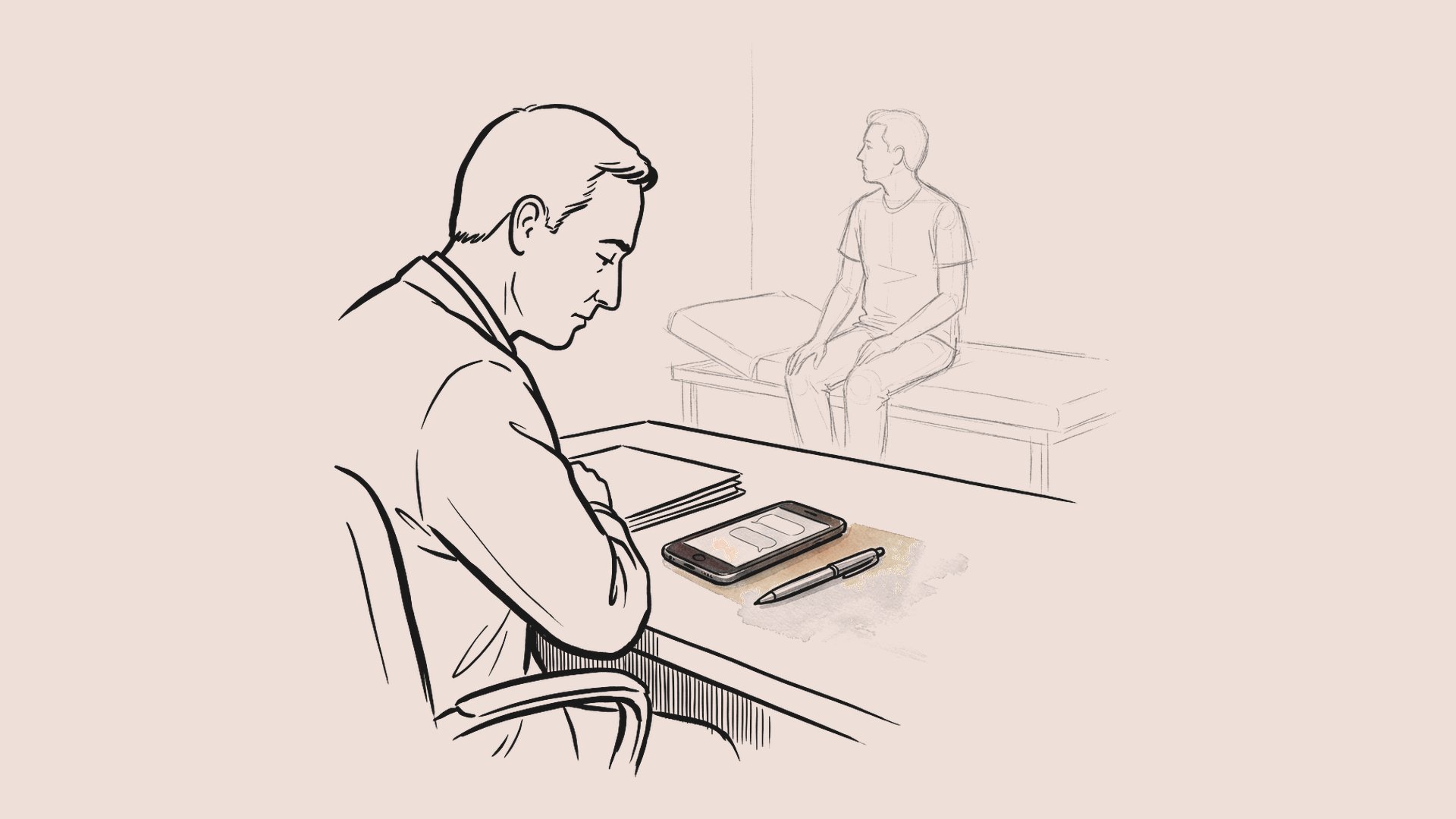
Usted va al médico en un sistema donde las herramientas de inteligencia artificial deben ser evaluadas y aprobadas antes de usarse en pacientes. Eso es lo que exige la ley europea para el software que sirve para diagnosticar, predecir, monitorear o tratar.
Entre diciembre de 2023 y enero de 2024, unos investigadores de la Universidad de Halmstad, en Suecia, encuestaron a 357 médicos que trabajaban en el sistema de salud de ese país. La mayoría eran hombres, 221 de 357, y poco más de la mitad tenía entre 35 y 54 años. Tres de cada cuatro trabajaban en hospitales o centros de salud públicos.
Los médicos escribieron, en respuestas abiertas, para qué usaban herramientas como ChatGPT. Según lo que contaron, las usaban como un colega o una segunda opinión para pensar diagnósticos difíciles; para escribir cartas a los pacientes en palabras más sencillas; para mantenerse al día con la investigación de su especialidad; y por curiosidad, para probar qué hacía la herramienta.
Un médico escribió que metió datos del paciente sin nombre en ChatGPT y la herramienta le sugirió varios diagnósticos posibles. Otro dijo que la usaba cuando dudaba de un diagnóstico. Otro contó que metió la información de un informe complicado de radiología en ChatGPT y la herramienta la resumió en una carta más fácil de entender para el paciente.
Bajo las reglas de la Unión Europea, ese uso clínico no está autorizado. Las herramientas de propósito general como ChatGPT no han pasado la evaluación que se exige a un dispositivo médico. Ninguna de las herramientas que describieron los médicos había sido aprobada por el hospital ni integrada a los sistemas clínicos.
El estudio tiene límites claros. Es sólo de Suecia, así que no dice nada sobre lo que hacen los médicos en otros países. Son respuestas escritas por los propios médicos, y casi nunca cuentan en detalle cómo usaban la herramienta. Y no midió si algún paciente fue ayudado o perjudicado.
Los investigadores concluyen que prohibir estas herramientas por decreto probablemente no las elimine, porque los médicos las usan para llenar vacíos que el sistema formal no cubre.
La pregunta que queda es para usted: antes de que una herramienta de inteligencia artificial toque sus datos de salud, ¿qué exige su propio país?
Qué significa para usted
Ese estudio es de médicos suecos, así que no dice nada sobre lo que ocurre en su país. Si le preocupa qué puede hacer una empresa con su cara, su voz o sus datos de salud, la pregunta útil es otra: qué exige su propia ley antes de que una herramienta de inteligencia artificial toque esa información. Eso no lo responde esta encuesta, y conviene no sacar de ella conclusiones sobre su sistema de salud.
Petersson, L., Irgang, L., Mauritzon, I. et al. (2026). Shadow AI in Swedish Health Care: Qualitative Analysis of Physicians’ Free-Text Answers. Journal of Medical Internet Research. https://doi.org/10.2196/93484
Quién pagó: La investigación fue financiada por la Fundación Sueca del Conocimiento a través del proyecto Business Models for Information-Driven Healthcare Ecosystems (subvención 220021) y la Multidisciplinary National Health Innovation Research School (subvención 20210047-H-02); los financiadores no tuvieron ningún papel en el diseño del estudio, la recogida de datos, el análisis, la interpretación ni la redacción.
No tome esto como consejo médico profesional.
Versión detalladaLos pasajes copiados del artículo, las ilustraciones y cada fuente con cuánto leímos de ella · 1123 palabras · unos 6 minLeerla →Cerrar
Médicos suecos usan ChatGPT con datos de pacientes sin que el hospital lo sepa
Una encuesta recogió lo que 357 médicos escribieron sobre cómo usan herramientas de inteligencia artificial que nadie les autorizó.
En una encuesta realizada en Suecia, 357 médicos describieron para qué usan herramientas de inteligencia artificial que sus hospitales no les autorizaron. Los investigadores agruparon esas respuestas en cuatro propósitos: trabajo clínico y decisiones médicas, tareas administrativas, investigación y desarrollo profesional, y curiosidad tecnológica. El estudio se publicó en el Journal of Medical Internet Research y lo firmaron Lena Petersson, Luís Irgang, Ingela Mauritzon y Magnus Holmén, de la Universidad de Halmstad. Lo financió la Fundación Sueca del Conocimiento y los autores declararon no tener conflictos de interés.
Los datos se recogieron entre diciembre de 2023 y enero de 2024 mediante un panel verificado por una empresa de encuestas. Invitaron a 557 médicos que ya usaban inteligencia artificial en su trabajo y respondieron 357, una tasa de respuesta cercana al 64%. La mayoría eran hombres, 221 de 357, y algo más de la mitad tenía entre 35 y 54 años. La mayoría trabajaba en el sector público, sobre todo en hospitales públicos, aunque también había médicos en centros privados y en instituciones académicas. El estudio analizó lo que los médicos escribieron en sus respuestas abiertas sobre los propósitos, las motivaciones y las preocupaciones de ese uso.
Los propios autores advierten de varios límites. El estudio se hizo solo en Suecia, así que no puede decir qué pasa en otro país1. Lo que analizaron fueron respuestas escritas, que rara vez detallan cómo el médico conversa con la herramienta, cómo verifica lo que le devuelve o cómo la integra en su trabajo diario2. Tampoco puede saberse cuántos médicos en total hacen esto, porque el objetivo no era contar frecuencias. Y la inteligencia artificial cambia tan rápido que las herramientas distintas de ChatGPT pueden volverse más relevantes con el tiempo.
El fenómeno tiene nombre: Shadow AI, o inteligencia artificial en la sombra. Se define como el uso de herramientas de inteligencia artificial no autorizadas por parte de profesionales médicos3. La razón de fondo es un desfase: la tecnología avanza mucho más rápido de lo que tardan los hospitales en adoptarla formalmente3. En la Unión Europea, ese uso tiene además una base legal concreta. Bajo el Reglamento de Dispositivos Médicos, el software que sirve para diagnosticar, predecir, monitorear o tratar es un dispositivo médico y debe pasar una evaluación de conformidad antes de usarse clínicamente4. ChatGPT no tiene el marcado europeo de conformidad, no pasó esa evaluación y no está clasificado como dispositivo médico. Cuando un médico lo usa para razonar sobre un diagnóstico o para comunicarse con un paciente, emplea una aplicación que carece de base legal para ese uso5.
¿Cómo funciona en la práctica? Un médico escribe en la herramienta los datos del caso —historia clínica, hallazgos del examen, resultados de pruebas— y le pide que sugiera diagnósticos diferenciales6. Otro introduce el informe de radiología y le pide que lo convierta en una carta comprensible para el paciente7. Un tercero programó sus propias herramientas, sobre todo con ChatGPT, para obtener información rápida antes de decidir8. Según los autores, estos usos se hacían sobre todo con herramientas de inteligencia artificial de uso general, principalmente ChatGPT, a las que accedían desde cuentas personales y dispositivos privados.
El riesgo no es abstracto. Los autores señalan que estas herramientas pueden tomar decisiones de forma autónoma, generar información médica que suena plausible pero es incorrecta, y procesar datos sensibles de pacientes a través de sistemas externos9.
Los investigadores reconocen que el fenómeno tiene dos caras. Por un lado, indica huecos donde el sistema hospitalario formal no cubre las necesidades de los profesionales, y muestra una manera en que los médicos refuerzan su conocimiento basado en la experiencia10. Por otro, crea riesgos para esos mismos médicos y para las organizaciones. Para avanzar, los autores proponen entornos controlados de experimentación —especies de laboratorios clínicos— y caminos de prueba supervisados11. También piden que se comunique con claridad qué usos están permitidos, cuáles se recomiendan y cuáles se prohíben, junto con formación en inteligencia artificial para el personal médico12.
Así lo leemos nosotros. Cuando un sistema formal no cubre una necesidad urgente, la gente busca soluciones por fuera de las vías oficiales, aunque eso signifique operar en zonas grises. Si los hospitales no ofrecen herramientas de inteligencia artificial aprobadas y fáciles de usar, es razonable esperar que los médicos sigan usando ChatGPT con datos de pacientes, y que los pacientes no se enteren de que sus datos pasaron por un sistema no autorizado. Nos equivocaríamos si los médicos abandonaran esas herramientas apenas se les ofreciera una alternativa oficial, o si los pacientes supieran siempre cuándo y cómo se usó inteligencia artificial en su atención.
Lo que un lector puede hacer con esto es concreto. En su próximo turno médico, puede preguntar si se usó alguna herramienta de inteligencia artificial para interpretar sus síntomas o redactar su historia clínica, y pedir que le expliquen qué datos suyos salieron del sistema del hospital. También puede preguntar en su hospital o clínica qué políticas existen sobre el uso de inteligencia artificial con datos de pacientes, y exigir que le informen si sus datos se compartieron con sistemas externos. Y puede consultar a la autoridad de protección de datos de su país sobre sus derechos.
Otros trabajos que leímos apuntan en la misma dirección. Un análisis de documentos oficiales de reguladores, gobiernos y colegios médicos encontró que las expectativas para adoptar con seguridad los transcriptores clínicos con inteligencia artificial están dispersas entre normas de privacidad, profesionales, de dispositivos médicos y de seguridad; pudimos leer solo el resumen, el texto completo está detrás de una suscripción. Ese mismo análisis propone que la guía futura defina estándares razonables de verificación, asigne tiempo protegido para revisar y exija monitorear el desempeño entre acentos, idiomas y formas de hablar; también leímos solo el resumen. Un tercer trabajo, sobre inteligencia artificial en psiquiatría en Europa, señala que los instrumentos existentes —incluidos el reglamento de inteligencia artificial, el de dispositivos médicos y el de protección de datos— establecen deberes de gobierno pero no ofrecen un marco armonizado de responsabilidad; de nuevo, solo pudimos leer el resumen.
La pregunta que queda no es si la inteligencia artificial llegó a la medicina, sino quién responde cuando algo sale mal. Los estudios que citamos no resuelven eso, y el de Suecia tampoco lo intenta. Pero dejan claro que la conversación sobre innovación y la conversación sobre responsabilidad van por caminos separados, y que usted, como paciente, está en el medio.
La próxima vez que se siente frente a un médico, pregunte: ¿se usó inteligencia artificial en mi atención, y qué pasó con mis datos?
De dónde sale cada dato de contexto, y cuánto leímos de cada documento
- Petersson, L., Irgang, L., Mauritzon, I. et al. (2026). Shadow AI in Swedish Health Care: Qualitative Analysis of Physicians’ Free-Text Answers. Journal of Medical Internet Research. https://doi.org/10.2196/93484 - el artículo del que trata esta nota — el artículo completo — el pasaje: "although our sample included physicians from diverse health care settings across Sweden, the study’s exclusive focus on a single national context may limit the transferability of our findings to other countries"
- Petersson, L., Irgang, L., Mauritzon, I. et al. (2026). Shadow AI in Swedish Health Care: Qualitative Analysis of Physicians’ Free-Text Answers. Journal of Medical Internet Research. https://doi.org/10.2196/93484 - el artículo del que trata esta nota — el artículo completo — el pasaje: "the free-text format yielded responses that captured the purposes, motivations, and concerns associated with Shadow AI use, but rarely included detailed accounts of how physicians interact with AI tools in practice"
- Petersson, L., Irgang, L., Mauritzon, I. et al. (2026). Shadow AI in Swedish Health Care: Qualitative Analysis of Physicians’ Free-Text Answers. Journal of Medical Internet Research. https://doi.org/10.2196/93484 - el artículo del que trata esta nota — el artículo completo — el pasaje: "The rapid emergence of artificial intelligence (AI) has outpaced its formal adoption in health care organizations, contributing to the emergence of Shadow AI, defined here as the use of unauthorized AI tools by medical professionals."
- Petersson, L., Irgang, L., Mauritzon, I. et al. (2026). Shadow AI in Swedish Health Care: Qualitative Analysis of Physicians’ Free-Text Answers. Journal of Medical Internet Research. https://doi.org/10.2196/93484 - el artículo del que trata esta nota — el artículo completo — el pasaje: "Under the MDR, software intended for diagnostic, predictive, monitoring, or therapeutic purposes qualifies as a medical device and must undergo conformity assessment before clinical use (Regulation (EU) 2017/745, Art. 2(1))"
- Petersson, L., Irgang, L., Mauritzon, I. et al. (2026). Shadow AI in Swedish Health Care: Qualitative Analysis of Physicians’ Free-Text Answers. Journal of Medical Internet Research. https://doi.org/10.2196/93484 - el artículo del que trata esta nota — el artículo completo — el pasaje: "General-purpose generative AI tools such as ChatGPT are not Conformité Européenne marked, have not undergone conformity assessment, and are not classified as medical devices. When physicians repurpose these tools for clinical reasoning or patient communication, they use applications that lack the legal basis for such use, rendering the practice unauthorized at the regulatory level, not merely informal or unendorsed at the organizational level."
- Petersson, L., Irgang, L., Mauritzon, I. et al. (2026). Shadow AI in Swedish Health Care: Qualitative Analysis of Physicians’ Free-Text Answers. Journal of Medical Internet Research. https://doi.org/10.2196/93484 - el artículo del que trata esta nota — el artículo completo — el pasaje: "I entered de-identified data (medical history, examination [or observed findings/clinical findings], test results) into ChatGPT, which suggested various differential diagnoses"
- Petersson, L., Irgang, L., Mauritzon, I. et al. (2026). Shadow AI in Swedish Health Care: Qualitative Analysis of Physicians’ Free-Text Answers. Journal of Medical Internet Research. https://doi.org/10.2196/93484 - el artículo del que trata esta nota — el artículo completo — el pasaje: "To generate letters for patients, information from complex radiology reports was entered into GPT, which summarized the information in patient letters in a way that is easier for them to understand"
- Petersson, L., Irgang, L., Mauritzon, I. et al. (2026). Shadow AI in Swedish Health Care: Qualitative Analysis of Physicians’ Free-Text Answers. Journal of Medical Internet Research. https://doi.org/10.2196/93484 - el artículo del que trata esta nota — el artículo completo — el pasaje: "I have programmed tools myself, mostly via ChatGPT, but also other open-source AI tools. I use these tools to quickly obtain information before decision-making, when appropriate"
- Petersson, L., Irgang, L., Mauritzon, I. et al. (2026). Shadow AI in Swedish Health Care: Qualitative Analysis of Physicians’ Free-Text Answers. Journal of Medical Internet Research. https://doi.org/10.2196/93484 - el artículo del que trata esta nota — el artículo completo — el pasaje: "Shadow AI introduces unique risks related to AI’s capacity for autonomous decision-making, its potential to generate plausible but incorrect medical information, and its ability to process sensitive patient data through external systems"
- Petersson, L., Irgang, L., Mauritzon, I. et al. (2026). Shadow AI in Swedish Health Care: Qualitative Analysis of Physicians’ Free-Text Answers. Journal of Medical Internet Research. https://doi.org/10.2196/93484 - el artículo del que trata esta nota — el artículo completo — el pasaje: "Shadow AI used by physicians presents both opportunities and risks for health care professionals and organizations. Shadow AI indicates gaps where formal hospital systems may fail to meet health care professionals’ needs and signals a way for physicians to strengthen their experience-based knowledge."
- Petersson, L., Irgang, L., Mauritzon, I. et al. (2026). Shadow AI in Swedish Health Care: Qualitative Analysis of Physicians’ Free-Text Answers. Journal of Medical Internet Research. https://doi.org/10.2196/93484 - el artículo del que trata esta nota — el artículo completo — el pasaje: "health care organizations may benefit from acknowledging the reality of Shadow AI and developing controlled and transparent environments for experimentation, such as clinical sandboxes, supervised testing pathways, or dedicated AI support structures"
- Petersson, L., Irgang, L., Mauritzon, I. et al. (2026). Shadow AI in Swedish Health Care: Qualitative Analysis of Physicians’ Free-Text Answers. Journal of Medical Internet Research. https://doi.org/10.2196/93484 - el artículo del que trata esta nota — el artículo completo — el pasaje: "Clearer communication regarding permitted, recommended, and prohibited uses, together with investments in AI literacy and professional guidance, may support safer and more consistent practices"
Petersson, L., Irgang, L., Mauritzon, I. et al. (2026). Shadow AI in Swedish Health Care: Qualitative Analysis of Physicians’ Free-Text Answers. Journal of Medical Internet Research. https://doi.org/10.2196/93484
Quién pagó: La investigación fue financiada por la Fundación Sueca del Conocimiento a través del proyecto Business Models for Information-Driven Healthcare Ecosystems (subvención 220021) y la Multidisciplinary National Health Innovation Research School (subvención 20210047-H-02); los financiadores no tuvieron ningún papel en el diseño del estudio, la recogida de datos, el análisis, la interpretación ni la redacción.
No tome esto como consejo médico profesional.
survey · Journal of medical Internet research · the paper, 28 Jul 2026 · free
Doctors Are Using ChatGPT on Patients. Sweden's Rules Say It Shouldn't.
Researchers asked 357 Swedish physicians what they do with unauthorized AI. Clinical decisions were among the answers.
Short version · the longer version follows, about 5 min
Ask the weeklyAI chat
Ask me about this study: who was studied, what it found, and what it does not say.
Conversations are saved for as long as weeklyAI exists, to improve the publication. Answers come in the language you write in.
- The study at a glance
- Who
- Physicians working in Swedish health care organizations
- How many
- 357 complete responses
- Where
- Sweden
- When
- December 2023 to January 2024
- Kind of study
- survey
- Who did it
- Halmstad University, Sweden
- The limit that matters
- Only Sweden; it reports what doctors said, not verified records or patient outcomes.
The study is only about Sweden. It cannot tell you what your own country requires, or what your own doctor does.
You sit in an exam room. Your doctor asks about your symptoms and your history. Somewhere in the building, or in their pocket, a chat window may be helping with the thinking.
In Sweden, researchers asked physicians about that. Between December 2023 and January 2024, they surveyed 357 doctors working in Swedish health care. Most worked in public hospitals and public health centers. The doctors typed their answers in their own words.
The doctors described using ChatGPT as a second opinion. One wrote about entering a patient's medical history, exam findings and test results, with identifying details removed, and getting a list of possible diagnoses back. Another used it for rare conditions. "In some cases, if one is uncertain about a diagnosis, one can consult ChatGPT," one wrote.
They also used it to turn complex radiology reports into letters patients could read. They used it to look up current research. They used it out of plain curiosity. Some built their own tools.
These doctors used ChatGPT through personal accounts and private devices. Their hospitals had not approved it. Under European Union rules, software used to diagnose or treat patients counts as a medical device and must be checked for safety before clinical use. General-purpose AI like ChatGPT has not gone through that check.
That makes its use for diagnosis or treatment unauthorized in the European Union. The study is only about Sweden. It cannot tell you what your own country requires, or what your own doctor does.
It also reports what doctors said in a survey. It did not look at records of what happened. It measured no patient outcomes, so it cannot show whether anyone was helped or hurt.
The researchers argue that banning these tools will not stop their use. They suggest hospitals build safe spaces to test AI instead. One question is worth carrying to your own doctor: before an AI tool touches my health data, what has to be approved, and by whom?
What this means for you
That study watched one country and one group of doctors, so it cannot tell you what rules apply where you live, or what your own doctor does behind the screen. What you can do is ask, plainly, before an AI tool touches your health information: who approved this, and can I see the approval. Watch for whether your country or state publishes its own rules on AI and medical devices, because that answer is still being written.
Petersson, L., Irgang, L., Mauritzon, I. et al. (2026). Shadow AI in Swedish Health Care: Qualitative Analysis of Physicians’ Free-Text Answers. Journal of Medical Internet Research. https://doi.org/10.2196/93484
Who paid: The research was funded by the Swedish Knowledge Foundation through the Business Models for Information-Driven Healthcare Ecosystems project (grant 220021) and the Multidisciplinary National Health Innovation Research School (grant 20210047-H-02); the funders had no role in study design, data collection, analysis, interpretation or writing.
Do not take this as professional medical advice.
The longer versionThe passages copied from the paper, the pictures, and every source with how much of it we read · 1023 words · about 5 minRead it →Close
Swedish doctors asked ChatGPT for a second opinion on hard cases
In a survey of 357 physicians, unauthorized AI was used for diagnoses, patient letters and research — and the study's own authors say prohibition alone won't stop it.
The study, published in the Journal of Medical Internet Research in 2026 by researchers at Halmstad University in Sweden, invited 557 physicians working in Swedish health care organizations and received 357 complete responses. It asked them, in open-ended written answers, what they used unauthorized artificial intelligence tools for. The short answer: almost everything. The authors sorted the answers into four groups — clinical work and decision-making, administrative work, research and professional development, and plain technological curiosity1.
The physicians described using these tools as a colleague and a second opinion. One wrote that they entered de-identified data — medical history, examination findings, test results — into ChatGPT, which suggested various differential diagnoses2. Another described entering information from complex radiology reports into GPT so it could summarize the material into patient letters that were easier to understand3. A third said they had programmed their own tools, mostly through ChatGPT but also other open-source AI tools, to quickly obtain information before decision-making4.
What makes this "Shadow AI" rather than ordinary software use is a specific legal fact. Under the European Union's Medical Device Regulation, software intended for diagnosis, prediction, monitoring or treatment counts as a medical device and must pass a conformity assessment before clinical use5. General-purpose tools like ChatGPT have not been through that assessment, are not Conformité Européenne marked and are not classified as medical devices. When a physician repurposes them for clinical reasoning or patient communication, the article states, the practice lacks a legal basis — it is unauthorized at the regulatory level, not merely informal at the organizational level6.
Put plainly, the mechanism is this: a doctor types de-identified patient details into a chatbot bought by no one and approved by no one. The chatbot answers in confident, fluent prose. That answer then enters a human clinical judgment — or a letter to a patient — with no regulator, no hospital IT department and often no manager aware it happened. The article names three risks specific to this setup: the tool can make decisions on its own, it can generate plausible but incorrect medical information, and it can process sensitive patient data through external systems7.
The study's own authors do not present this as simple rule-breaking. They write that Shadow AI indicates gaps where formal hospital systems fail to meet health care professionals' needs, and that it signals a way for physicians to strengthen their experience-based knowledge8. The tool fills a hole the institution left open. The same authors also propose what should happen next: health care organizations may benefit from acknowledging the reality of Shadow AI and building controlled, transparent environments for experimentation — clinical sandboxes, supervised testing pathways, dedicated AI support structures9 — alongside clearer communication about what is permitted, recommended and prohibited10.
Here is how we read it. Authority and speed are a dangerous pair. When a system is slow, people who believe their own judgment is sound will route around it — and a chatbot answers instantly, in fluent sentences, with the confidence of an expert. The study did not measure whether physicians verified those answers, and its free-text format rarely captured how they interacted with the tools in practice11. So watch for this in your own clinic or hospital: not whether AI is used, but who can say who approved it and how its answers get checked. You would know we are wrong if physicians in your country routinely demand regulatory proof before touching such a tool, or if hospitals publish verification routines that patients can read. Until then, the useful question is not "does my doctor use AI?" but "who approved the tool, and who checks its answers before they reach me?"
The limits matter here. The study covers only Sweden — its authors state that the exclusive focus on a single national context may limit how far the findings carry to other countries12. It is a cross-sectional survey: one snapshot, taken between December 2023 and January 2024, with 557 physicians invited and 357 complete responses. The response rate is reported as roughly 64 percent. The authors flag self-selection bias, since physicians interested in technology are more likely to answer. It reports what physicians said in free-text answers, not verified records of what happened in any clinic. It measured no patient outcomes, so it cannot show whether anyone was helped or hurt.
We also read work that looks at the same family of problems from a different angle. We could read only the summary of that study; the full paper sits behind a subscription. That is a boundary observation about a whole class of systems, not a verdict on the Swedish findings — and it is exactly the gap a reader in Latin America, the United States or Canada should watch for at home.
Where you live, the question is what your own rules say. The European Union has a binding regulation that classifies diagnostic and therapeutic software as medical devices5. Whether your country treats a chatbot used on your health data the same way is something the study cannot tell you — and neither can we from this article. What the study does show is that a regulator's rulebook and a hospital's procurement calendar move far slower than the tools themselves.
This is how we read it, and it changes what you can ask for. If a hospital can be bypassed, then a rule on paper is not the same as a rule in force. The practical move for a reader is to ask your own clinic or health authority two questions: does any AI touch my records, and under whose approval? You can also ask whether the tool's output was reviewed by a person before it affected your care. If the answer is a shrug, you have learned something about your own system — and about how far the rules have to travel before they reach your bedside. Where would you even go to ask?
Where each piece of context comes from, and how much of it we read
- Petersson, L., Irgang, L., Mauritzon, I. et al. (2026). Shadow AI in Swedish Health Care: Qualitative Analysis of Physicians’ Free-Text Answers. Journal of Medical Internet Research. https://doi.org/10.2196/93484 - the article this story is about — the whole article — the passage: "The rapid emergence of artificial intelligence (AI) has outpaced its formal adoption in health care organizations, contributing to the emergence of Shadow AI, defined here as the use of unauthorized AI tools by medical professionals."
- Petersson, L., Irgang, L., Mauritzon, I. et al. (2026). Shadow AI in Swedish Health Care: Qualitative Analysis of Physicians’ Free-Text Answers. Journal of Medical Internet Research. https://doi.org/10.2196/93484 - the article this story is about — the whole article — the passage: "I entered de-identified data (medical history, examination [or observed findings/clinical findings], test results) into ChatGPT, which suggested various differential diagnoses"
- Petersson, L., Irgang, L., Mauritzon, I. et al. (2026). Shadow AI in Swedish Health Care: Qualitative Analysis of Physicians’ Free-Text Answers. Journal of Medical Internet Research. https://doi.org/10.2196/93484 - the article this story is about — the whole article — the passage: "To generate letters for patients, information from complex radiology reports was entered into GPT, which summarized the information in patient letters in a way that is easier for them to understand"
- Petersson, L., Irgang, L., Mauritzon, I. et al. (2026). Shadow AI in Swedish Health Care: Qualitative Analysis of Physicians’ Free-Text Answers. Journal of Medical Internet Research. https://doi.org/10.2196/93484 - the article this story is about — the whole article — the passage: "I have programmed tools myself, mostly via ChatGPT, but also other open-source AI tools. I use these tools to quickly obtain information before decision-making, when appropriate"
- Petersson, L., Irgang, L., Mauritzon, I. et al. (2026). Shadow AI in Swedish Health Care: Qualitative Analysis of Physicians’ Free-Text Answers. Journal of Medical Internet Research. https://doi.org/10.2196/93484 - the article this story is about — the whole article — the passage: "Under the MDR, software intended for diagnostic, predictive, monitoring, or therapeutic purposes qualifies as a medical device and must undergo conformity assessment before clinical use (Regulation (EU) 2017/745, Art. 2(1))"
- Petersson, L., Irgang, L., Mauritzon, I. et al. (2026). Shadow AI in Swedish Health Care: Qualitative Analysis of Physicians’ Free-Text Answers. Journal of Medical Internet Research. https://doi.org/10.2196/93484 - the article this story is about — the whole article — the passage: "General-purpose generative AI tools such as ChatGPT are not Conformité Européenne marked, have not undergone conformity assessment, and are not classified as medical devices. When physicians repurpose these tools for clinical reasoning or patient communication, they use applications that lack the legal basis for such use, rendering the practice unauthorized at the regulatory level, not merely informal or unendorsed at the organizational level."
- Petersson, L., Irgang, L., Mauritzon, I. et al. (2026). Shadow AI in Swedish Health Care: Qualitative Analysis of Physicians’ Free-Text Answers. Journal of Medical Internet Research. https://doi.org/10.2196/93484 - the article this story is about — the whole article — the passage: "Shadow AI introduces unique risks related to AI’s capacity for autonomous decision-making, its potential to generate plausible but incorrect medical information, and its ability to process sensitive patient data through external systems"
- Petersson, L., Irgang, L., Mauritzon, I. et al. (2026). Shadow AI in Swedish Health Care: Qualitative Analysis of Physicians’ Free-Text Answers. Journal of Medical Internet Research. https://doi.org/10.2196/93484 - the article this story is about — the whole article — the passage: "Shadow AI used by physicians presents both opportunities and risks for health care professionals and organizations. Shadow AI indicates gaps where formal hospital systems may fail to meet health care professionals’ needs and signals a way for physicians to strengthen their experience-based knowledge."
- Petersson, L., Irgang, L., Mauritzon, I. et al. (2026). Shadow AI in Swedish Health Care: Qualitative Analysis of Physicians’ Free-Text Answers. Journal of Medical Internet Research. https://doi.org/10.2196/93484 - the article this story is about — the whole article — the passage: "health care organizations may benefit from acknowledging the reality of Shadow AI and developing controlled and transparent environments for experimentation, such as clinical sandboxes, supervised testing pathways, or dedicated AI support structures"
- Petersson, L., Irgang, L., Mauritzon, I. et al. (2026). Shadow AI in Swedish Health Care: Qualitative Analysis of Physicians’ Free-Text Answers. Journal of Medical Internet Research. https://doi.org/10.2196/93484 - the article this story is about — the whole article — the passage: "Clearer communication regarding permitted, recommended, and prohibited uses, together with investments in AI literacy and professional guidance, may support safer and more consistent practices"
- Petersson, L., Irgang, L., Mauritzon, I. et al. (2026). Shadow AI in Swedish Health Care: Qualitative Analysis of Physicians’ Free-Text Answers. Journal of Medical Internet Research. https://doi.org/10.2196/93484 - the article this story is about — the whole article — the passage: "the free-text format yielded responses that captured the purposes, motivations, and concerns associated with Shadow AI use, but rarely included detailed accounts of how physicians interact with AI tools in practice"
- Petersson, L., Irgang, L., Mauritzon, I. et al. (2026). Shadow AI in Swedish Health Care: Qualitative Analysis of Physicians’ Free-Text Answers. Journal of Medical Internet Research. https://doi.org/10.2196/93484 - the article this story is about — the whole article — the passage: "although our sample included physicians from diverse health care settings across Sweden, the study’s exclusive focus on a single national context may limit the transferability of our findings to other countries"
Petersson, L., Irgang, L., Mauritzon, I. et al. (2026). Shadow AI in Swedish Health Care: Qualitative Analysis of Physicians’ Free-Text Answers. Journal of Medical Internet Research. https://doi.org/10.2196/93484
Who paid: The research was funded by the Swedish Knowledge Foundation through the Business Models for Information-Driven Healthcare Ecosystems project (grant 220021) and the Multidisciplinary National Health Innovation Research School (grant 20210047-H-02); the funders had no role in study design, data collection, analysis, interpretation or writing.
Do not take this as professional medical advice.