interviews · Frontiers in digital health · la publicación, 15 sep 2026 · gratis
Entrevistaron a once empresas de voz; dos nunca pidieron revisión ética
Once empresas de voz con inteligencia artificial contaron cómo trabajan. Dos no pidieron revisión ética de ningún tipo y varias guardan los datos bajo llave. El estudio no prueba que esto ocurra en todas.
Versión breve · la versión detallada sigue, unos 7 min
Pregunte al chat de weeklyAI
Pregúnteme por este estudio: a quiénes se estudió, qué encontró y qué no dice.
Las conversaciones se guardan mientras exista weeklyAI, para mejorar la publicación. Se responde en el idioma en que usted escribe.
- El estudio, de un vistazo
- Quiénes
- Representantes de empresas nuevas que usan inteligencia artificial sobre la voz
- Cuántos
- once empresas (de 27 contactadas)
- Dónde
- Estados Unidos, Canadá, Reino Unido, Luxemburgo, Alemania, Francia, Australia y Argentina
- Cuándo
- entrevistas entre febrero y mayo de 2025
- Tipo de estudio
- entrevistas
- Quién lo hizo
- Weill Cornell Medical College y SUNY Downstate College of Medicine
- El límite que importa
- Solo once empresas respondieron y varias venían de una red académica de ética
Antes de hablarle a una aplicación de salud, pregunte quién la hizo, dónde guarda su voz y para qué país es el producto.
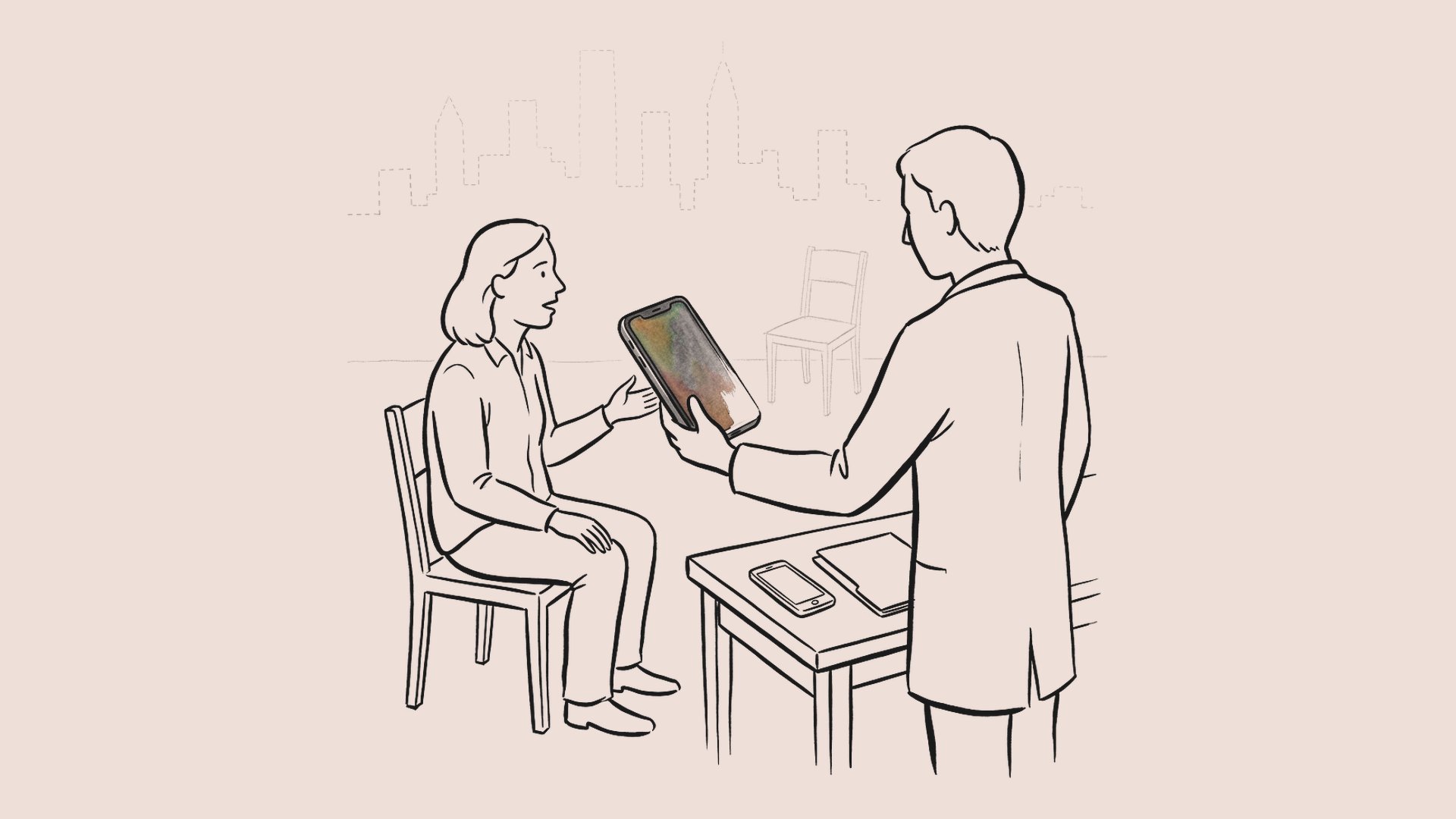
Investigadores de Weill Cornell y de SUNY Downstate, en Estados Unidos, entrevistaron a representantes de once empresas que usan inteligencia artificial sobre la voz para detectar Parkinson, Alzheimer, depresión y otras condiciones. De 27 empresas contactadas, once aceptaron hablar. Las entrevistas fueron entre febrero y mayo de 2025.
Los propios representantes describieron cómo graban. Unos usan teléfonos, otros computadoras, otros el navegador. No hay una norma común. "Distintos teléfonos tienen distintas frecuencias de grabación", dijo uno. Si el grupo enfermo se graba en un consultorio y el sano en su casa, la máquina puede separar los grupos por el ruido de fondo y no por la enfermedad.
La revisión ética varió. Dos de las once no buscaron ninguna. Uno de esos representantes preguntó qué era un IRB, el comité que revisa los estudios con personas. Otros pasaron por universidades o por juntas comerciales.
El consentimiento también varió. Dos empresas pidieron permiso casilla por casilla. Otra obtuvo exenciones por considerar sus estudios de riesgo no significativo. Otra redujo el formulario a una página. Varios dijeron que la voz no se puede anonimizar de verdad: si se cambia, deja de servir.
Cuatro de las once recogieron datos en países de ingreso bajo y medio, tres de ellos en India. Un representante dijo que allí se paga unos pocos dólares al día, mucho menos que en Estados Unidos. Una empresa planeaba vender primero en Canadá.
Siete de las once ya tenían productos comerciales hechos con esos datos, y tres más estaban en camino de tenerlos. Varias dijeron que prefieren mantener sus datos en privado, aunque algunas los compartieron abiertamente o con acuerdos. Cuando cada empresa entrena y prueba sus programas con sus propios datos cerrados, no hay una forma independiente de revisar si los resultados se sostienen. Algunas empresas sí compartieron datos abiertamente o con acuerdos.
El estudio no dice qué tan comunes son estas prácticas. Sólo once empresas respondieron, y varias llegaron por una red académica de ética, así que las que callaron podrían trabajar peor. Lo que cuenta cada empresa es su propio relato, sin verificación independiente. El estudio también menciona leyes de privacidad como HIPAA y GDPR, y pide revisar cómo tratan la voz.
Antes de hablarle a una aplicación de salud, pregunte quién la hizo, dónde guarda su voz y para qué país es el producto.
Qué significa para usted
Lo que el estudio muestra es limitado: once empresas contaron su propia versión, sin verificación externa, así que no concluya que todas trabajan igual. Cuando una aplicación de salud le pida su voz, pregunte quién la hizo, en qué país guarda las grabaciones y para qué mercado es el producto. Sobre su propia salud, consulte a un profesional.
Yuhan, A., Swain, S., Zhao, R. et al. (2026). The epistemic economy of vocal biomarker startups: a qualitative interview study of data practices and governance. Frontiers in Digital Health. https://doi.org/10.3389/fdgth.2026.1895383
Quién pagó: El artículo indica que la autora A.R. recibió apoyo del Paul B. Beeson Emerging Leaders Career Development Award in Aging (K76 AG079040) del National Institute on Aging y del premio Bridge2AI (OT2 OD032720) del NIH Common Fund; el artículo no dice si los financiadores tuvieron alguna influencia en el estudio y no menciona equipos ni programas cedidos a los investigadores.
No tome esto como consejo médico profesional.
Versión detalladaLos pasajes copiados del artículo, las ilustraciones y cada fuente con cuánto leímos de ella · 1340 palabras · unos 7 minLeerla →Cerrar
Once empresas de voz graban datos y solo algunas lo hacen en países pobres
Un estudio entrevistó a once empresas de "biomarcadores de voz" y encontró reglas desiguales sobre quién vigila las grabaciones, cómo se pide permiso y qué pasa con esos datos.
Imagínese que su médico pudiera detectar un problema de salud con solo escucharle hablar. Eso es, en palabras sencillas, lo que promete la tecnología de biomarcadores de voz: rasgos de la voz, solos o combinados, validados como indicadores de resultados clínicos1. La inteligencia artificial permitiría usarla para detectar y vigilar enfermedades como el Parkinson, el Alzheimer, la depresión y la insuficiencia cardíaca2.
Un grupo de investigadores quiso saber cómo trabajan por dentro las empresas que desarrollan esa tecnología. Entrevistaron a representantes de once empresas nuevas, de veintisiete a las que escribieron, entre febrero y mayo de 2025. Las entrevistas fueron semiestructuradas y virtuales, y los investigadores analizaron las respuestas por temas. Encontraron seis patrones que describen cómo se recogen y se gobiernan los datos de voz34567.
El primero: no existen estándares compartidos para grabar la voz, y eso introduce diferencias de equipo y de método que amenazan la validez científica. El segundo: la revisión ética varió desde procesos sólidos con varios comités hasta la ausencia total de supervisión3. El tercero: el consentimiento iba desde casillas detalladas hasta un consentimiento implícito con avisos mínimos4. El cuarto: los propios entrevistados reconocieron que la voz no puede anonimizarse del todo, lo que deja riesgos de privacidad sin resolver5. El quinto: cuatro de las once empresas recogieron datos en países de ingresos bajos y medios, tres de ellas en India, mientras apuntaban a vender en países de ingresos altos6. El sexto: los incentivos comerciales produjeron protocolos propietarios que impiden la validación independiente y frenan el intercambio de datos7.
Una de las empresas lo dijo así: "Trabajamos con pueblos indígenas en Perú, trabajamos con poblaciones universitarias en América Latina y Estados Unidos, trabajamos con personas mayores en centros de cuidados en España"8. Otra explicó la diferencia de trato: "En India, son unos pocos dólares al día. En Estados Unidos, sería mucho más"9.
Conviene detenerse en los límites. Solo once de veintisiete empresas aceptaron participar, y las autoras advierten que su muestra describe patrones presentes en estas empresas, no la frecuencia de esas prácticas en todo el sector, y que sus hallazgos podrían no ser generalizables10. Además, la selección favoreció a empresas ya vinculadas con la comunidad académica y de ética, es decir, las que más probabilidades tenían de haber pensado en revisión ética, consentimiento y procedencia de datos11. Las entrevistas recogen lo que las empresas dicen de sí mismas, no lo que se verificó de forma independiente. Y ninguna entrevistada describió un plan para qué hacer con los datos si la empresa cierra12.
¿Por qué importa la voz y no, por ejemplo, un análisis de sangre? Porque la voz es a la vez señal clínica e identidad. El artículo describe un estudio en el que, bajo el estándar de HIPAA en Estados Unidos, las huellas de voz figuran entre los dieciocho identificadores que deben retirarse para anonimizar datos. El artículo describe un estudio en el que, bajo el reglamento europeo de protección de datos, las grabaciones de voz son datos biométricos con protecciones especiales cuando se procesan para identificar a una persona5. Una de las empresas lo resumió así: "La de-identificación de la voz es muy problemática… no puedo cambiar la voz porque… entonces no sirve". Ese es el mecanismo, paso a paso: la empresa graba, la voz viaja a un servidor, el modelo aprende de ella, y el mismo dato que enseña a detectar una enfermedad puede señalar a quien la prestó.
No es un problema aislado de esta tecnología. Un análisis de documentos oficiales sobre asistentes de inteligencia artificial que transcriben consultas médicas —leímos solo el resumen, el texto completo está detrás de una suscripción— encontró que la transparencia es común en las guías, pero el consentimiento es desigual, y que la gobernanza de la privacidad se extiende desde el almacenamiento seguro hasta la identificabilidad de la voz13. Ese trabajo también señala que la verificación por parte del médico es el salvavidas central, aunque las guías no definen qué verificación es razonable14.
Otro trabajo sobre inteligencia artificial en psiquiatría —también leído solo en su resumen— advierte que estas herramientas pueden redistribuir la autoridad sobre quién decide qué es cierto y complicar quién responde cuando algo sale mal15, y que cumplir con la regulación no determina por sí solo si la atención fue razonable16. La responsabilidad, según ese trabajo, debería repartirse entre desarrolladores, quienes despliegan la herramienta y quienes atienden, según el control y la posibilidad de prevenir17.
¿Qué se propone? Los propios autores del estudio piden requisitos estandarizados de procedencia de datos, una revisión de cómo se clasifica el riesgo de la voz bajo marcos como HIPAA y el reglamento europeo, y gobernanza participativa que incluya a las comunidades de origen18. El trabajo sobre asistentes de IA recomienda definir estándares razonables de verificación y vigilar el desempeño entre acentos, idiomas y diferencias del habla19.
Aquí es donde hablamos nosotros. Cuando una empresa recoge datos personales en un país y los procesa en otro, suele quedar sujeta a las reglas del lugar donde los guarda o los usa, no a las del lugar donde los obtuvo. Por eso, si su voz fue grabada por una de estas empresas, es probable que ninguna autoridad de su propio país esté en posición de atenderle un reclamo, porque los datos y las decisiones sobre ellos quedaron bajo jurisdicciones extranjeras. Es posible incluso que usted nunca sepa que su voz terminó en servidores de otro país. Sabríamos que nos equivocamos si las empresas registraran cada grabación con su país de origen, si las autoridades locales tuvieran competencia reconocida sobre esos datos y si existieran convenios entre países que permitieran reclamar donde uno vive aunque los datos estén fuera.
Lo mismo ocurre con lo que se cede. Las personas entregan sus datos a cambio de un servicio o de una compensación pequeña, sin calcular que esa grabación puede acumularse con otras y usarse después para clasificarlas. Es probable que quienes dieron su voz por unos pocos dólares no imaginaran que alimentaría un producto vendido en Estados Unidos o Canadá, ni recibieran después ninguna noticia sobre en qué terminó. Nos equivocaríamos si las empresas avisaran por escrito, en lenguaje sencillo, que la voz se usará para un producto comercial en otro país, pidieran un consentimiento específico para eso e informaran a la persona cuando el producto sale al mercado.
Y hay un tercer patrón que conviene mirar de frente. Las redes de producción y de conocimiento que cruzan fronteras tienden a concentrar el valor en las empresas grandes y en los países donde están sus casas matrices, mientras la materia prima se reparte en muchos lugares. Cabe esperar que las comunidades latinoamericanas que aportaron voces no hayan tenido papel alguno en decidir cómo se usarían, ni reciban parte de las ganancias. Veríamos que nos equivocamos si existieran contratos que reconozcan un pago o una regalía a las comunidades de origen, comités locales con poder real de veto y empresas que expliquen por qué las reglas del país de origen también les aplican.
La pregunta práctica es qué puede hacer usted. Ante cualquier app, clínica o estudio que le pida grabar su voz, pregunte en qué país se guardará la grabación y qué autoridad de su propio país puede atender un reclamo. Pregunte quién es dueño de las grabaciones, si hay algún pago o beneficio para su comunidad y quién decide si se pueden vender. Pida que la respuesta quede por escrito antes de firmar, y guarde ese documento. No se trata de rechazar la tecnología: se trata de saber a qué se está comprometiendo.
Si algo de esto le suena, la próxima vez que una aplicación le pida su voz para "mejorar el servicio", la pregunta que puede llevar consigo es sencilla: ¿en qué país queda mi voz, y a quién le reclamo si algo sale mal?
De dónde sale cada dato de contexto, y cuánto leímos de cada documento
- Yuhan, A., Swain, S., Zhao, R. et al. (2026). The epistemic economy of vocal biomarker startups: a qualitative interview study of data practices and governance. Frontiers in Digital Health. https://doi.org/10.3389/fdgth.2026.1895383 - el artículo del que trata esta nota — el artículo completo — el pasaje: "Vocal biomarkers are defined as vocal features, alone or in combination, validated as indicators of clinical outcomes."
- Yuhan, A., Swain, S., Zhao, R. et al. (2026). The epistemic economy of vocal biomarker startups: a qualitative interview study of data practices and governance. Frontiers in Digital Health. https://doi.org/10.3389/fdgth.2026.1895383 - el artículo del que trata esta nota — el artículo completo — el pasaje: "Vocal biomarker technology has emerged as a promising non-invasive health assessment tool, with artificial intelligence enabling the screening, diagnosis, and monitoring of conditions including Parkinson's disease, Alzheimer's disease, depression, and heart failure."
- Yuhan, A., Swain, S., Zhao, R. et al. (2026). The epistemic economy of vocal biomarker startups: a qualitative interview study of data practices and governance. Frontiers in Digital Health. https://doi.org/10.3389/fdgth.2026.1895383 - el artículo del que trata esta nota — el artículo completo — el pasaje: "IRB engagement ranged from robust multi-site review to complete absence of oversight;"
- Yuhan, A., Swain, S., Zhao, R. et al. (2026). The epistemic economy of vocal biomarker startups: a qualitative interview study of data practices and governance. Frontiers in Digital Health. https://doi.org/10.3389/fdgth.2026.1895383 - el artículo del que trata esta nota — el artículo completo — el pasaje: "consent practices varied from granular opt-in to implied consent and minimal disclosures;"
- Yuhan, A., Swain, S., Zhao, R. et al. (2026). The epistemic economy of vocal biomarker startups: a qualitative interview study of data practices and governance. Frontiers in Digital Health. https://doi.org/10.3389/fdgth.2026.1895383 - el artículo del que trata esta nota — el artículo completo — el pasaje: "voice data were acknowledged as inherently non-anonymizable, creating unresolved privacy and re-identification risks;"
- Yuhan, A., Swain, S., Zhao, R. et al. (2026). The epistemic economy of vocal biomarker startups: a qualitative interview study of data practices and governance. Frontiers in Digital Health. https://doi.org/10.3389/fdgth.2026.1895383 - el artículo del que trata esta nota — el artículo completo — el pasaje: "data sourcing was asymmetric, with collection from low- and middle-income countries in 4 out of 11 startups while targeting commercial deployment in high-income countries;"
- Yuhan, A., Swain, S., Zhao, R. et al. (2026). The epistemic economy of vocal biomarker startups: a qualitative interview study of data practices and governance. Frontiers in Digital Health. https://doi.org/10.3389/fdgth.2026.1895383 - el artículo del que trata esta nota — el artículo completo — el pasaje: "commercial incentives produced proprietary protocols that preclude independent validation and impede data sharing."
- Yuhan, A., Swain, S., Zhao, R. et al. (2026). The epistemic economy of vocal biomarker startups: a qualitative interview study of data practices and governance. Frontiers in Digital Health. https://doi.org/10.3389/fdgth.2026.1895383 - el artículo del que trata esta nota — el artículo completo — el pasaje: "We work with indigenous people in Peru, we work with university populations in Latin America and the United States, we work with a third age in hospice populations in Spain."
- Yuhan, A., Swain, S., Zhao, R. et al. (2026). The epistemic economy of vocal biomarker startups: a qualitative interview study of data practices and governance. Frontiers in Digital Health. https://doi.org/10.3389/fdgth.2026.1895383 - el artículo del que trata esta nota — el artículo completo — el pasaje: "In India, it's a few dollars a day. In the U.S., it would be a lot more"
- Yuhan, A., Swain, S., Zhao, R. et al. (2026). The epistemic economy of vocal biomarker startups: a qualitative interview study of data practices and governance. Frontiers in Digital Health. https://doi.org/10.3389/fdgth.2026.1895383 - el artículo del que trata esta nota — el artículo completo — el pasaje: "our sample of eleven startups characterizes patterns present among these companies; it cannot establish the prevalence of these practices among startups across the vocal biomarker field, and our findings may not be generalizable."
- Yuhan, A., Swain, S., Zhao, R. et al. (2026). The epistemic economy of vocal biomarker startups: a qualitative interview study of data practices and governance. Frontiers in Digital Health. https://doi.org/10.3389/fdgth.2026.1895383 - el artículo del que trata esta nota — el artículo completo — el pasaje: "recruitment through the Bridge2AI-Voice Consortium's symposium networking list likely favored companies already engaged with the academic and ethics community"
- Yuhan, A., Swain, S., Zhao, R. et al. (2026). The epistemic economy of vocal biomarker startups: a qualitative interview study of data practices and governance. Frontiers in Digital Health. https://doi.org/10.3389/fdgth.2026.1895383 - el artículo del que trata esta nota — el artículo completo — el pasaje: "No interviewee described a plan for data disposition upon dissolution."
- Atiku SO. (2026). Regulating the drafting fiction: A qualitative content analysis of official guidance and regulator documents on AI scribe adoption and use in healthcare. PLOS Digital Health. https://doi.org/10.1371/journal.pdig.0001776 — solo el resumen - no se pudo obtener el texto completo — el pasaje: "Across guidelines, transparency is common, consent is uneven, verification is treated as the central safeguard in direct AI-scribe guidance, privacy governance extends from secure storage to voice identifiability, and medical device classification shifts when transcription becomes summarisation."
- Atiku SO. (2026). Regulating the drafting fiction: A qualitative content analysis of official guidance and regulator documents on AI scribe adoption and use in healthcare. PLOS Digital Health. https://doi.org/10.1371/journal.pdig.0001776 — solo el resumen - no se pudo obtener el texto completo — el pasaje: "Organisational safety cases, vendor due diligence and data protection assessments narrow product-level uncertainty, but they do not define the encounter-level support needed for clinicians to detect hallucination, omission, automation bias or model drift."
- Madeira L, Águas C, Schouler-Ocak M, Samochowiec J, Galderisi S, Pinto da Costa M. (2026). Liability and Standard of Care in AI-Driven Psychiatric Practice: European Viewpoint. Journal of Medical Internet Research. https://doi.org/10.2196/99894 — solo el resumen - no se pudo obtener el texto completo — el pasaje: "These applications may improve access, continuity, efficiency, and pattern recognition, but they also redistribute epistemic authority and complicate responsibility when harm occurs."
- Madeira L, Águas C, Schouler-Ocak M, Samochowiec J, Galderisi S, Pinto da Costa M. (2026). Liability and Standard of Care in AI-Driven Psychiatric Practice: European Viewpoint. Journal of Medical Internet Research. https://doi.org/10.2196/99894 — solo el resumen - no se pudo obtener el texto completo — el pasaje: "Regulatory compliance may inform later legal assessment, but it does not determine whether psychiatric care was reasonable."
- Madeira L, Águas C, Schouler-Ocak M, Samochowiec J, Galderisi S, Pinto da Costa M. (2026). Liability and Standard of Care in AI-Driven Psychiatric Practice: European Viewpoint. Journal of Medical Internet Research. https://doi.org/10.2196/99894 — solo el resumen - no se pudo obtener el texto completo — el pasaje: "Accountability should be distributed across developers, deployers, and clinicians according to control and preventability."
- Yuhan, A., Swain, S., Zhao, R. et al. (2026). The epistemic economy of vocal biomarker startups: a qualitative interview study of data practices and governance. Frontiers in Digital Health. https://doi.org/10.3389/fdgth.2026.1895383 - el artículo del que trata esta nota — el artículo completo — el pasaje: "Standardized data provenance requirements, reassessment of voice data's risk classification under existing privacy frameworks (e.g., HIPAA, GDPR), and participatory governance including source communities are urgently needed"
- Atiku SO. (2026). Regulating the drafting fiction: A qualitative content analysis of official guidance and regulator documents on AI scribe adoption and use in healthcare. PLOS Digital Health. https://doi.org/10.1371/journal.pdig.0001776 — solo el resumen - no se pudo obtener el texto completo — el pasaje: "Future guidance should define reasonable verification standards, allocate protected review time, resource consent refusal pathways and require monitoring of performance across accents, language and speech differences."
Yuhan, A., Swain, S., Zhao, R. et al. (2026). The epistemic economy of vocal biomarker startups: a qualitative interview study of data practices and governance. Frontiers in Digital Health. https://doi.org/10.3389/fdgth.2026.1895383
Quién pagó: El artículo indica que la autora A.R. recibió apoyo del Paul B. Beeson Emerging Leaders Career Development Award in Aging (K76 AG079040) del National Institute on Aging y del premio Bridge2AI (OT2 OD032720) del NIH Common Fund; el artículo no dice si los financiadores tuvieron alguna influencia en el estudio y no menciona equipos ni programas cedidos a los investigadores.
No tome esto como consejo médico profesional.
Los hallazgos de otros estudios que aquí se mencionan los conocemos por este documento, que fue el que leímos; no abrimos cada uno de esos estudios.
interviews · Frontiers in digital health · the paper, 15 Sep 2026 · free
They Recorded Voices in India and Planned to Sell in Canada
Eleven voice-AI startups described their own data practices to university researchers. Two had sought no ethics review at all, and the study cannot say how common that is.
Short version · the longer version follows, about 6 min
Ask the weeklyAI chat
Ask me about this study: who was studied, what it found, and what it does not say.
Conversations are saved for as long as weeklyAI exists, to improve the publication. Answers come in the language you write in.
- The study at a glance
- Who
- representatives of vocal biomarker startups
- How many
- eleven
- Where
- worldwide (United States, Canada, United Kingdom, Luxembourg, Germany, France, Australia, Argentina)
- When
- interviews conducted between February 2025 and May 2025
- Kind of study
- interviews
- Who did it
- Weill Cornell Medical College and SUNY Downstate College of Medicine
- The limit that matters
- Only eleven of 27 companies answered, and they were recruited through an academic ethics network.
Pay for voice data in India compared with the United States
One startup said people in India were paid a few dollars a day, while in the U.S. it would be a lot more.
Before you speak into a health app, look for who is collecting your voice, where they store it, and whether a university or government board reviewed the study.
Researchers at Weill Cornell Medical College asked 27 small companies to explain how they collect voices. Eleven said yes. All of them use artificial intelligence on recordings of the human voice, hoping to screen for Parkinson's disease, Alzheimer's disease, depression and other conditions.
The companies described collecting voices through phones, laptops and web browsers. No shared standard exists for this work. One representative said a voice recorded on one laptop differs from the same voice on another, and that different phones record at different frequencies. If a sick group is recorded in a clinic and healthy people at home, a computer can sort them by room and device instead of by disease.
Oversight varied. Nine of the eleven had some form of ethics review, from university committees to commercial boards. Two had sought none. One of those was a business whose founder did not know about ethics review, and it planned to get review later through a university. The other said team members at universities "do not require that information."
Consent ranged from item-by-item checkboxes to one-page forms. One company said its studies sometimes received a waiver of consent. Several said voice cannot truly be anonymized: you cannot change a voice without ruining its medical use. That is a claim about what companies told the researchers, not a fact anyone verified.
Four of the eleven collected voices in poorer countries, three of them in India. One paid people there "a few dollars a day" while paying more in the United States. Yet that same company said Canada would be its first market, and registered its app there as a medical device.
Seven of the eleven built commercial products from those recordings. Most kept the data private, so no outside researcher can check whether the results hold up. One said plainly: "A lot of our data is not publicly available because we're an industry research lab, so it's proprietary."
The study cannot say how common any of this is. Only eleven of 27 companies answered, and they were recruited through an academic ethics network, so the silent ones may follow weaker practices. The article says voiceprints are among the eighteen identifiers under HIPAA, and that under GDPR voice recordings are treated as biometric data with special protections when used to identify a person.
Before you speak into a health app, look for who is collecting your voice, where they store it, and whether a university or government board reviewed the study.
What this means for you
The study cannot tell you how common any of this is, so weigh a voice app the way you would weigh any health product from a small company. Ask who holds the recordings, where they are stored, and whether an ethics board outside the company ever reviewed the work. If a voice test touches your own health, that question belongs to a doctor.
Yuhan, A., Swain, S., Zhao, R. et al. (2026). The epistemic economy of vocal biomarker startups: a qualitative interview study of data practices and governance. Frontiers in Digital Health. https://doi.org/10.3389/fdgth.2026.1895383
Who paid: The article states that author A.R. was supported by a Paul B. Beeson Emerging Leaders Career Development Award in Aging (K76 AG079040) from the National Institute on Aging and by the Bridge2AI award (OT2 OD032720) from the NIH Common Fund; the article does not say whether the funders had any say in the study, and it names no equipment or software lent to the researchers.
Do not take this as professional medical advice.
The findings of other studies mentioned here are known to us through this document, which is the one we read; we did not open each of those studies.
The longer versionThe passages copied from the paper, the pictures, and every source with how much of it we read · 1145 words · about 6 minRead it →Close
Startups Are Recording Voices in Latin America and Selling the Results Elsewhere. A Study Asked What Rules They Followed.
Eleven companies agreed to talk. Four took voice data from lower-income countries. Two had sought no ethics review of their own.
Vocal biomarker technology uses artificial intelligence to screen for, diagnose, or monitor conditions including Parkinson's disease, Alzheimer's disease, depression, and heart failure, according to the study1. A vocal biomarker is a vocal feature, or a combination of them, validated as an indicator of a clinical outcome2.
The study, published 15 September 2026 in Frontiers in Digital Health, reports interviews conducted between February 2025 and May 2025 with representatives from eleven vocal biomarker startups. Twenty-seven companies were approached; eleven participated3. The article lists affiliations for all five authors, including Yuhan at SUNY Downstate College of Medicine and Rameau at the Sean Parker Institute for the Voice at Weill Cornell Medical College. One author is an advisor for Sound Health Systems and Pentax Medical and founded VAST Health LLC. The article also states that this author was supported by a National Institute on Aging career award and an NIH Common Fund award.
Six themes emerged. Ethics review ranged from robust multi-site review to complete absence of oversight4. Consent practices ran from granular opt-in to implied consent and minimal disclosures5. Voice data were acknowledged as inherently non-anonymizable, creating unresolved privacy and re-identification risks6. Data sourcing was asymmetric, with collection from low- and middle-income countries in four of eleven startups while targeting commercial deployment in high-income countries7. Commercial incentives produced proprietary protocols that preclude independent validation and impede data sharing8. And the absence of shared data standards created hardware and protocol differences that risk undermining scientific validity.
Of the four startups collecting data in lower-income countries, three collected in India9. One described working with indigenous people in Peru and with university populations in Latin America and the United States10. Compensation differed by country: "In India, it's a few dollars a day. In the U.S., it would be a lot more," one representative said11. Two of the eleven startups had sought no ethics review of their own. Seven had developed commercial products from their research datasets, and three more were in the process.
No interviewee described a plan for what would happen to the recordings if the company closed12. One company had already halted operations after an unsuccessful fundraising round.
The study cannot say how common any of this is. Its eleven companies were recruited through an academic ethics network, which likely favored companies already engaged with ethics review, consent, and data standards3. The interviews record what representatives said about themselves, not what was independently verified, and social desirability may have encouraged favorable self-presentation. Members of the research team, including the senior author, are investigators in the consortium working to standardize voice data in this field, which may have shaped what was disclosed and how it was read. The transcripts cannot be released even in de-identified form because they contain commercially sensitive information about identifiable companies and releasing them would risk re-identification of participants.
To understand why this matters, it helps to see what the technology actually does. A person speaks into a phone or a laptop. Software measures features of the voice. An algorithm trained on recordings from people with and without a condition looks for a pattern. The promise is that voice can be collected non-invasively with ubiquitous smartphone technology1. The problem is that everything from the microphone to the room to the language spoken can change what the software hears.
This is not the field's first attempt to sort out its rules. A study of official guidance on AI scribes found that transparency is common across guidelines, consent is uneven, and privacy governance extends from secure storage to voice identifiability. We could read only the summary of that study; the full paper is behind a subscription13. The same summary found that guidance does not define the support clinicians need to detect hallucination, omission, or model drift14, and recommended that future guidance define verification standards, protect review time, and require monitoring across accents, languages, and speech differences15.
A separate review of AI in psychiatry — also read only in summary — found that these applications may improve access and efficiency but also redistribute who gets to decide, and complicate responsibility when harm occurs16. That review distinguishes binding law from guidance, and regulation written in advance from liability decided afterward17, and notes that existing European instruments establish governance duties but do not provide a harmonized fault-based liability framework for AI-assisted health care18. Compliance may inform a later legal assessment, but it does not determine whether care was reasonable19.
Here is how we read it. The pattern is not that voice tools are dangerous. It is that the recordings are treated as raw material rather than as something belonging to the person who spoke. When a company describes "data collection" or "data sourcing," the person whose voice was taken tends to disappear from the sentence. We expect that recordings made in Latin America will remain in company or cloud storage after the study ends. We could be wrong. A company that publishes a binding plan for deleting recordings at a set date, or that can show it removed contributors' data on request, would prove us wrong.
That is why the next time you see a privacy notice or a regulator's decision about a voice tool, the useful question is not whether the company says it is compliant. It is: whose voice was taken, where is the recording stored, and what happens to it if the company closes. Ask in writing. A written request leaves a record. And when a company says its tool is approved, ask which authority approved it and under what rule. If the only answer is the company itself, that is not an outside check.
The authors call for standardized requirements for where data came from, a fresh look at how voice is classified under privacy frameworks like HIPAA and GDPR, and governance that includes the communities whose voices were recorded20. Voice recordings are already treated as identifiable under HIPAA's Safe Harbor standard and as biometric data under GDPR when used to identify a person.
What would have to happen next, if the authors' recommendations were followed, is that a company recording voices in Latin America would have to document the device, the room, the task, and how the diagnosis was confirmed; obtain independent ethics review even without a university partner; offer written opt-in consent that explains re-identifiability and withdrawal; and share in the benefit with the communities whose data it used20. None of that requires new law today. It requires someone to ask for it.
What to ask, in writing, of any clinic, employer, or insurer using voice screening where you live: Where is my recording stored, who can access it, and when is it deleted?
Where each piece of context comes from, and how much of it we read
- Yuhan, A., Swain, S., Zhao, R. et al. (2026). The epistemic economy of vocal biomarker startups: a qualitative interview study of data practices and governance. Frontiers in Digital Health. https://doi.org/10.3389/fdgth.2026.1895383 - the article this story is about — the whole article — the passage: "Vocal biomarker technology has emerged as a promising non-invasive health assessment tool, with artificial intelligence enabling the screening, diagnosis, and monitoring of conditions including Parkinson's disease, Alzheimer's disease, depression, and heart failure."
- Yuhan, A., Swain, S., Zhao, R. et al. (2026). The epistemic economy of vocal biomarker startups: a qualitative interview study of data practices and governance. Frontiers in Digital Health. https://doi.org/10.3389/fdgth.2026.1895383 - the article this story is about — the whole article — the passage: "Vocal biomarkers are defined as vocal features, alone or in combination, validated as indicators of clinical outcomes."
- Yuhan, A., Swain, S., Zhao, R. et al. (2026). The epistemic economy of vocal biomarker startups: a qualitative interview study of data practices and governance. Frontiers in Digital Health. https://doi.org/10.3389/fdgth.2026.1895383 - the article this story is about — the whole article — the passage: "our sample of eleven startups characterizes patterns present among these companies; it cannot establish the prevalence of these practices among startups across the vocal biomarker field, and our findings may not be generalizable."
- Yuhan, A., Swain, S., Zhao, R. et al. (2026). The epistemic economy of vocal biomarker startups: a qualitative interview study of data practices and governance. Frontiers in Digital Health. https://doi.org/10.3389/fdgth.2026.1895383 - the article this story is about — the whole article — the passage: "IRB engagement ranged from robust multi-site review to complete absence of oversight;"
- Yuhan, A., Swain, S., Zhao, R. et al. (2026). The epistemic economy of vocal biomarker startups: a qualitative interview study of data practices and governance. Frontiers in Digital Health. https://doi.org/10.3389/fdgth.2026.1895383 - the article this story is about — the whole article — the passage: "consent practices varied from granular opt-in to implied consent and minimal disclosures;"
- Yuhan, A., Swain, S., Zhao, R. et al. (2026). The epistemic economy of vocal biomarker startups: a qualitative interview study of data practices and governance. Frontiers in Digital Health. https://doi.org/10.3389/fdgth.2026.1895383 - the article this story is about — the whole article — the passage: "voice data were acknowledged as inherently non-anonymizable, creating unresolved privacy and re-identification risks;"
- Yuhan, A., Swain, S., Zhao, R. et al. (2026). The epistemic economy of vocal biomarker startups: a qualitative interview study of data practices and governance. Frontiers in Digital Health. https://doi.org/10.3389/fdgth.2026.1895383 - the article this story is about — the whole article — the passage: "data sourcing was asymmetric, with collection from low- and middle-income countries in 4 out of 11 startups while targeting commercial deployment in high-income countries;"
- Yuhan, A., Swain, S., Zhao, R. et al. (2026). The epistemic economy of vocal biomarker startups: a qualitative interview study of data practices and governance. Frontiers in Digital Health. https://doi.org/10.3389/fdgth.2026.1895383 - the article this story is about — the whole article — the passage: "commercial incentives produced proprietary protocols that preclude independent validation and impede data sharing."
- Yuhan, A., Swain, S., Zhao, R. et al. (2026). The epistemic economy of vocal biomarker startups: a qualitative interview study of data practices and governance. Frontiers in Digital Health. https://doi.org/10.3389/fdgth.2026.1895383 - the article this story is about — the whole article — the passage: "Four of the eleven startups collected data from low- and middle-income countries (LMICs), three of them in India."
- Yuhan, A., Swain, S., Zhao, R. et al. (2026). The epistemic economy of vocal biomarker startups: a qualitative interview study of data practices and governance. Frontiers in Digital Health. https://doi.org/10.3389/fdgth.2026.1895383 - the article this story is about — the whole article — the passage: "We work with indigenous people in Peru, we work with university populations in Latin America and the United States, we work with a third age in hospice populations in Spain."
- Yuhan, A., Swain, S., Zhao, R. et al. (2026). The epistemic economy of vocal biomarker startups: a qualitative interview study of data practices and governance. Frontiers in Digital Health. https://doi.org/10.3389/fdgth.2026.1895383 - the article this story is about — the whole article — the passage: "In India, it's a few dollars a day. In the U.S., it would be a lot more"
- Yuhan, A., Swain, S., Zhao, R. et al. (2026). The epistemic economy of vocal biomarker startups: a qualitative interview study of data practices and governance. Frontiers in Digital Health. https://doi.org/10.3389/fdgth.2026.1895383 - the article this story is about — the whole article — the passage: "No interviewee described a plan for data disposition upon dissolution."
- Atiku SO. (2026). Regulating the drafting fiction: A qualitative content analysis of official guidance and regulator documents on AI scribe adoption and use in healthcare. PLOS Digital Health. https://doi.org/10.1371/journal.pdig.0001776 — only the abstract - the full text could not be fetched — the passage: "Across guidelines, transparency is common, consent is uneven, verification is treated as the central safeguard in direct AI-scribe guidance, privacy governance extends from secure storage to voice identifiability, and medical device classification shifts when transcription becomes summarisation."
- Atiku SO. (2026). Regulating the drafting fiction: A qualitative content analysis of official guidance and regulator documents on AI scribe adoption and use in healthcare. PLOS Digital Health. https://doi.org/10.1371/journal.pdig.0001776 — only the abstract - the full text could not be fetched — the passage: "Organisational safety cases, vendor due diligence and data protection assessments narrow product-level uncertainty, but they do not define the encounter-level support needed for clinicians to detect hallucination, omission, automation bias or model drift."
- Atiku SO. (2026). Regulating the drafting fiction: A qualitative content analysis of official guidance and regulator documents on AI scribe adoption and use in healthcare. PLOS Digital Health. https://doi.org/10.1371/journal.pdig.0001776 — only the abstract - the full text could not be fetched — the passage: "Future guidance should define reasonable verification standards, allocate protected review time, resource consent refusal pathways and require monitoring of performance across accents, language and speech differences."
- Madeira L, Águas C, Schouler-Ocak M, Samochowiec J, Galderisi S, Pinto da Costa M. (2026). Liability and Standard of Care in AI-Driven Psychiatric Practice: European Viewpoint. Journal of Medical Internet Research. https://doi.org/10.2196/99894 — only the abstract - the full text could not be fetched — the passage: "These applications may improve access, continuity, efficiency, and pattern recognition, but they also redistribute epistemic authority and complicate responsibility when harm occurs."
- Madeira L, Águas C, Schouler-Ocak M, Samochowiec J, Galderisi S, Pinto da Costa M. (2026). Liability and Standard of Care in AI-Driven Psychiatric Practice: European Viewpoint. Journal of Medical Internet Research. https://doi.org/10.2196/99894 — only the abstract - the full text could not be fetched — the passage: "It distinguishes binding law from guidance and policy, and separates ex ante regulation from ex post liability, and from professional standards of care."
- Madeira L, Águas C, Schouler-Ocak M, Samochowiec J, Galderisi S, Pinto da Costa M. (2026). Liability and Standard of Care in AI-Driven Psychiatric Practice: European Viewpoint. Journal of Medical Internet Research. https://doi.org/10.2196/99894 — only the abstract - the full text could not be fetched — the passage: "Existing European instruments, including the AI Act, Medical Device Regulation, General Data Protection Regulation, revised Product Liability Directive, and European Health Data Space Regulation, establish governance duties, but do not provide a harmonized fault-based liability framework for AI-assisted health care."
- Madeira L, Águas C, Schouler-Ocak M, Samochowiec J, Galderisi S, Pinto da Costa M. (2026). Liability and Standard of Care in AI-Driven Psychiatric Practice: European Viewpoint. Journal of Medical Internet Research. https://doi.org/10.2196/99894 — only the abstract - the full text could not be fetched — the passage: "Regulatory compliance may inform later legal assessment, but it does not determine whether psychiatric care was reasonable."
- Yuhan, A., Swain, S., Zhao, R. et al. (2026). The epistemic economy of vocal biomarker startups: a qualitative interview study of data practices and governance. Frontiers in Digital Health. https://doi.org/10.3389/fdgth.2026.1895383 - the article this story is about — the whole article — the passage: "Standardized data provenance requirements, reassessment of voice data's risk classification under existing privacy frameworks (e.g., HIPAA, GDPR), and participatory governance including source communities are urgently needed"
Yuhan, A., Swain, S., Zhao, R. et al. (2026). The epistemic economy of vocal biomarker startups: a qualitative interview study of data practices and governance. Frontiers in Digital Health. https://doi.org/10.3389/fdgth.2026.1895383
Who paid: The article states that author A.R. was supported by a Paul B. Beeson Emerging Leaders Career Development Award in Aging (K76 AG079040) from the National Institute on Aging and by the Bridge2AI award (OT2 OD032720) from the NIH Common Fund; the article does not say whether the funders had any say in the study, and it names no equipment or software lent to the researchers.
Do not take this as professional medical advice.
The findings of other studies mentioned here are known to us through this document, which is the one we read; we did not open each of those studies.