analysis of texts · Revista Mexicana de Derecho Electoral · la publicación, 6 nov 2026 · gratis
Un repaso legal sobre el voto en pantalla: qué se puede vigilar y qué no
Versión breve · la versión detallada sigue, unos 5 min
Pregunte al chat de weeklyAI
Pregúnteme sobre la IA en su vida: le señalo las notas que weeklyAI ha publicado sobre el tema, esta semana y antes.
Las conversaciones se guardan mientras exista weeklyAI, para mejorar la publicación. Se responde en el idioma en que usted escribe.
- El estudio, de un vistazo
- Quiénes
- Mecanismos electrónicos de emisión del sufragio en varios países
- Cuántos
- once elecciones celebradas entre 2005 y 2019 (caso Estonia)
- Dónde
- Estonia, Brasil, Perú, Países Bajos, Argentina, Estados Unidos, Ciudad de México
- Cuándo
- publicado en julio-diciembre de 2026
- Tipo de estudio
- review of studies
- Quién lo hizo
- José María Pérez Corti, Universidad Nacional de Córdoba, Argentina
- El límite que importa
- Describe riesgos posibles; no probó ninguna máquina ni midió efectos en una elección concreta.
Son las tasas de ausentismo y de votos nulos y blancos que generaban las boletas tradicionales en Brasil antes del despliegue masivo de la urna; miden el problema de origen, no el efecto de la urna.
Dos caminos ante el voto en pantalla
Brasil sostuvo la urna electrónica; Países Bajos volvió al papel porque no podía garantizar la invulnerabilidad de los sistemas ni la transparencia del código fuente.
El artículo describe riesgos como plausibles, no como hechos probados en una elección concreta.
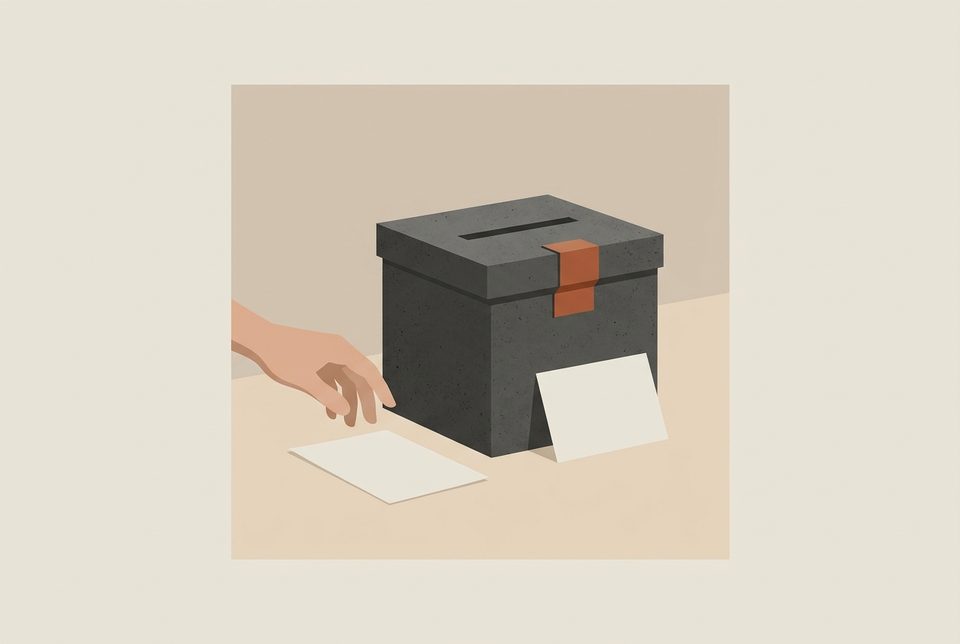
Un artículo revisó cómo se vota en máquinas y por internet en varios países. Brasil es el caso principal del voto en máquinas dentro de la casilla. Perú probó el voto digital por internet y en 2025 su autoridad electoral lo declaró inviable para las elecciones de 2026. Estonia usa el voto por internet desde hace años, sin que haya subido de forma clara la cantidad de gente que vota. En Argentina el debate se movió hacia la boleta única de papel. En Estados Unidos el artículo cita el caso de la empresa Diebold. En Países Bajos se volvió al papel. En Ciudad de México, en 2012, un tribunal admitió el voto por internet antes de que existiera la norma que lo regulara. Salió en julio-diciembre de 2026 en la Revista Mexicana de Derecho Electoral. Es un análisis de normas y casos, no una prueba de su máquina.
Lo que encontró: en la casilla, el riesgo es que el proceso interno de la computadora quede como una caja negra. Por internet, no se puede garantizar que nadie presione a quien vota, y los datos de conexión pueden revelar conductas. Un programa malicioso en su teléfono podría cambiar su voto antes de enviarlo. El artículo no dice que esas fallas se hayan visto en una elección concreta. Dice que basta con que sean riesgos posibles, y cita casos como el de la empresa Diebold en Estados Unidos y el regreso al papel en Países Bajos.
Usted puede revisar si su autoridad electoral publica el código del sistema, sus auditorías antes y después de la jornada, y si existe un comprobante en papel que permita un recuento a mano. El artículo cita la recomendación del Consejo de Europa de 2017 sobre voto electrónico, que pide transparencia y rendición de cuentas. En Perú, el Jurado Nacional de Elecciones rechazó en diciembre de 2025 su sistema de voto digital para las elecciones de 2026. Países Bajos volvió al papel.
Qué significa para usted
Lo que puede hacer es pedir a su autoridad electoral el código del sistema, las auditorías antes y después de la jornada, y el comprobante en papel para un recuento a mano. El artículo advierte que un sistema no se vuelve confiable por ser nuevo, y Países Bajos regresó al papel cuando no pudo revisar el suyo. Si esas piezas no aparecen publicadas, conviene decirlo.
Pérez Corti, J. M. (2026). Mecanismos electrónicos de emisión del sufragio. Taxonomía por categorías y características. Revista Mexicana de Derecho Electoral. https://doi.org/10.22201/iij.24487910e.2026.25.21535
Quién pagó: El artículo no indica quién financió el estudio ni si los financiadores tuvieron alguna influencia, y no menciona equipos ni programas prestados al autor; solo agradece a dos personas dictaminadoras externas y al equipo editorial de la revista.
Los hallazgos de otros estudios que aquí se mencionan provienen de este documento; esos estudios no se consultaron uno por uno.
Versión detalladaLos pasajes copiados del artículo, las ilustraciones y cada fuente con cuánto leímos de ella · 992 palabras · unos 5 minLeerla →Cerrar
La regla y la evidencia: un repaso legal sobre el voto en pantalla: qué se puede vigilar y qué no
### EL ACTO
En Perú, la ley ya había abierto la puerta al voto por internet. La reforma a la Ley Orgánica de Elecciones núm. 26,859 introdujo el capítulo de Voto Digital a través de la Ley núm. 32,2701. Ese es el texto que quedó escrito.
Lo que vino después fue una opinión técnica. En 2025, el Jurado Nacional de Elecciones aprobó una opinión desfavorable, basada en el dictamen de la Dirección de Fiscalización Electoral Digital, y declaró la inviabilidad de aplicar esa solución para las elecciones generales de 20262.
Para el votante peruano, el acto tiene un alcance: la ley existe, pero la autoridad que organiza la elección dijo que no se podía usar en esos comicios2. El documento no dice qué puede hacer una persona que quisiera impugnar esa decisión, ni ante quién, ni en qué plazo. En eso el texto es mudo.
### EL CASO QUE RESPONDE
Esta semana no se encontró ningún caso real que ilustre lo que el artículo discute: ni un video falso, ni un conteo manipulado, ni una auditoría fallida con nombre, lugar y fecha. No se inventa.
### LO QUE SE MIDIÓ
El artículo no reporta ninguna medición del efecto de las máquinas de votar sobre los votantes, la participación o la exactitud del conteo. Es un análisis jurídico y documental, no un experimento ni una encuesta.
Lo más cercano a un dato es el caso brasileño. Cuando se desplegó la urna electrónica en 1998, la complejidad de las boletas tradicionales generaba un ausentismo del 17.8 % y tasas de votos nulos y blancos del 41.7 %3. Traducido a una imagen: de cada cien personas llamadas a votar, casi dieciocho no llegaban, y más de cuarenta votos terminaban nulos o en blanco. Eso mide el problema que la urna buscaba resolver, no el efecto de la urna.
Sobre Estonia hay otra cifra, y va en sentido contrario al entusiasmo. El análisis de once elecciones celebradas entre 2005 y 2019 muestra una amplia difusión del sistema en una sociedad fuertemente digitalizada, pero sin evidencias de un incremento significativo de la participación electoral atribuible a su uso4. Once elecciones, quince años, un país: y la participación no subió de forma apreciable.
### LA RESPUESTA DE OTRA REGIÓN AL MISMO ASUNTO
Los Países Bajos habían usado pantallas táctiles durante años. Después, sus autoridades decidieron volver al voto manual con papel, porque no podían garantizar la invulnerabilidad de los sistemas y porque el código fuente no era transparente5.
En Estados Unidos, las Academias Nacionales de Ciencias, Ingeniería y Medicina fijaron posición: no existe tecnología conocida que garantice a la vez secreto, seguridad y verificabilidad de boletas transmitidas por internet, y recomendaron no usar esa vía para el retorno de votos mientras no haya garantías robustas6.
Brasil tomó el camino opuesto y lo sostuvo. Su informatización empezó en 1985, llegó a la totalización informática en 1994, la urna electrónica se diseñó en 1995 y se implementó por primera vez en 19967.
### LA LECTURA DE WEEKLYAI
Así lo lee weeklyAI: cuando un asunto público se decide con aparatos que casi nadie entiende por dentro, la gente tiende a sentirse tranquila frente a la pantalla y a soltar el hábito de dudar. Es probable que muchos votantes, y hasta funcionarios de casilla, acepten como bueno el resultado que aparece rápido y sin protestas visibles, y que dejen de preguntar quién revisó el programa, quién guardó las llaves y qué papel queda para comparar. Esta lectura se equivocaría si en la práctica la gente común pide ver el respaldo en papel, pregunta por las auditorías antes y después de la jornada y desconfía de los resultados que solo existen dentro de la máquina.
Hay una segunda capa, y conviene separarla. La confianza en una elección con máquinas parece depender menos de cómo se ve el aparato y más de quién lo custodia: si el organismo electoral es creíble, la gente acepta el sistema; si no, ninguna explicación técnica basta, aunque el programa funcione bien. Por eso weeklyAI le sugiere separar dos preguntas que suelen ir juntas: si confía en la institución que organiza y si confía en la máquina. Pida los informes de auditoría y la resolución donde se aprobó el sistema, y juzgue con esos documentos, no con la fama.
También conviene desconfiar del paquete cerrado. Es probable que las autoridades presenten sus sistemas como algo ya validado, que el ciudadano solo debe acatar, y que las objeciones técnicas se traten como ignorancia. Esta lectura se equivocaría si las autoridades publican el código, admiten fallas encontradas y abren audiencias públicas donde las críticas se responden por escrito antes de la elección. Cuando le digan que el sistema "ya está certificado", pregunte qué se certificó, quién lo hizo y si el informe es público.
### LO QUE NO SE SABE
El artículo describe riesgos como plausibles, no como hechos probados en una elección concreta. Una vulnerabilidad listada es una razón para exigir evidencia, no la prueba de que su voto fue alterado.
El texto no dice si las máquinas de su país son seguras. No probó ninguna. Lo que ofrece es una lista de preguntas.
El artículo examina normas, recomendaciones internacionales, doctrina especializada, experiencias institucionales y antecedentes tecnológicos relevantes.
El tratamiento de la inteligencia artificial es un marco de riesgo, no un estudio medido de su uso en ninguna elección real.
El caso brasileño de 1998 y el estonio de 2005 a 2019 se midieron en esos países, con esas reglas y esas sociedades. Leerlos como si describieran lo que pasará en la suya es un salto que el documento no autoriza.
Antes de votar, pregunte a su autoridad electoral tres cosas: si hay registro en papel, si las auditorías son públicas y quién custodia las llaves. Y cuando reciba su comprobante, revise usted mismo si coincide con lo que marcó.
De dónde sale cada dato de contexto, y cuánto leímos de cada documento
- Pérez Corti, J. M. (2026). Mecanismos electrónicos de emisión del sufragio. Taxonomía por categorías y características. Revista Mexicana de Derecho Electoral. https://doi.org/10.22201/iij.24487910e.2026.25.21535 - el artículo del que trata esta nota — el artículo completo — el pasaje: "En contraste, respecto al voto digital remoto, Perú iba camino a convertirse en una interesante experiencia latinoamericana al poner en marcha la denominada Solución Tecnológica de Voto Digital. Esto se realizó mediante la reforma de la Ley Orgánica de Elecciones núm. 26,859, que introdujo el capítulo de Voto Digital a través de la Ley núm. 32,270."
- Pérez Corti, J. M. (2026). Mecanismos electrónicos de emisión del sufragio. Taxonomía por categorías y características. Revista Mexicana de Derecho Electoral. https://doi.org/10.22201/iij.24487910e.2026.25.21535 - el artículo del que trata esta nota — el artículo completo — el pasaje: "Sin embargo, en 2025, el Jurado Nacional de Elecciones (jne) aprobó una opinión técnica desfavorable basada en el dictamen de la Dirección de Fiscalización Electoral Digital, declarando la inviabilidad de su aplicación para las elecciones generales de 2026 (jne, 2025, diciembre 18)."
- Pérez Corti, J. M. (2026). Mecanismos electrónicos de emisión del sufragio. Taxonomía por categorías y características. Revista Mexicana de Derecho Electoral. https://doi.org/10.22201/iij.24487910e.2026.25.21535 - el artículo del que trata esta nota — el artículo completo — el pasaje: "Su despliegue masivo en 1998 tuvo el objetivo primordial de facilitar el sufragio a una ciudadanía con bajo nivel de escolaridad, en un contexto donde la complejidad de las boletas tradicionales generaba un ausentismo del 17.8 % y tasas de votos nulos y blancos del 41.7 % (Nicolau, 2015)."
- Pérez Corti, J. M. (2026). Mecanismos electrónicos de emisión del sufragio. Taxonomía por categorías y características. Revista Mexicana de Derecho Electoral. https://doi.org/10.22201/iij.24487910e.2026.25.21535 - el artículo del que trata esta nota — el artículo completo — el pasaje: "el análisis de once elecciones celebradas entre 2005 y 2019 muestra una amplia difusión del sistema en una sociedad fuertemente digitalizada, aunque sin evidencias de un incremento significativo de la participación electoral atribuible a su utilización (Ehin et al., 2022)."
- Pérez Corti, J. M. (2026). Mecanismos electrónicos de emisión del sufragio. Taxonomía por categorías y características. Revista Mexicana de Derecho Electoral. https://doi.org/10.22201/iij.24487910e.2026.25.21535 - el artículo del que trata esta nota — el artículo completo — el pasaje: "Un ejemplo de respuesta soberana ocurrió en los Países Bajos, donde tras años de utilizar pantallas táctiles, las autoridades decidieron retornar al voto manual con papel debido a la incapacidad de garantizar la invulnerabilidad de los sistemas y a la falta de transparencia en el código fuente (Libbenga, 2007)."
- Pérez Corti, J. M. (2026). Mecanismos electrónicos de emisión del sufragio. Taxonomía por categorías y características. Revista Mexicana de Derecho Electoral. https://doi.org/10.22201/iij.24487910e.2026.25.21535 - el artículo del que trata esta nota — el artículo completo — el pasaje: "las Academias Nacionales de Ciencias, Ingeniería y Medicina de los Estados Unidos (nasem, por sus siglas en inglés), y la literatura especializada fijaron posición entendiendo que no existe tecnología conocida que garantice —simultáneamente— secreto, seguridad y verificabilidad de boletas de sufragio transmitidas por Internet, recomendando no usar esta última para el retorno de votos mientras no existan garantías robustas (nasem, 2018; Park et al., 2021)."
- Pérez Corti, J. M. (2026). Mecanismos electrónicos de emisión del sufragio. Taxonomía por categorías y características. Revista Mexicana de Derecho Electoral. https://doi.org/10.22201/iij.24487910e.2026.25.21535 - el artículo del que trata esta nota — el artículo completo — el pasaje: "El caso de Brasil representa el paradigma regional de la transición hacia el voto electrónico presencial, mediante una informatización gradual que comenzó en 1985 y alcanzó la totalización informática en 1994, el diseño de la urna electrónica en 1995 y su primera implementación en 1996 (Ayres Britto y Bucchianeri Pinheiro, 2008)."
Pérez Corti, J. M. (2026). Mecanismos electrónicos de emisión del sufragio. Taxonomía por categorías y características. Revista Mexicana de Derecho Electoral. https://doi.org/10.22201/iij.24487910e.2026.25.21535
Quién pagó: El artículo no indica quién financió el estudio ni si los financiadores tuvieron alguna influencia, y no menciona equipos ni programas prestados al autor; solo agradece a dos personas dictaminadoras externas y al equipo editorial de la revista.
Los hallazgos de otros estudios que aquí se mencionan provienen de este documento; esos estudios no se consultaron uno por uno.
analysis of texts · Revista Mexicana de Derecho Electoral · the paper, 6 Nov 2026 · free
A legal review finds screen and internet voting can be legitimate only under strict conditions.
Short version · the longer version follows, about 6 min
Ask the weeklyAI chat
Ask me about AI in your life: I point you to the stories weeklyAI has published on it, this week and before.
Conversations are saved for as long as weeklyAI exists, to improve the publication. Answers come in the language you write in.
- The study at a glance
- Who
- A legal review of electronic vote-casting mechanisms
- How many
- Two main kinds: in-person electronic voting and remote digital voting
- Where
- Latin America, Europe and the United States
- When
- Published July–December 2026
- Kind of study
- review of studies
- Who did it
- José María Pérez Corti, Universidad Nacional de Córdoba, Argentina
- The limit that matters
- A legal and documentary review, not a test of any machine in any country
Two ways of voting, and what each one costs the voter
In person, the machine sits under the electoral authority's supervision and custody; the main threat is that its inner workings are opaque to the public
Remote, the vote travels over the internet or a mobile phone from supposedly private places, with no official in the room
Remote voting makes secrecy and freedom harder to guarantee, because outside pressure on the voter cannot be ruled out as it can in a supervised room
The paper record is the answer the review keeps returning to: ask, before you vote, whether one exists and who keeps it.
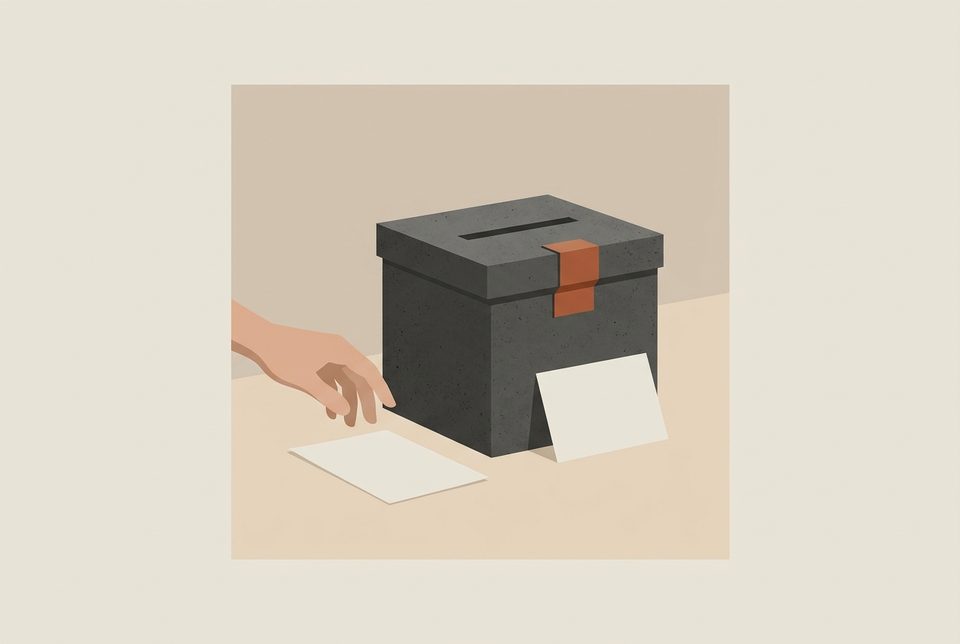
The Revista Mexicana de Derecho Electoral (UNAM) carries a legal review by José María Pérez Corti in its July–December 2026 issue. He sorts electronic vote-casting into in-person voting on machines under officials' control, and remote digital voting over the internet from uncontrolled places. For remote voting, he says secrecy and freedom are harder to guarantee, because coercion and metadata can reveal how someone voted. Malware on a personal phone or computer can change a vote before it is sent. In December 2025, Peru's Jurado Nacional de Elecciones approved an unfavorable technical opinion, based on a ruling by its digital election oversight office, and declared its digital vote system unviable for the 2026 general elections. Estonia's internet voting over eleven elections from 2005 to 2019 showed no significant increase in turnout.
The article does name a check for voters: the system should let any voter confirm, simply and directly, that the encrypted option sent matches the one she chose. It also says citizens should be able to check the system without technical training.
The review cites Council of Europe Recommendation CM/Rec(2017)5 (June 2017) on e-voting standards. It describes paper backup and public audits as ways to check the electronic result later, through independent audits and, where needed, manual recounts.
What this means for you
What the review offers is a checklist, not a verdict on your polling place. Before you vote on a screen, ask whether the machine prints a paper record you can see, and whether the authority has published its audits and allowed independent observers to watch. If those answers are missing, that is worth reporting, because the review finds legitimacy depends on them.
Pérez Corti, J. M. (2026). Mecanismos electrónicos de emisión del sufragio. Taxonomía por categorías y características. Revista Mexicana de Derecho Electoral. https://doi.org/10.22201/iij.24487910e.2026.25.21535
Who paid: The article does not state who funded the study or whether funders had any say, and it names no equipment or software lent to the author; it only thanks two external reviewers and the journal's editorial team.
The findings of other studies mentioned here come from this document; those studies were not opened one by one.
The longer versionThe passages copied from the paper, the pictures, and every source with how much of it we read · 1199 words · about 6 minRead it →Close
The rule and the evidence: A legal review finds screen and internet voting can be legitimate only under strict conditions
### THE ACT
The document is a legal review, not a rule, so there is no resolution, ruling, audit or bill in it that binds anyone to anything. Its author, José María Pérez Corti, writes that legitimacy "depende de su subordinación a los principios del derecho electoral, del control ciudadano y de la revisabilidad humana de las decisiones automatizadas"1. That is an argument, not an order. No passage in this document says what a voter in any named country may do, or by when, under a rule now in force.
What the review does carry is a standard it asks election authorities to meet. It says transparency "no puede ser un acto de fe en los expertos informáticos," and that a system should let any voter confirm "de manera sencilla y directa, que la opción cifrada y enviada corresponda efectivamente con la seleccionada por ella"1. The review proposes this as a condition of legitimacy. It does not say which authority has adopted it, in which country, or from what date.
### THE CASE IT ANSWERS
No real instance was found this week.
### WHAT WAS MEASURED
No passage in this document reports a measured effect on voters or on an election, so there is no size, sample or country of measurement to give here.
What the review does report is one finding from outside its own analysis. An examination of eleven elections held in Estonia between 2005 and 2019 found the system widely used in a strongly digitalized society, "aunque sin evidencias de un incremento significativo de la participación electoral atribuible a su utilización"2. That is a statement about turnout, and the review carries other measured findings too, such as Brazil's high rates of abstention and of null and blank votes before its electronic ballot was introduced. The review does not say how the finding was produced.
The two ways of voting the review separates do different things to a voter's ability to check. In the in-person kind, the machine sits in a polling place "bajo la supervisión, control y custodia de la autoridad electoral"3. In the remote kind, the vote travels "a través de Internet o telefonía móvil— desde ubicaciones supuestamente privadas"4. The first keeps a public room around the act. The second removes the room and keeps only the screen.
The review names the trade-off that follows. In controlled settings the main threat is "la opacidad interna del proceso informático frente a la ciudadanía," the transparent ballot box replaced by a digital "caja negra"5. In uncontrolled settings, the difficulty is secrecy and freedom: outside pressure on the voter cannot be ruled out as it can in a supervised room6. Neither kind is free. Each buys something and gives something up: the polling-place machine buys supervision and gives up visibility into its own working; the remote vote buys convenience and gives up the room where pressure could be seen.
The review also names a failure that belongs to the voter's own equipment. Malware on a personal computer or phone "puede alterar el sentido del voto antes de su transmisión"7. The vote that leaves the house may not be the vote cast in it.
### THE OTHER REGION'S ANSWER TO THE SAME THING
Peru wrote remote digital voting into its election law, through a reform of the Organic Elections Law that introduced a chapter on digital voting8. In 2025 the country's National Elections Board (JNE) approved an unfavorable technical opinion, based on a review by its digital electoral oversight office, declaring the system unworkable for the 2026 general elections9. That is one authority, on one method, with a date.
The Netherlands went the other way from its own screens. After years of using touchscreens, the authorities returned to hand-marked paper, "debido a la incapacidad de garantizar la invulnerabilidad de los sistemas y a la falta de transparencia en el código fuente"10. Two countries, two directions, and both decisions came from the same question: can anyone outside the machine see how it works?
### THE LIBRARY'S READING
Here is weeklyAI's reading. A false story about a candidate has always done one thing well: it leaves a mark that is hard to wash off, and the person it touches spends the rest of the campaign denying it. What is new is not the lie. It is the speed, the polish, and the fact that a copy can now be made faster than a correction. A public can learn to check a claim against a second source. What it cannot check by looking is a screen that has already decided what to show, or a count whose steps happen inside a sealed box.
This reading leads weeklyAI to expect that most voters facing a screen or an internet ballot will rest their confidence on the authority's word and the vendor's name, and will rarely ask to see the audit or the paper record themselves. This reading would be wrong if ordinary voters and local reporters were routinely demanding those documents and treating them, not a press release, as the basis for trust. What you can do with it is small and concrete: before election day, ask your electoral authority which audits exist, who performs them, and whether the reports are public. After the vote, look for the paper record or audit trail that lets you check the count yourself.
### WHAT IS NOT KNOWN
The review is a legal and documentary analysis, not a test of any machine in any country. It tells you what to ask about your own system. It does not tell you whether your system is safe.
The risks it lists are described as plausible, not proven to have happened in a given election. A listed vulnerability is a reason to demand evidence, not proof that a vote was altered.
The review says plainly that its analysis does not allow the general claim that electronic methods are more efficient than paper. It also reports that no known technology guarantees secrecy, security and verifiability at once for ballots sent over the internet, and that the United States' national academies recommended not using the internet for returning votes until robust guarantees exist11. That is a recommendation, not a finding about any election.
The document is silent on what any single authority actually found in its own audit files. Its country examples come from secondary literature and news reports, so the detail of what each authority audited and concluded is thin.
The review does say what would let a voter check: a paper record kept alongside the digital one, which "ofrece una fuente independiente de contraste y facilita la verificación posterior del resultado electrónico"12. It also describes a citizen custody commission, made up of academics, jurists and civil-society representatives, holding the cryptographic keys13. Whether your authority has either is not something this document can tell you.
You are standing at the screen with your hand on the button, and the question is whether you can check what happens next. The paper record is the answer the review keeps returning to: ask, before you vote, whether one exists and who keeps it.
Where each piece of context comes from, and how much of it we read
- Pérez Corti, J. M. (2026). Mecanismos electrónicos de emisión del sufragio. Taxonomía por categorías y características. Revista Mexicana de Derecho Electoral. https://doi.org/10.22201/iij.24487910e.2026.25.21535 - the article this story is about — the whole article — the passage: "La transparencia no puede ser un acto de fe en los expertos informáticos. Por el contrario, el sistema debe facilitar que cualquier persona electora compruebe, de manera sencilla y directa, que la opción cifrada y enviada corresponda efectivamente con la seleccionada por ella (cast-as-intended) (Finogina y Herranz, 2023)."
- Pérez Corti, J. M. (2026). Mecanismos electrónicos de emisión del sufragio. Taxonomía por categorías y características. Revista Mexicana de Derecho Electoral. https://doi.org/10.22201/iij.24487910e.2026.25.21535 - the article this story is about — the whole article — the passage: "el análisis de once elecciones celebradas entre 2005 y 2019 muestra una amplia difusión del sistema en una sociedad fuertemente digitalizada, aunque sin evidencias de un incremento significativo de la participación electoral atribuible a su utilización (Ehin et al., 2022)."
- Pérez Corti, J. M. (2026). Mecanismos electrónicos de emisión del sufragio. Taxonomía por categorías y características. Revista Mexicana de Derecho Electoral. https://doi.org/10.22201/iij.24487910e.2026.25.21535 - the article this story is about — the whole article — the passage: "Por un lado, el voto electrónico presencial (vep) se desarrolla en entornos oficialmente controlados, caracterizándose por el uso de computadoras, pantallas táctiles o dispositivos de grabación electrónica directa situados en centros de votación oficiales, bajo la supervisión, control y custodia de la autoridad electoral."
- Pérez Corti, J. M. (2026). Mecanismos electrónicos de emisión del sufragio. Taxonomía por categorías y características. Revista Mexicana de Derecho Electoral. https://doi.org/10.22201/iij.24487910e.2026.25.21535 - the article this story is about — the whole article — the passage: "Por otro lado, el voto digital remoto (vdr) opera en entornos no controlados, permitiendo el sufragio telemático —a través de Internet o telefonía móvil— desde ubicaciones supuestamente privadas, lo que la doctrina ha denominado como voto en pijama (Reniu Vilamala, 2008a; García Soriano, 2008)."
- Pérez Corti, J. M. (2026). Mecanismos electrónicos de emisión del sufragio. Taxonomía por categorías y características. Revista Mexicana de Derecho Electoral. https://doi.org/10.22201/iij.24487910e.2026.25.21535 - the article this story is about — the whole article — the passage: "En los entornos controlados (vep), la principal amenaza es la opacidad interna del proceso informático frente a la ciudadanía. El reemplazo de la urna transparente o de cartón por una “caja negra” digital genera descon-"
- Pérez Corti, J. M. (2026). Mecanismos electrónicos de emisión del sufragio. Taxonomía por categorías y características. Revista Mexicana de Derecho Electoral. https://doi.org/10.22201/iij.24487910e.2026.25.21535 - the article this story is about — the whole article — the passage: "En los entornos no controlados (vdr) se registran mayores dificultades para garantizar el secreto y la libertad, con el consecuente incremento del riesgo de afectación del secreto y de la libertad. El riesgo de coerción externa no puede excluirse con el mismo grado de control que en un entorno presencial supervisado, dado que no se puede garantizar la ausencia de presiones o interferencias de terceros."
- Pérez Corti, J. M. (2026). Mecanismos electrónicos de emisión del sufragio. Taxonomía por categorías y características. Revista Mexicana de Derecho Electoral. https://doi.org/10.22201/iij.24487910e.2026.25.21535 - the article this story is about — the whole article — the passage: "Asimismo, la integridad del terminal de la persona electora representa un punto crítico de falla: la presencia de códigos maliciosos (malware) en computadoras personales o teléfonos inteligentes puede alterar el sentido del voto antes de su transmisión."
- Pérez Corti, J. M. (2026). Mecanismos electrónicos de emisión del sufragio. Taxonomía por categorías y características. Revista Mexicana de Derecho Electoral. https://doi.org/10.22201/iij.24487910e.2026.25.21535 - the article this story is about — the whole article — the passage: "En contraste, respecto al voto digital remoto, Perú iba camino a convertirse en una interesante experiencia latinoamericana al poner en marcha la denominada Solución Tecnológica de Voto Digital. Esto se realizó mediante la reforma de la Ley Orgánica de Elecciones núm. 26.859, que introdujo el capítulo de Voto Digital a través de la Ley núm. 32.270."
- Pérez Corti, J. M. (2026). Mecanismos electrónicos de emisión del sufragio. Taxonomía por categorías y características. Revista Mexicana de Derecho Electoral. https://doi.org/10.22201/iij.24487910e.2026.25.21535 - the article this story is about — the whole article — the passage: "Sin embargo, en 2025, el Jurado Nacional de Elecciones (jne) aprobó una opinión técnica desfavorable basada en el dictamen de la Dirección de Fiscalización Electoral Digital, declarando la inviabilidad de su aplicación para las elecciones generales de 2026 (jne, 2025, diciembre 18)."
- Pérez Corti, J. M. (2026). Mecanismos electrónicos de emisión del sufragio. Taxonomía por categorías y características. Revista Mexicana de Derecho Electoral. https://doi.org/10.22201/iij.24487910e.2026.25.21535 - the article this story is about — the whole article — the passage: "Un ejemplo de respuesta soberana ocurrió en los Países Bajos, donde tras años de utilizar pantallas táctiles, las autoridades decidieron retornar al voto manual con papel debido a la incapacidad de garantizar la invulnerabilidad de los sistemas y a la falta de transparencia en el código fuente (Libbenga, 2007)."
- Pérez Corti, J. M. (2026). Mecanismos electrónicos de emisión del sufragio. Taxonomía por categorías y características. Revista Mexicana de Derecho Electoral. https://doi.org/10.22201/iij.24487910e.2026.25.21535 - the article this story is about — the whole article — the passage: "las Academias Nacionales de Ciencias, Ingeniería y Medicina de los Estados Unidos (nasem, por sus siglas en inglés), y la literatura especializada fijaron posición entendiendo que no existe tecnología conocida que garantice —simultáneamente— secreto, seguridad y verificabilidad de boletas de sufragio transmitidas por Internet, recomendando no usar esta última para el retorno de votos mientras no existan garantías robustas (nasem, 2018; Park et al., 2021)."
- Pérez Corti, J. M. (2026). Mecanismos electrónicos de emisión del sufragio. Taxonomía por categorías y características. Revista Mexicana de Derecho Electoral. https://doi.org/10.22201/iij.24487910e.2026.25.21535 - the article this story is about — the whole article — the passage: "la coexistencia de un registro físico y otro digital ofrece una fuente independiente de contraste y facilita la verificación posterior del resultado electrónico, contribuyendo a preservar la integridad del sistema y facilitando su verificación independiente"
- Pérez Corti, J. M. (2026). Mecanismos electrónicos de emisión del sufragio. Taxonomía por categorías y características. Revista Mexicana de Derecho Electoral. https://doi.org/10.22201/iij.24487910e.2026.25.21535 - the article this story is about — the whole article — the passage: "se destaca la mesa o comisión ciudadana de custodia independiente, como instancia independiente de salvaguarda de las claves criptográficas, integrada por académicos, juristas y representantes de la sociedad civil (Reniu Vilamala, 2008b)."
Pérez Corti, J. M. (2026). Mecanismos electrónicos de emisión del sufragio. Taxonomía por categorías y características. Revista Mexicana de Derecho Electoral. https://doi.org/10.22201/iij.24487910e.2026.25.21535
Who paid: The article does not state who funded the study or whether funders had any say, and it names no equipment or software lent to the author; it only thanks two external reviewers and the journal's editorial team.
The findings of other studies mentioned here come from this document; those studies were not opened one by one.