other · Scientific reports · la publicación, 15 may 2026 · gratis
Una cámara en el salón comprueba primero que el rostro esté vivo
Un sistema para pasar lista midió 97.8% de aciertos en las pruebas de sus autores, pero lo probó con 50 alumnos de una sola escuela y no dice nada sobre las escuelas de su país.
Versión breve · la versión detallada sigue, unos 7 min
Pregunte al chat de weeklyAI
Pregúnteme sobre la IA en su vida: le señalo las notas que weeklyAI ha publicado sobre el tema, esta semana y antes.
Las conversaciones se guardan mientras exista weeklyAI, para mejorar la publicación. Se responde en el idioma en que usted escribe.
- El estudio, de un vistazo
- Quiénes
- Un sistema de reconocimiento facial para pasar lista, probado con estudiantes de una escuela
- Cuántos
- 50 participantes
- Dónde
- Una sola escuela (autores de Nigeria y Emiratos Árabes Unidos)
- Cuándo
- Publicado el 15 de mayo de 2026
- Tipo de estudio
- experiment
- Quién lo hizo
- Universidad de Abuja (Nigeria) y Abu Dhabi University (Emiratos Árabes Unidos)
- El límite que importa
- Se probó con 50 alumnos de una sola escuela; no cubre otras regiones ni tonos de piel.
Errores del sistema ante distintos tipos de ataque
Dejó pasar 4.9% de los intentos falsos y rechazó por error 3.7% de las caras verdaderas
Los errores de falsificación quedaron por debajo de 2% en la mayoría de los ataques

El alumno se para frente a la cámara. Antes de buscarlo en la lista, el sistema revisa dos cosas: que la cara tenga señales de sangre corriendo bajo la piel y que el video no haya sido fabricado. Solo entonces pasa a reconocerlo.
El modelo de reconocimiento es pequeño y corre en aparatos baratos. Cuando no reconoce a alguien, lo marca como desconocido en vez de forzar una coincidencia. La decisión queda en un registro con el número de consentimiento del alumno.
Los autores trabajan en una universidad de Nigeria y en dos de Emiratos Árabes Unidos. Informan 97.8% de aciertos en las pruebas, con errores de falsificación por debajo de 2% en la mayoría de los ataques y una diferencia de acierto entre grupos de alumnos de 1.8%. En una placa pequeña y barata, la respuesta tarda menos de una décima de segundo.
Los ataques más difíciles subieron los errores. Con máscaras de silicón, el sistema dejó pasar como reales 4.9% de los intentos falsos y rechazó por error 3.7% de las caras verdaderas.
La prueba en un salón real tuvo 50 participantes en una sola escuela, en 12 sesiones. Ese número no alcanza para saber cómo trataría el sistema a los alumnos de su región, con otros tonos de piel, otras edades y otra luz. Los propios autores lo advierten.
También advierten algo que ninguna tecnología resuelve: los resguardos técnicos no compensan una escuela mal vigilada. Una escuela sin controles claros podría usar mal el sistema aunque esté bien hecho.
El código está en un repositorio privado y los datos del salón no son públicos. Usted no puede revisar por su cuenta lo que los autores afirman.
Tampoco se probaron ataques con calcomanías en la cara, lentes especiales ni luces infrarrojas. El sistema no está demostrado contra todo.
Cuando una escuela cerca de usted anuncie que pasará lista con la cara, pregunte tres cosas: si las imágenes se quedan en los aparatos de la escuela, si el consentimiento se puede retirar y si hay una revisión hecha por alguien de fuera.
Qué significa para usted
Cuando en su escuela anuncien que van a pasar lista con la cara, pida ver el aviso de consentimiento y pregunte si las imágenes se quedan en los aparatos de la escuela y si usted puede retirar ese permiso. El estudio probó el sistema con 50 alumnos de una sola escuela y no midió si mejora la asistencia ni el trato entre los estudiantes, así que conviene esperar la revisión de alguien de fuera antes de darlo por bueno.
Abiodun, E. O., Abiodun, O. I., Alawida, M. et al. (2026). LaED: a novel lightweight, edge-aware and explainable deep learning model for privacy-preserving facial attendance tracking in resource-constrained educational environments. Scientific Reports. https://doi.org/10.1038/s41598-026-42051-8
Quién pagó: El trabajo fue financiado íntegramente por la Universidad de Abu Dhabi con las subvenciones n.º 1930063 y 19300887; el artículo no indica si los financiadores tuvieron algún papel y no menciona donantes de equipos o programas aparte de las herramientas comerciales citadas.
Versión detalladaLos pasajes copiados del artículo, las ilustraciones y cada fuente con cuánto leímos de ella · 1453 palabras · unos 7 minLeerla →Cerrar
Una escuela puede reconocer a su hijo en 40 milisegundos. ¿Quién responde si se equivoca?
Un sistema para tomar asistencia por rostro, probado en un solo plantel de 50 estudiantes, promete no sacar las caras de la escuela. El código y los datos no son públicos.
Un grupo de investigadores de la Universidad de Abuja, en Nigeria, y de la Abu Dhabi University, en Emiratos Árabes Unidos, presentó un sistema llamado LaED para tomar asistencia en salones de clase con reconocimiento facial. El artículo salió publicado el 15 de mayo de 2026 en Scientific Reports, y el trabajo lo pagó la Universidad de Abu Dhabi con dos becas. Los autores diseñaron el sistema y también lo evaluaron.
La idea se apoya en tres capas. Una revisa la imagen que entra: analiza cambios de color en la piel para detectar el pulso de la sangre y distingue a una persona viva de una foto o un video1. Otra compara el rostro con los estudiantes registrados y, si no lo reconoce, lo marca como desconocido y no lo anota2. La tercera guarda cada decisión en un registro que no se puede alterar sin dejar rastro y borra los datos cuando vence el plazo de consentimiento34. El entrenamiento se hace en el aparato de la escuela, sin mandar las caras a un servidor central5.
En las pruebas, el sistema acertó el 97.8 por ciento de las veces al reconocer a un estudiante6. La diferencia entre el grupo de estudiantes que mejor le fue y el que peor le fue quedó en 1.8 por ciento. En una computadora pequeña para escuelas, una Jetson Nano, procesó 26 imágenes por segundo con un consumo de 4 watts7. Frente a ataques con fotos impresas, videos repetidos, máscaras y caras falsas hechas por computadora, el sistema dejó pasar entre 2.3 y 4.9 de cada cien ataques según el tipo, y rechazó por error entre 1.9 y 3.7 de cada cien rostros genuinos, también según el tipo de ataque.
El salón donde se probó tenía 50 participantes en 12 sesiones, todos de una sola escuela8. Los propios autores escriben que esa muestra no cubre la diversidad demográfica, cultural ni de infraestructura de otros planteles8. La base de datos del salón no es pública por razones de privacidad, aunque puede compartirse sin nombres si alguien la pide y la institución lo aprueba9. El código está en un repositorio privado de GitHub, al que solo se entra por invitación10. La evaluación sobre si las explicaciones del sistema les servían tuvo seis maestros y administradores, y la prueba de uso del panel para docentes tuvo otros seis educadores.
Piense en la mañana en que su hija llega tarde a la escuela. En la puerta hay una cámara, y en la computadora de la dirección aparece una lista. El sistema que describe este artículo no es el que ya opera en su escuela; es una propuesta que se probó en un plantel. Lo que sí ocurre ya en algunos países son casos como el de Microsoft Teams en Nueva Gales del Sur en 2025, donde se recogieron datos biométricos de estudiantes sin autorización, o el de la escuela Chelmer Valley High School en el Reino Unido, que fue reprendida por usar reconocimiento facial para cobrar los alimentos sin completar los estudios de protección de datos11. Los autores señalan que en estos entornos los usuarios suelen ser menores de edad y que la capacidad de vigilancia de las instituciones puede ser limitada12.
Lo curioso es que la parte técnica del sistema está pensada para no sacar los datos del plantel. Cada escuela entrena su propio modelo y solo comparte los ajustes matemáticos, no las caras, y a esos ajustes se les añade ruido para que no se pueda reconstruir un rostro a partir de ellos5. Cada asistencia queda anotada en una cadena de registros que permite verificar después, por parte de las personas autorizadas, que la asistencia no fue alterada3. El sistema también guarda los consentimientos y borra los datos biométricos cuando vence el plazo4. Todo eso, sin embargo, depende de que la escuela lo use como está escrito.
En Estados Unidos y en Europa ya existen reglas que obligan a las escuelas a manejar con cuidado los datos de los estudiantes: el Reglamento General de Protección de Datos en Europa y la ley FERPA en Estados Unidos, y los autores advierten que cumplirlas no es opcional y que las instituciones que fallan enfrentan sanciones y daño reputacional13. Lo que el artículo describe es cómo ese sistema traduce esas obligaciones en piezas concretas: los datos se quedan en el aparato local, los registros se pueden auditar y el consentimiento queda anotado. Si eso basta para cumplir la ley en su país es otra pregunta, y el artículo no la responde.
Otros trabajos que hemos leído, y de los que solo pudimos consultar el resumen porque el texto completo está detrás de una suscripción, muestran que el uso de sistemas de vigilancia con inteligencia artificial en escuelas es cada vez más común, y que los efectos son especialmente preocupantes cuando se vigila la conducta y la salud mental de los estudiantes sin que ellos entiendan cómo sus acciones quedan mediadas por un programa1415. Un estudio exploratorio sobre escuelas en Australia examinó tres herramientas de vigilancia16 y analizó cómo se presentan en los sitios de las empresas que las venden17. La misma línea de trabajo señala que entender qué datos se recogen y qué supuestos trae el sistema es indispensable para gobernar la tecnología educativa18.
Pasa lo mismo con la evidencia sobre inteligencia artificial en el aula en general. Una revisión de estudios encontró que estas herramientas pueden apoyar la atención, la motivación y la comprensión, pero que la evidencia varía mucho entre diseños de estudio y que muchos trabajos se basan en la opinión de maestros o en muestras pequeñas, no en mediciones directas en el salón1920. La misma revisión advierte que la inteligencia artificial debe complementar, no reemplazar, el juicio del maestro21. Otra revisión sobre Indonesia encontró un crecimiento rápido de publicaciones después de 2022, concentrado en universidades y ciudades de la isla de Java, con ausencia notable en primaria, secundaria y regiones fuera de Java2223. Esa revisión también reporta riesgos: caída del pensamiento crítico, amenazas a la integridad académica y falta de políticas de privacidad24.
Así lo leemos nosotros. Cuando una autoridad escolar anuncia un sistema así, la mayoría de las familias lo acepta porque viene de arriba y porque el daño no se ve de inmediato. No hay un rostro concreto al que culpar si la cámara falla. Por eso conviene adelantarse: pedir por escrito quién es el responsable de esos datos y qué procedimiento existe si el sistema marca una ausencia equivocada. Si la escuela contesta con un nombre y un trámite, la preocupación se reduce. Si no contesta, eso también es información.
La segunda cosa que vigilaríamos es la igualdad. Aunque el sistema diga que trata igual a todos, la prueba se hizo con 50 estudiantes de una sola escuela, y los propios autores piden estudios en varios planteles con distintas luces, cámaras y composiciones demográficas25. En escuelas de América Latina, con rostros, edades e iluminaciones distintas a las de esa muestra, el sistema podría fallar más con ciertos estudiantes, y nadie en la escuela tendría manera de notarlo. Usted sabrá que nos equivocamos si la escuela publica resultados separados por grupo y esos resultados salen parejos, y si existe un canal para impugnar una falta mal registrada.
También nos queda una duda de fondo. Los autores escriben que las salvaguardas técnicas no pueden compensar una gobernanza institucional débil, y que las escuelas con poca alfabetización digital o prácticas de vigilancia inconsistentes pueden tener dificultades para mantener controles de acceso, manejo de incidentes y comunicación con los padres26. Es una concesión honesta y, a la vez, el punto más frágil: el sistema protege los datos solo si la escuela lo opera bien. Pregunte si existe una forma de marcar asistencia sin dar el rostro y si negarse tiene consecuencias para el estudiante. Pídalo por escrito y con copia a la supervisión escolar.
El siguiente paso que los autores anuncian es una validación en varios planteles y a lo largo de varios ciclos escolares25. Mientras eso no ocurra, lo que tenemos es una promesa técnica con buenos números en un solo lugar. Vale la pena saberlo antes de que la cámara llegue a la puerta.
Esa cámara en la entrada de la escuela puede ser, dentro de unos años, el primer rostro que su hijo entregue sin saberlo. La pregunta que puede llevar a la próxima reunión de padres es sencilla: ¿quién responde por esos datos y qué pasa si el sistema se equivoca?
De dónde sale cada dato de contexto, y cuánto leímos de cada documento
- Abiodun, E. O., Abiodun, O. I., Alawida, M. et al. (2026). LaED: a novel lightweight, edge-aware and explainable deep learning model for privacy-preserving facial attendance tracking in resource-constrained educational environments. Scientific Reports. https://doi.org/10.1038/s41598-026-42051-8 - el artículo del que trata esta nota — el artículo completo — el pasaje: "Remote photoplethysmography (rPPG) is applied to extract subtle skin color variations associated with blood flow. These physiological signals are computed in parallel with face detection and are used to distinguish live subjects from static images, replayed videos, or synthetically generated faces."
- Abiodun, E. O., Abiodun, O. I., Alawida, M. et al. (2026). LaED: a novel lightweight, edge-aware and explainable deep learning model for privacy-preserving facial attendance tracking in resource-constrained educational environments. Scientific Reports. https://doi.org/10.1038/s41598-026-42051-8 - el artículo del que trata esta nota — el artículo completo — el pasaje: "Inputs that do not meet acceptance criteria are labeled as unknown and excluded from attendance records."
- Abiodun, E. O., Abiodun, O. I., Alawida, M. et al. (2026). LaED: a novel lightweight, edge-aware and explainable deep learning model for privacy-preserving facial attendance tracking in resource-constrained educational environments. Scientific Reports. https://doi.org/10.1038/s41598-026-42051-8 - el artículo del que trata esta nota — el artículo completo — el pasaje: "Each attendance decision is recorded in a tamper-evident audit log constructed using cryptographic hash chaining. These logs enable post hoc verification of attendance records by authorized parties."
- Abiodun, E. O., Abiodun, O. I., Alawida, M. et al. (2026). LaED: a novel lightweight, edge-aware and explainable deep learning model for privacy-preserving facial attendance tracking in resource-constrained educational environments. Scientific Reports. https://doi.org/10.1038/s41598-026-42051-8 - el artículo del que trata esta nota — el artículo completo — el pasaje: "The Trust Layer maintains consent records, enforces data retention policies, and supports automated deletion of expired biometric data."
- Abiodun, E. O., Abiodun, O. I., Alawida, M. et al. (2026). LaED: a novel lightweight, edge-aware and explainable deep learning model for privacy-preserving facial attendance tracking in resource-constrained educational environments. Scientific Reports. https://doi.org/10.1038/s41598-026-42051-8 - el artículo del que trata esta nota — el artículo completo — el pasaje: "Model updates are trained locally on edge devices and aggregated using a federated learning protocol. Differential privacy noise is applied to model updates prior to aggregation, limiting the risk of reconstructing biometric information from transmitted parameters."
- Abiodun, E. O., Abiodun, O. I., Alawida, M. et al. (2026). LaED: a novel lightweight, edge-aware and explainable deep learning model for privacy-preserving facial attendance tracking in resource-constrained educational environments. Scientific Reports. https://doi.org/10.1038/s41598-026-42051-8 - el artículo del que trata esta nota — el artículo completo — el pasaje: "Experimental evaluation on CASIA-FASD, CelebA-Spoof, DFDC, FairFace, and a consent-driven classroom dataset shows that LaED achieves over 97.8% recognition accuracy, APCER and BPCER values below 2%, demographic fairness gaps under 2%, and inference latency below 150 milliseconds on edge hardware."
- Abiodun, E. O., Abiodun, O. I., Alawida, M. et al. (2026). LaED: a novel lightweight, edge-aware and explainable deep learning model for privacy-preserving facial attendance tracking in resource-constrained educational environments. Scientific Reports. https://doi.org/10.1038/s41598-026-42051-8 - el artículo del que trata esta nota — el artículo completo — el pasaje: "LaED achieved 26 FPS at 4 W on Jetson Nano, striking the best balance of throughput and efficiency."
- Abiodun, E. O., Abiodun, O. I., Alawida, M. et al. (2026). LaED: a novel lightweight, edge-aware and explainable deep learning model for privacy-preserving facial attendance tracking in resource-constrained educational environments. Scientific Reports. https://doi.org/10.1038/s41598-026-42051-8 - el artículo del que trata esta nota — el artículo completo — el pasaje: "The dataset includes 50 participants from a single school and does not capture the demographic, cultural or infrastructural diversity present across broader educational environments."
- Abiodun, E. O., Abiodun, O. I., Alawida, M. et al. (2026). LaED: a novel lightweight, edge-aware and explainable deep learning model for privacy-preserving facial attendance tracking in resource-constrained educational environments. Scientific Reports. https://doi.org/10.1038/s41598-026-42051-8 - el artículo del que trata esta nota — el artículo completo — el pasaje: "The in-house dataset is not publicly available due to privacy and ethical restrictions but may be shared in de-identified form upon reasonable request to the corresponding author, subject to institutional approval."
- Abiodun, E. O., Abiodun, O. I., Alawida, M. et al. (2026). LaED: a novel lightweight, edge-aware and explainable deep learning model for privacy-preserving facial attendance tracking in resource-constrained educational environments. Scientific Reports. https://doi.org/10.1038/s41598-026-42051-8 - el artículo del que trata esta nota — el artículo completo — el pasaje: "The system design and evaluation emphasized privacy preservation, fairness, and prevention of discriminatory outcomes. All experiments were implemented in Python, and the full source code is available at a private GitHub repository"
- Abiodun, E. O., Abiodun, O. I., Alawida, M. et al. (2026). LaED: a novel lightweight, edge-aware and explainable deep learning model for privacy-preserving facial attendance tracking in resource-constrained educational environments. Scientific Reports. https://doi.org/10.1038/s41598-026-42051-8 - el artículo del que trata esta nota — el artículo completo — el pasaje: "Recent incidents, including unauthorized biometric data collection associated with Microsoft Teams in New South Wales in 2025 and regulatory action against Chelmer Valley High School in the United Kingdom, demonstrate how poorly governed systems can violate student rights and fail to meet regulatory compliance."
- Abiodun, E. O., Abiodun, O. I., Alawida, M. et al. (2026). LaED: a novel lightweight, edge-aware and explainable deep learning model for privacy-preserving facial attendance tracking in resource-constrained educational environments. Scientific Reports. https://doi.org/10.1038/s41598-026-42051-8 - el artículo del que trata esta nota — el artículo completo — el pasaje: "These cases highlight the sensitivity of biometric technologies in educational environments, where users are often minors, regulatory requirements are stringent, and institutional capacity for oversight may be limited."
- Abiodun, E. O., Abiodun, O. I., Alawida, M. et al. (2026). LaED: a novel lightweight, edge-aware and explainable deep learning model for privacy-preserving facial attendance tracking in resource-constrained educational environments. Scientific Reports. https://doi.org/10.1038/s41598-026-42051-8 - el artículo del que trata esta nota — el artículo completo — el pasaje: "Regulatory frameworks such as the General Data Protection Regulation in Europe and the Family Educational Rights and Privacy Act in the United States impose strict requirements on the handling of student data. Compliance with these regulations is not optional; institutions that fail to meet standards risk legal penalties and reputational harm."
- Nemorin S. (2026). ‘Hey, I See You. Do You Need Help?’: Understanding the Algorithmic Gaze of AI-Driven Student Surveillance. Postdigital Science and Education. https://doi.org/10.1007/s42438-026-00720-x — solo el resumen - no se pudo obtener el texto completo — el pasaje: "The adoption of Artificial Intelligence (AI)-driven surveillance systems in educational settings is becoming increasingly common as policymakers, school leaders, and educators seek to enhance student safety and wellbeing."
- Nemorin S. (2026). ‘Hey, I See You. Do You Need Help?’: Understanding the Algorithmic Gaze of AI-Driven Student Surveillance. Postdigital Science and Education. https://doi.org/10.1007/s42438-026-00720-x — solo el resumen - no se pudo obtener el texto completo — el pasaje: "The impacts of the algorithmic gaze are particularly concerning in educational settings where AI technologies are increasingly used to monitor students’ behaviour and mental health, often without students fully understanding how their actions, opportunities, and experiences may be mediated by code."
- Nemorin S. (2026). ‘Hey, I See You. Do You Need Help?’: Understanding the Algorithmic Gaze of AI-Driven Student Surveillance. Postdigital Science and Education. https://doi.org/10.1007/s42438-026-00720-x — solo el resumen - no se pudo obtener el texto completo — el pasaje: "Using a qualitative case study design, it examines three surveillance tools through the conceptual lens of the algorithmic gaze."
- Nemorin S. (2026). ‘Hey, I See You. Do You Need Help?’: Understanding the Algorithmic Gaze of AI-Driven Student Surveillance. Postdigital Science and Education. https://doi.org/10.1007/s42438-026-00720-x — solo el resumen - no se pudo obtener el texto completo — el pasaje: "To reveal how this process operates, the study undertakes a thematic analysis of product website discourses, including product marketing pages, customer story blogs, and support documentation."
- Nemorin S. (2026). ‘Hey, I See You. Do You Need Help?’: Understanding the Algorithmic Gaze of AI-Driven Student Surveillance. Postdigital Science and Education. https://doi.org/10.1007/s42438-026-00720-x — solo el resumen - no se pudo obtener el texto completo — el pasaje: "Understanding what student data are collected, how monitoring occurs, and what assumptions are embedded within these systems is therefore essential to informing ethical approaches to educational technology governance."
- Rosadi A, Efendi M, Ediyanto E. (2026). The Use Of Artificial Intelligence (AI) As An Interactive Learning Tool For Students With Intellectual Disabilities In Special Education Schools. Urwatul Wutsqo: Jurnal Studi Kependidikan dan Keislaman. https://doi.org/10.54437/urwatulwutsqo.v15i3.3831 — solo el resumen - no se pudo obtener el texto completo — el pasaje: "Findings suggest that these technologies can support students' attention, engagement, motivation, conceptual understanding, memory, and independence by providing visual representations, structured practice, and immediate feedback."
- Rosadi A, Efendi M, Ediyanto E. (2026). The Use Of Artificial Intelligence (AI) As An Interactive Learning Tool For Students With Intellectual Disabilities In Special Education Schools. Urwatul Wutsqo: Jurnal Studi Kependidikan dan Keislaman. https://doi.org/10.54437/urwatulwutsqo.v15i3.3831 — solo el resumen - no se pudo obtener el texto completo — el pasaje: "However, evidence varies considerably across study designs, learner characteristics, and technologies. Several studies relied on teachers' perceptions or small samples rather than direct classroom measurements, limiting conclusions about effectiveness."
- Rosadi A, Efendi M, Ediyanto E. (2026). The Use Of Artificial Intelligence (AI) As An Interactive Learning Tool For Students With Intellectual Disabilities In Special Education Schools. Urwatul Wutsqo: Jurnal Studi Kependidikan dan Keislaman. https://doi.org/10.54437/urwatulwutsqo.v15i3.3831 — solo el resumen - no se pudo obtener el texto completo — el pasaje: "The synthesis indicates that AI should complement, rather than replace, teachers' pedagogical judgment and individualized instruction."
- Riski A, Paais RL, Komariah A, Novebri N, Alang LP, Ataupah WV, et al. (2026). AI Integration in Indonesian Education: Trends, Outcomes, and Challenges - A Comprehensive Review. F1000Research. 10.12688/f1000research.188536.3 — solo el resumen - no se pudo obtener el texto completo — el pasaje: "The findings indicate a rapid increase in publication productivity, particularly following the worldwide expansion of generative AI technologies after 2022."
- Riski A, Paais RL, Komariah A, Novebri N, Alang LP, Ataupah WV, et al. (2026). AI Integration in Indonesian Education: Trends, Outcomes, and Challenges - A Comprehensive Review. F1000Research. 10.12688/f1000research.188536.3 — solo el resumen - no se pudo obtener el texto completo — el pasaje: "However, this growth remains unevenly distributed, concentrated in higher education institutions and urban centers on the island of Java, with a marked absence in primary and secondary education levels and in regions outside Java."
- Riski A, Paais RL, Komariah A, Novebri N, Alang LP, Ataupah WV, et al. (2026). AI Integration in Indonesian Education: Trends, Outcomes, and Challenges - A Comprehensive Review. F1000Research. 10.12688/f1000research.188536.3 — solo el resumen - no se pudo obtener el texto completo — el pasaje: "Nonetheless, its adoption also poses significant risks, including a decline in students' critical thinking skills, threats to academic integrity, and the absence of comprehensive data privacy policies and ethical standards governing AI use in education."
- Abiodun, E. O., Abiodun, O. I., Alawida, M. et al. (2026). LaED: a novel lightweight, edge-aware and explainable deep learning model for privacy-preserving facial attendance tracking in resource-constrained educational environments. Scientific Reports. https://doi.org/10.1038/s41598-026-42051-8 - el artículo del que trata esta nota — el artículo completo — el pasaje: "Future work will include multi-site studies involving classrooms with varied lighting conditions, camera placements, demographic composition, and attendance policies."
- Abiodun, E. O., Abiodun, O. I., Alawida, M. et al. (2026). LaED: a novel lightweight, edge-aware and explainable deep learning model for privacy-preserving facial attendance tracking in resource-constrained educational environments. Scientific Reports. https://doi.org/10.1038/s41598-026-42051-8 - el artículo del que trata esta nota — el artículo completo — el pasaje: "Technical safeguards cannot fully compensate for weak institutional governance. Schools with limited digital literacy or inconsistent enforcement practices may struggle to maintain robust access control, incident handling and parental communication procedures."
Abiodun, E. O., Abiodun, O. I., Alawida, M. et al. (2026). LaED: a novel lightweight, edge-aware and explainable deep learning model for privacy-preserving facial attendance tracking in resource-constrained educational environments. Scientific Reports. https://doi.org/10.1038/s41598-026-42051-8
Quién pagó: El trabajo fue financiado íntegramente por la Universidad de Abu Dhabi con las subvenciones n.º 1930063 y 19300887; el artículo no indica si los financiadores tuvieron algún papel y no menciona donantes de equipos o programas aparte de las herramientas comerciales citadas.
other · Scientific reports · the paper, 15 May 2026 · free
A School Camera Checks for a Pulse Before It Marks a Student Present
In tests at one school of 50 people, a face-attendance system scored high on accuracy, but its fairness and privacy claims rest on data no outsider can see.
Short version · the longer version follows, about 5 min
Ask the weeklyAI chat
Ask me about AI in your life: I point you to the stories weeklyAI has published on it, this week and before.
Conversations are saved for as long as weeklyAI exists, to improve the publication. Answers come in the language you write in.
- The study at a glance
- Who
- students in a classroom face-attendance test
- How many
- 50 participants
- Where
- a single school
- When
- 2026
- Kind of study
- experiment
- Who did it
- University of Abuja, Abu Dhabi University, Al Ain University
- The limit that matters
- One school, 50 people; authors say it misses wider diversity across schools.
LaED face-attendance system vs. ArcFace recognition model
LaED reached 97.8% accuracy; ArcFace reached 95.2%.
When a school near you announces face-based attendance, look for three things: whether faces stay on school devices, whether a parent can withdraw consent, and whether any independent audit has been published.
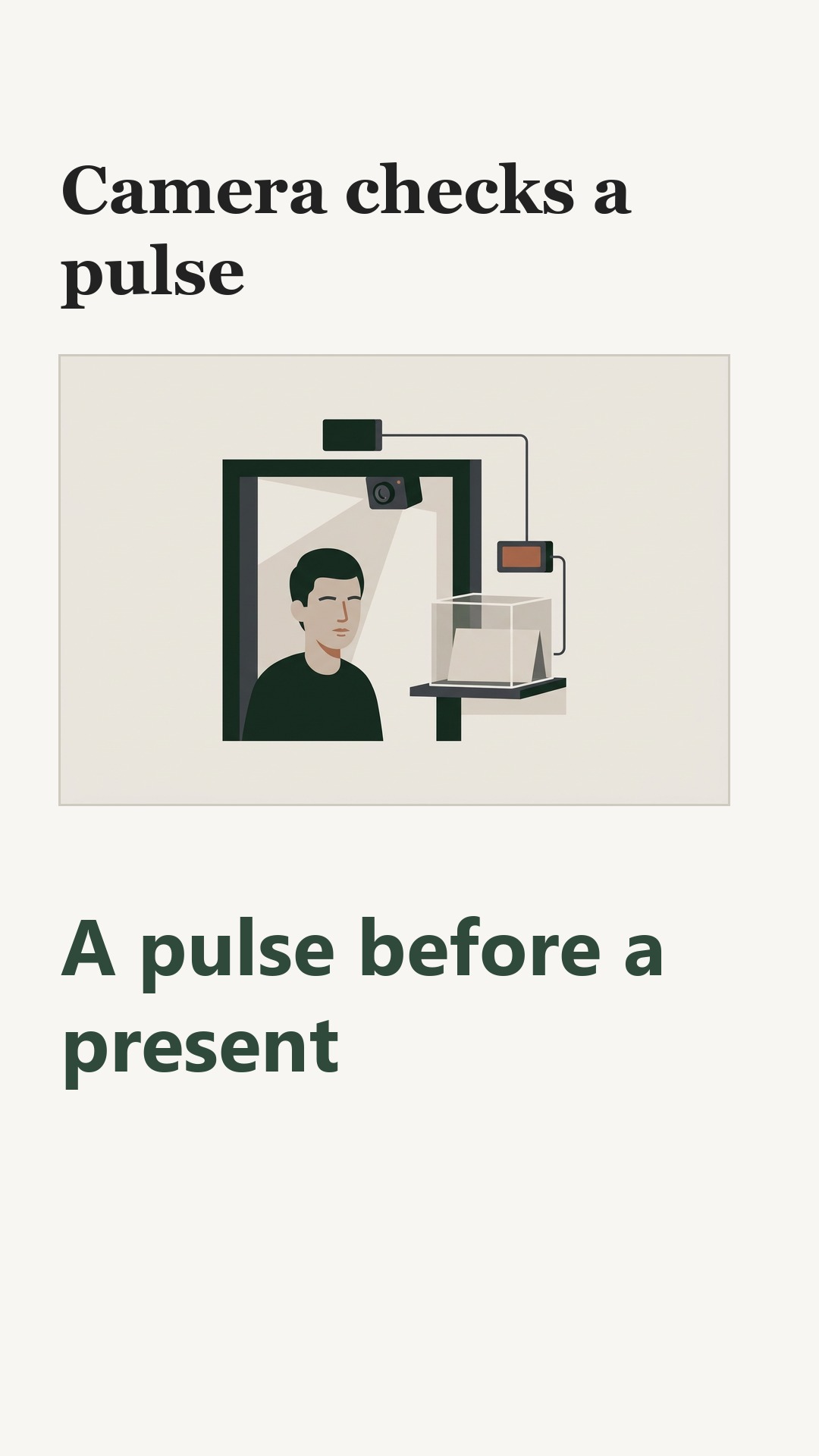
A camera at the classroom door sees a student's face. Before it marks anyone present, the system checks for a pulse.
It reads faint color changes in the skin, the kind a heartbeat makes. Printed photos and replayed videos do not have them. A second check looks for the small errors a computer program leaves behind when it fakes a face. Only then does the picture reach a recognition model, which is built to answer "I don't know" for an unregistered person instead of forcing a match. The decision is written into a log with a record of the student's consent.
That is LaED, described by researchers at the University of Abuja in Nigeria, Abu Dhabi University and Al Ain University in the United Arab Emirates.
In their tests, it reached 97.8 percent accuracy, against 95.2 percent for ArcFace, a widely used model. The largest gap between student groups was 1.8 percent. On a Jetson Nano, a small computer for cheap devices, it answered in 40 milliseconds.
Consider where those numbers come from. The classroom test used 50 participants across 12 sessions at a single school. The authors say it does not capture the mix of skin tones, ages, lighting and buildings found across schools. Six teachers and administrators rated the explanations.
The classroom test took place at one school, and the authors say it does not capture the mix of students and buildings found across schools.
Ask what a good score would need to mean for your child's school, and the answer is a larger test than this one. The authors also say technical safeguards cannot make up for weak school governance; a badly run school could still misuse the system. The source code sits in a private repository, and the classroom data is not public, so no outside person can check the claims.
When a school near you announces face-based attendance, look for three things: whether faces stay on school devices, whether a parent can withdraw consent, and whether any independent audit has been published.
What this means for you
What was tested here is one system, at one school of 50 people, and the authors say that is too small to stand for schools across a country. So when a school near you announces face-based attendance, the useful questions are still the plain ones: whether faces stay on school devices, whether a parent can withdraw consent, and whether anyone outside has checked the claims.
Abiodun, E. O., Abiodun, O. I., Alawida, M. et al. (2026). LaED: a novel lightweight, edge-aware and explainable deep learning model for privacy-preserving facial attendance tracking in resource-constrained educational environments. Scientific Reports. https://doi.org/10.1038/s41598-026-42051-8
Who paid: The work was fully supported by Abu Dhabi University under Grant No 1930063 and 19300887; the article does not say whether the funders had any role, and names no equipment or software donors beyond the commercial tools listed.
The longer versionThe passages copied from the paper, the pictures, and every source with how much of it we read · 1096 words · about 5 minRead it →Close
A Face-Attendance System Built to Keep Student Data at School. The Test Was 50 Students in One School.
A three-layer design for classroom attendance passed its benchmarks. Its own authors say that is not yet proof it works across schools, skin tones or age groups.
Consider the morning roll call. A camera watches the door, a small computer in the classroom decides who walked in, and a log records the decision. The paper describing this system, called LaED, was published on 15 May 2026 by a team from the University of Abuja in Nigeria and Abu Dhabi University in the United Arab Emirates, and the work was paid for by Abu Dhabi University under two grant numbers. The authors declare no competing interests.
The system is built in three layers. A perception layer checks whether the face in front of the camera is a live person; an identity layer decides who it is; and a trust layer stores the result and governs who may see it1. The liveness check measures tiny colour changes in the skin that follow the heartbeat, and compares them against the flat signal of a printed photo, a replayed video or a generated face2. A face the system cannot match confidently is marked unknown and left out of the attendance record rather than forced into a name3. The training is done on the classroom device itself, and only scrambled updates travel to a central server, so raw faces never leave the school4. Each attendance decision goes into a tamper-evident log, and the system keeps consent records and deletes expired biometric data56.
On the standard public test sets and on a classroom set gathered with consent, the authors report 97.8 percent recognition accuracy, a fairness gap under 2 percent between demographic groups, and a response time under 150 milliseconds on small edge devices7. On a Jetson Nano, a credit-card-sized computer, the system ran at 26 frames per second while drawing 4 watts8. The article describes a study in which it was more accurate than the tracking system of Bugingo and colleagues and the lightweight liveness system of Surantha and Sugijakko. The article describes a study in which it was also smaller and faster than the heavier recognition models, though one of those heavier models was slightly more accurate.
Then come the limits, and they are the ones that matter for a family. The classroom data came from 50 participants in a single school and, in the authors' words, does not capture the demographic, cultural or infrastructural diversity of broader education9. The classroom data is not public, and the source code sits in a private repository1011. The authors themselves write that technical safeguards cannot make up for weak institutional governance, and that schools with limited digital literacy may struggle with access control, incident handling and talking to parents12. What they propose next is multi-site studies across different lighting, camera placements, demographics and attendance policies13.
The reason a paper like this exists is visible in the record. The article describes a study in which unauthorized biometric data collection tied to Microsoft Teams in New South Wales in 2025, and regulatory action against Chelmer Valley High School in the United Kingdom, both show how a poorly governed system can violate student rights and fail to meet the rules14. The article describes a study in which schools are a hard place for this technology precisely because the users are often minors, the rules are strict, and the capacity to oversee a system may be thin15. Separate work on classroom surveillance, which we could read only as a summary because the full text was behind a subscription, describes AI monitoring of students becoming more common in schools, with students often not understanding how their behaviour and opportunities are shaped by the software1617. A review of AI in special-needs classrooms, also read only in summary, found promise but noted that many studies rested on teachers' impressions or small samples rather than direct classroom measurement1819. Another review of AI in Indonesian education, summary only, found growth concentrated in universities and cities on Java, with little in primary and secondary schools outside it20.
The rules that would govern a system like this already exist on paper. Europe's General Data Protection Regulation and the United States' Family Educational Rights and Privacy Act impose strict requirements on student data, and the authors note that failing them risks legal penalties and reputational harm21. What the paper adds is a mapping from each legal duty to a technical feature: data minimisation to on-device processing, the right to erasure to consent tokens and a retention manager, records of processing to the audit log. Whether that mapping holds in a real school, under a real regulator, is a question the paper does not test.
Here is how we read it. The pattern to watch is not the accuracy figure but the question of who answers when the machine is wrong. A student marked absent by a system nobody at the school can explain has no one to appeal to, and a school that adopts face attendance will rarely announce which decisions are automatic. We would expect most schools to have no independent way to check whether an explanation is correct, and no named official who owns a mistaken record. You would know we are wrong if a school published, before switching the system on, which decisions are automatic, who is responsible for a wrong mark, and how a family can contest one and get a reasoned reply.
A second thing to watch is how fairness gets measured. The paper closes gaps between groups it defined in advance, and it fills some of those gaps with computer-generated faces. Real disputes in a school tend to fall outside those boxes: a student whose appearance changes during the year, a student in religious headwear, a student the camera keeps misreading. Expect the published fairness numbers to look cleaner than any one student's experience of being misread. You would know we are wrong if a school published its error rates on its own students, broken down by the categories parents themselves raise, and honoured corrections quickly. When a school announces face-based attendance, ask in writing for its error rates on its own students, for the deletion procedure, and for whether attendance can still be recorded for a child who opts out. Keep the answer, or the silence.
The camera at the door will keep watching. What a parent can do is make the school say, on paper, who is accountable when it gets the face wrong — and keep that paper.
Where each piece of context comes from, and how much of it we read
- Abiodun, E. O., Abiodun, O. I., Alawida, M. et al. (2026). LaED: a novel lightweight, edge-aware and explainable deep learning model for privacy-preserving facial attendance tracking in resource-constrained educational environments. Scientific Reports. https://doi.org/10.1038/s41598-026-42051-8 - the article this story is about — the whole article — the passage: "LaED is organized as a three-layer architecture consisting of a Perception Layer, an Identity Layer, and a Trust Layer. Each layer performs a distinct functional role in the attendance pipeline, and together they form an edge-deployable system suitable for classroom environments."
- Abiodun, E. O., Abiodun, O. I., Alawida, M. et al. (2026). LaED: a novel lightweight, edge-aware and explainable deep learning model for privacy-preserving facial attendance tracking in resource-constrained educational environments. Scientific Reports. https://doi.org/10.1038/s41598-026-42051-8 - the article this story is about — the whole article — the passage: "Remote photoplethysmography (rPPG) is applied to extract subtle skin color variations associated with blood flow. These physiological signals are computed in parallel with face detection and are used to distinguish live subjects from static images, replayed videos, or synthetically generated faces."
- Abiodun, E. O., Abiodun, O. I., Alawida, M. et al. (2026). LaED: a novel lightweight, edge-aware and explainable deep learning model for privacy-preserving facial attendance tracking in resource-constrained educational environments. Scientific Reports. https://doi.org/10.1038/s41598-026-42051-8 - the article this story is about — the whole article — the passage: "Inputs that do not meet acceptance criteria are labeled as unknown and excluded from attendance records."
- Abiodun, E. O., Abiodun, O. I., Alawida, M. et al. (2026). LaED: a novel lightweight, edge-aware and explainable deep learning model for privacy-preserving facial attendance tracking in resource-constrained educational environments. Scientific Reports. https://doi.org/10.1038/s41598-026-42051-8 - the article this story is about — the whole article — the passage: "Model updates are trained locally on edge devices and aggregated using a federated learning protocol. Differential privacy noise is applied to model updates prior to aggregation, limiting the risk of reconstructing biometric information from transmitted parameters."
- Abiodun, E. O., Abiodun, O. I., Alawida, M. et al. (2026). LaED: a novel lightweight, edge-aware and explainable deep learning model for privacy-preserving facial attendance tracking in resource-constrained educational environments. Scientific Reports. https://doi.org/10.1038/s41598-026-42051-8 - the article this story is about — the whole article — the passage: "Each attendance decision is recorded in a tamper-evident audit log constructed using cryptographic hash chaining. These logs enable post hoc verification of attendance records by authorized parties."
- Abiodun, E. O., Abiodun, O. I., Alawida, M. et al. (2026). LaED: a novel lightweight, edge-aware and explainable deep learning model for privacy-preserving facial attendance tracking in resource-constrained educational environments. Scientific Reports. https://doi.org/10.1038/s41598-026-42051-8 - the article this story is about — the whole article — the passage: "The Trust Layer maintains consent records, enforces data retention policies, and supports automated deletion of expired biometric data."
- Abiodun, E. O., Abiodun, O. I., Alawida, M. et al. (2026). LaED: a novel lightweight, edge-aware and explainable deep learning model for privacy-preserving facial attendance tracking in resource-constrained educational environments. Scientific Reports. https://doi.org/10.1038/s41598-026-42051-8 - the article this story is about — the whole article — the passage: "Experimental evaluation on CASIA-FASD, CelebA-Spoof, DFDC, FairFace, and a consent-driven classroom dataset shows that LaED achieves over 97.8% recognition accuracy, APCER and BPCER values below 2%, demographic fairness gaps under 2%, and inference latency below 150 milliseconds on edge hardware."
- Abiodun, E. O., Abiodun, O. I., Alawida, M. et al. (2026). LaED: a novel lightweight, edge-aware and explainable deep learning model for privacy-preserving facial attendance tracking in resource-constrained educational environments. Scientific Reports. https://doi.org/10.1038/s41598-026-42051-8 - the article this story is about — the whole article — the passage: "LaED achieved 26 FPS at 4 W on Jetson Nano, striking the best balance of throughput and efficiency."
- Abiodun, E. O., Abiodun, O. I., Alawida, M. et al. (2026). LaED: a novel lightweight, edge-aware and explainable deep learning model for privacy-preserving facial attendance tracking in resource-constrained educational environments. Scientific Reports. https://doi.org/10.1038/s41598-026-42051-8 - the article this story is about — the whole article — the passage: "The dataset includes 50 participants from a single school and does not capture the demographic, cultural or infrastructural diversity present across broader educational environments."
- Abiodun, E. O., Abiodun, O. I., Alawida, M. et al. (2026). LaED: a novel lightweight, edge-aware and explainable deep learning model for privacy-preserving facial attendance tracking in resource-constrained educational environments. Scientific Reports. https://doi.org/10.1038/s41598-026-42051-8 - the article this story is about — the whole article — the passage: "The in-house dataset is not publicly available due to privacy and ethical restrictions but may be shared in de-identified form upon reasonable request to the corresponding author, subject to institutional approval."
- Abiodun, E. O., Abiodun, O. I., Alawida, M. et al. (2026). LaED: a novel lightweight, edge-aware and explainable deep learning model for privacy-preserving facial attendance tracking in resource-constrained educational environments. Scientific Reports. https://doi.org/10.1038/s41598-026-42051-8 - the article this story is about — the whole article — the passage: "The system design and evaluation emphasized privacy preservation, fairness, and prevention of discriminatory outcomes. All experiments were implemented in Python, and the full source code is available at a private GitHub repository"
- Abiodun, E. O., Abiodun, O. I., Alawida, M. et al. (2026). LaED: a novel lightweight, edge-aware and explainable deep learning model for privacy-preserving facial attendance tracking in resource-constrained educational environments. Scientific Reports. https://doi.org/10.1038/s41598-026-42051-8 - the article this story is about — the whole article — the passage: "Technical safeguards cannot fully compensate for weak institutional governance. Schools with limited digital literacy or inconsistent enforcement practices may struggle to maintain robust access control, incident handling and parental communication procedures."
- Abiodun, E. O., Abiodun, O. I., Alawida, M. et al. (2026). LaED: a novel lightweight, edge-aware and explainable deep learning model for privacy-preserving facial attendance tracking in resource-constrained educational environments. Scientific Reports. https://doi.org/10.1038/s41598-026-42051-8 - the article this story is about — the whole article — the passage: "Future work will include multi-site studies involving classrooms with varied lighting conditions, camera placements, demographic composition, and attendance policies."
- Abiodun, E. O., Abiodun, O. I., Alawida, M. et al. (2026). LaED: a novel lightweight, edge-aware and explainable deep learning model for privacy-preserving facial attendance tracking in resource-constrained educational environments. Scientific Reports. https://doi.org/10.1038/s41598-026-42051-8 - the article this story is about — the whole article — the passage: "Recent incidents, including unauthorized biometric data collection associated with Microsoft Teams in New South Wales in 2025 and regulatory action against Chelmer Valley High School in the United Kingdom, demonstrate how poorly governed systems can violate student rights and fail to meet regulatory compliance."
- Abiodun, E. O., Abiodun, O. I., Alawida, M. et al. (2026). LaED: a novel lightweight, edge-aware and explainable deep learning model for privacy-preserving facial attendance tracking in resource-constrained educational environments. Scientific Reports. https://doi.org/10.1038/s41598-026-42051-8 - the article this story is about — the whole article — the passage: "These cases highlight the sensitivity of biometric technologies in educational environments, where users are often minors, regulatory requirements are stringent, and institutional capacity for oversight may be limited."
- Nemorin S. (2026). ‘Hey, I See You. Do You Need Help?’: Understanding the Algorithmic Gaze of AI-Driven Student Surveillance. Postdigital Science and Education. https://doi.org/10.1007/s42438-026-00720-x — only the abstract - the full text could not be fetched — the passage: "The adoption of Artificial Intelligence (AI)-driven surveillance systems in educational settings is becoming increasingly common as policymakers, school leaders, and educators seek to enhance student safety and wellbeing."
- Nemorin S. (2026). ‘Hey, I See You. Do You Need Help?’: Understanding the Algorithmic Gaze of AI-Driven Student Surveillance. Postdigital Science and Education. https://doi.org/10.1007/s42438-026-00720-x — only the abstract - the full text could not be fetched — the passage: "The impacts of the algorithmic gaze are particularly concerning in educational settings where AI technologies are increasingly used to monitor students’ behaviour and mental health, often without students fully understanding how their actions, opportunities, and experiences may be mediated by code."
- Rosadi A, Efendi M, Ediyanto E. (2026). The Use Of Artificial Intelligence (AI) As An Interactive Learning Tool For Students With Intellectual Disabilities In Special Education Schools. Urwatul Wutsqo: Jurnal Studi Kependidikan dan Keislaman. https://doi.org/10.54437/urwatulwutsqo.v15i3.3831 — only the abstract - the full text could not be fetched — the passage: "Findings suggest that these technologies can support students' attention, engagement, motivation, conceptual understanding, memory, and independence by providing visual representations, structured practice, and immediate feedback."
- Rosadi A, Efendi M, Ediyanto E. (2026). The Use Of Artificial Intelligence (AI) As An Interactive Learning Tool For Students With Intellectual Disabilities In Special Education Schools. Urwatul Wutsqo: Jurnal Studi Kependidikan dan Keislaman. https://doi.org/10.54437/urwatulwutsqo.v15i3.3831 — only the abstract - the full text could not be fetched — the passage: "However, evidence varies considerably across study designs, learner characteristics, and technologies. Several studies relied on teachers' perceptions or small samples rather than direct classroom measurements, limiting conclusions about effectiveness."
- Riski A, Paais RL, Komariah A, Novebri N, Alang LP, Ataupah WV, et al. (2026). AI Integration in Indonesian Education: Trends, Outcomes, and Challenges - A Comprehensive Review. F1000Research. 10.12688/f1000research.188536.3 — only the abstract - the full text could not be fetched — the passage: "However, this growth remains unevenly distributed, concentrated in higher education institutions and urban centers on the island of Java, with a marked absence in primary and secondary education levels and in regions outside Java."
- Abiodun, E. O., Abiodun, O. I., Alawida, M. et al. (2026). LaED: a novel lightweight, edge-aware and explainable deep learning model for privacy-preserving facial attendance tracking in resource-constrained educational environments. Scientific Reports. https://doi.org/10.1038/s41598-026-42051-8 - the article this story is about — the whole article — the passage: "Regulatory frameworks such as the General Data Protection Regulation in Europe and the Family Educational Rights and Privacy Act in the United States impose strict requirements on the handling of student data. Compliance with these regulations is not optional; institutions that fail to meet standards risk legal penalties and reputational harm."
Abiodun, E. O., Abiodun, O. I., Alawida, M. et al. (2026). LaED: a novel lightweight, edge-aware and explainable deep learning model for privacy-preserving facial attendance tracking in resource-constrained educational environments. Scientific Reports. https://doi.org/10.1038/s41598-026-42051-8
Who paid: The work was fully supported by Abu Dhabi University under Grant No 1930063 and 19300887; the article does not say whether the funders had any role, and names no equipment or software donors beyond the commercial tools listed.
The findings of other studies mentioned here come from this document; those studies were not opened one by one.