Weekly AI Watch
Every week, what changed and what it means for you. No hurry, no alarm.
Observatorio de la
Inteligencia Artificial
Cada semana, qué cambió y qué significa para usted. Sin prisa y sin alarma.
weeklyAI · Week of 30 October 2026weeklyAI · Semana del 30 de octubre de 2026
Your parentsSus padres
older people and the adult children who look out for thempersonas mayores y los hijos adultos que las cuidan
Ask the weeklyAI chat
Ask me about AI in your life: I point you to the stories weeklyAI has published on it, this week and before.
Conversations are saved for as long as weeklyAI exists, to improve the publication. Answers come in the language you write in.
Pregunte al chat de weeklyAI
Pregúnteme sobre la IA en su vida: le señalo las notas que weeklyAI ha publicado sobre el tema, esta semana y antes.
Las conversaciones se guardan mientras exista weeklyAI, para mejorar la publicación. Se responde en el idioma en que usted escribe.
- A Chatbot Answers at Once. The Question Is Whether It Says How Soon, and Who Should Be There. free short + detailed In a test of 90 written questions about depression in later life, the three chatbots gave acceptable answers 79, 72 and 60 percent of the time, and did worse on the riskiest ones. You type a question into a chatbot: a father who has stopped eating much, a mother who seems confused since a new pill, a low mood that will not lift.Los chatbots contestan con soltura. En los casos de más riesgo, fallan más. gratis breve + detallada En una prueba con 90 preguntas escritas por investigadores en inglés, los tres modelos dieron respuestas aceptables en la mayoría de los casos, pero en las preguntas de mayor riesgo bajaron mucho. Un hijo o una hija escribe en el teléfono: mi mamá dejó de comer y se le olvidan las cosas desde la semana pasada. El chatbot contesta en segundos, con frases tranquilas y bien ordenadas.
- ChatGPT Answers on Falls: Mostly Sound, Often Too Hard to Read subscribe short + detailed Six experts rated ten answers from ChatGPT 5.2. None were rated unsatisfactory, but five were written above the reading level recommended for patient materials. Someone in the family opens a chatbot and asks how to keep an older parent from falling at home. Or how to get up safely after a fall. The answer comes back in seconds, in full sentences, and it sounds like advice.Un chatbot contestó diez preguntas sobre caídas: la mitad estaba escrita para un lector de secundaria suscríbase breve + detallada Seis especialistas calificaron las respuestas como buenas o aceptables, pero no se probó con ninguna persona mayor si de verdad las entendían. Una hija abre el chatbot en su teléfono y le pregunta cómo evitar que su papá se caiga en casa. O le pide que le explique cómo levantarse del piso después de una caída. Esas mismas preguntas ya se las hacen muchas familias, y un grupo de investigadores quiso ver qué tan buenas son las respuestas.
- "You Need a Ramp, a Hospital Bed": What Families Would Ask a Voice Assistant subscribe short + detailed A wish for spoken help with care, from nine people in an Indiana workshop study. Nothing was built or tried at home, and the same people set conditions. "You need a ramp, you need a hospital bed, you need to make sure they have the wheelchair. So it's gonna give you a list of all the stuff you need and potentially where you get it and who pays for it. A caregiver in the study imagined a voice assistant saying that.Una voz que ayuda en casa: lo que nueve familias pidieron y lo que todavía no se puede saber suscríbase breve + detallada En talleres con tres personas mayores y seis cuidadores, los participantes imaginaron cómo podría ayudar un asistente de voz. Nadie construyó ni probó uno, y son nueve personas de un solo estudio en Estados Unidos. "Usted necesita una rampa, necesita una cama de hospital, necesita asegurarse de que tienen la silla de ruedas. Le va a dar una lista de todo lo que necesita y, posiblemente, dónde conseguirlo y quién paga". Así imaginó un cuidador del estudio lo que un asistente de voz podría hacer por él.
- Residents of Affordable Housing Helped Design the Voice Assistant They Would Want subscribe short + detailed In three Virginia buildings, 29 older adults turned 153 ideas into seven story scenarios. None of the scenarios has been built or tested, so no one can yet say whether any of it works. A 78-year-old man named Tom wants to know whether his neighbor Jeanne is all right. He speaks to the speaker on his table: “Alexa, connect me to Jeanne. They chat briefly through the speaker and share what is going on with them.La cajita que responde a la voz, y lo que pidieron quienes viven solos suscríbase breve + detallada En tres edificios de vivienda para personas de bajos ingresos, 29 adultos mayores ayudaron a diseñar siete guiones de voz. Nada se instaló ni se probó, y el estudio no midió si la soledad baja. Un aparato que responde a la voz y se maneja sin usar las manos.
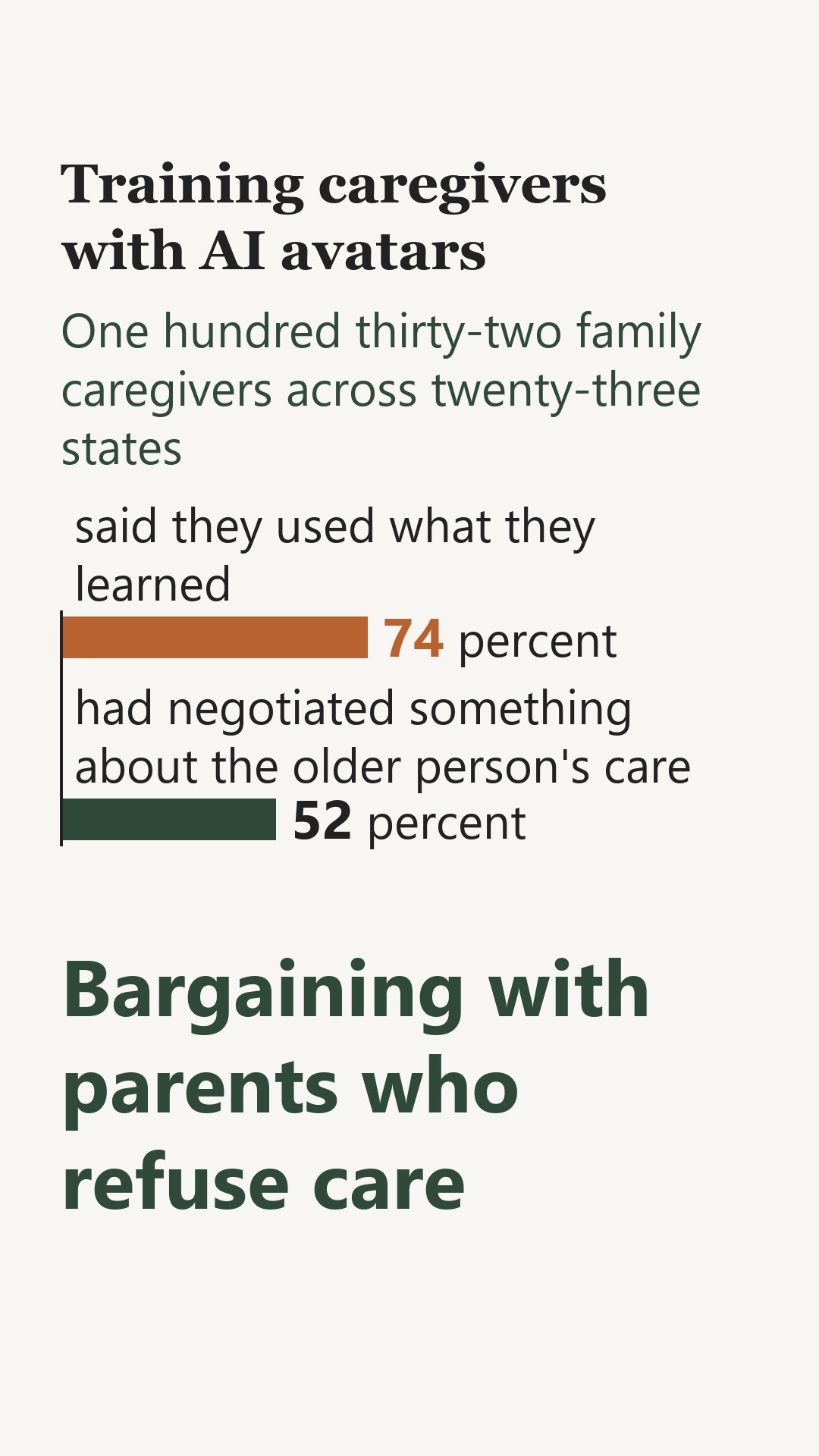
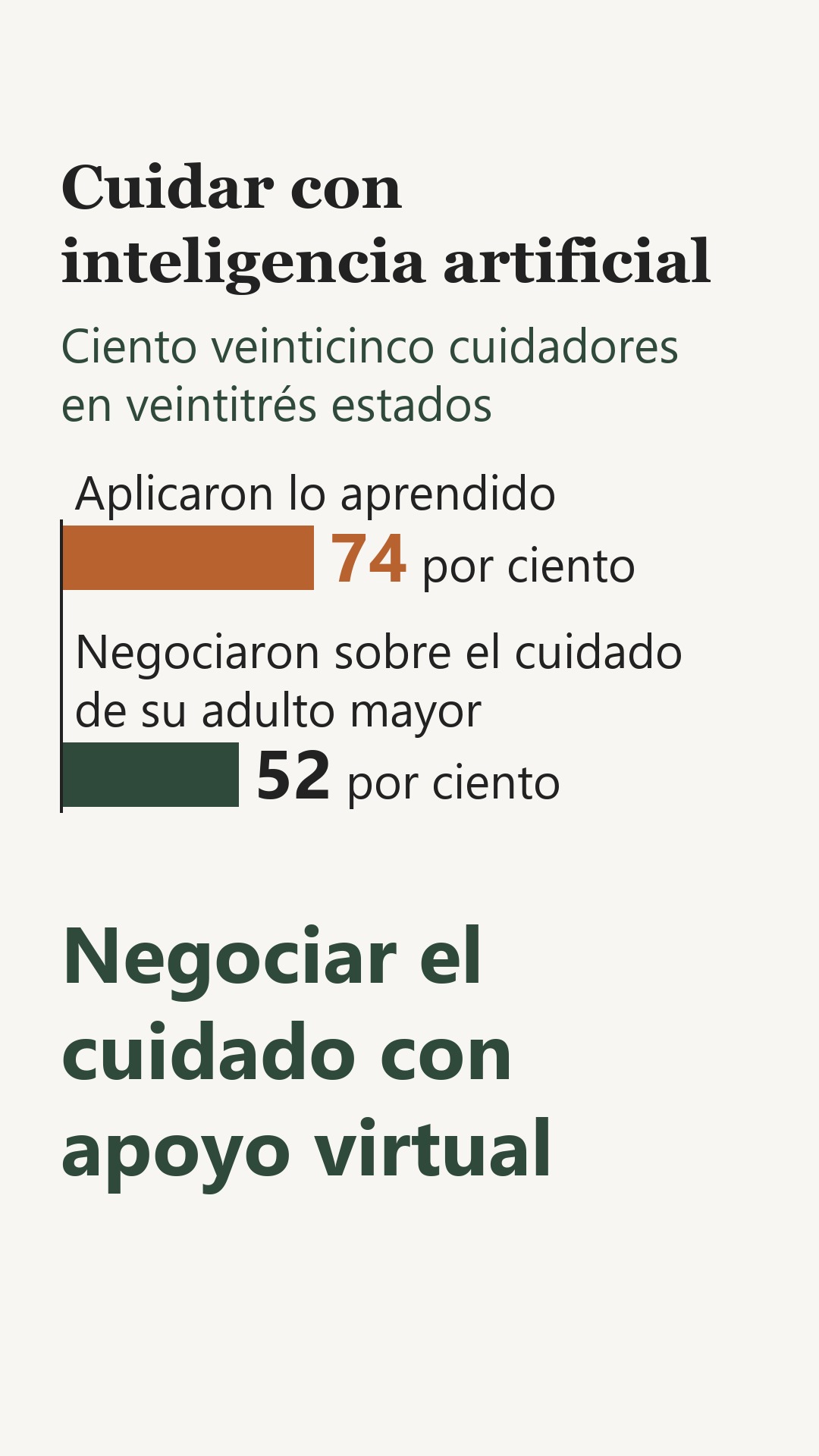
- A 45-Minute Course Taught Caregivers to Bargain With a Parent Who Refuses Help subscribe short + detailed In a 23-state study, family caregivers of people with Alzheimer's reported less burden and less negative mood a month later. Their parents' own care was not measured. Researchers at Northwestern University built an online course called NegotiAge. It runs about 45 minutes. Short videos explain how to negotiate, and the learner then practices with AI avatars that show emotions and answer in real time. The avatars draw on more than 1,000 lines written with family caregivers, geriatricians, social workers, nurses and older adults.Un curso de 45 minutos enseñó a cuidadores a negociar con la IA: menos carga a un mes suscríbase breve + detallada En un estudio con 125 familiares de personas con Alzheimer, la carga y el malestar bajaron. El ensayo se hizo para ajustar el programa, no para probarlo del todo, y sólo midió a los cuidadores. Un grupo de investigadores de la Universidad Northwestern, en Estados Unidos, construyó un curso en línea llamado NegotiAge. Dura unos 45 minutos. Tiene videos cortos sobre cómo negociar y la oportunidad de practicar con personajes creados por inteligencia artificial, avatares que muestran emociones y responden.

Todas las notas de todas las secciones, breves y detalladas, la edición completa por correo cada semana y todas las ediciones pasadas: 199 MXN al mes, cancele cuando quiera; o seis meses o un año en un único pago.
Vea lo que recibe¿Ya está suscrito? Entre aquí.
Every story of every section, short and detailed, the whole edition by email every week, and every past edition: $9.95 a month, cancel whenever you like; or six months or a year paid once.
See what you getAlready a subscriber? Sign in.