interviews · Frontiers in digital health · la publicación, 15 sep 2026 · gratis
Graban voces para diagnosticar enfermedades: once empresas contaron cómo lo hacen
Investigadores de Weill Cornell entrevistaron a representantes de once empresas que usan la inteligencia artificial sobre la voz. Dos de esas empresas no habían pedido ninguna revisión ética para sus propios estudios, y cuatro recogían datos en países de ingresos bajos y medios.
Versión breve · la versión detallada sigue, unos 7 min
Pregunte al chat de weeklyAI
Pregúnteme por este estudio: a quiénes se estudió, qué encontró y qué no dice.
Las conversaciones se guardan mientras exista weeklyAI, para mejorar la publicación. Se responde en el idioma en que usted escribe.
- El estudio, de un vistazo
- Quiénes
- Representantes de empresas que usan inteligencia artificial sobre la voz
- Cuántos
- once de veintisiete empresas contactadas
- Dónde
- India, cuatro países africanos y Europa
- Cuándo
- entre febrero y mayo de 2025
- Tipo de estudio
- entrevistas
- Quién lo hizo
- Facultad de Medicina Weill Cornell
- El límite que importa
- Solo once de veintisiete empresas aceptaron participar y las contactaron por una red académica.
Número de participantes que una sola empresa reportó por región; en Europa la cifra es menor a 1,000, y son datos de una sola empresa, no del sector.
Dónde se recogen los datos y dónde se venden los productos
Los datos salen de países de ingreso bajo y medio y los productos se venden en países de ingreso alto
La compensación es menor donde se recogen los datos
La misma señal que lleva valor diagnóstico lleva identidad, y las dos no se pueden separar sin destruir el dato.
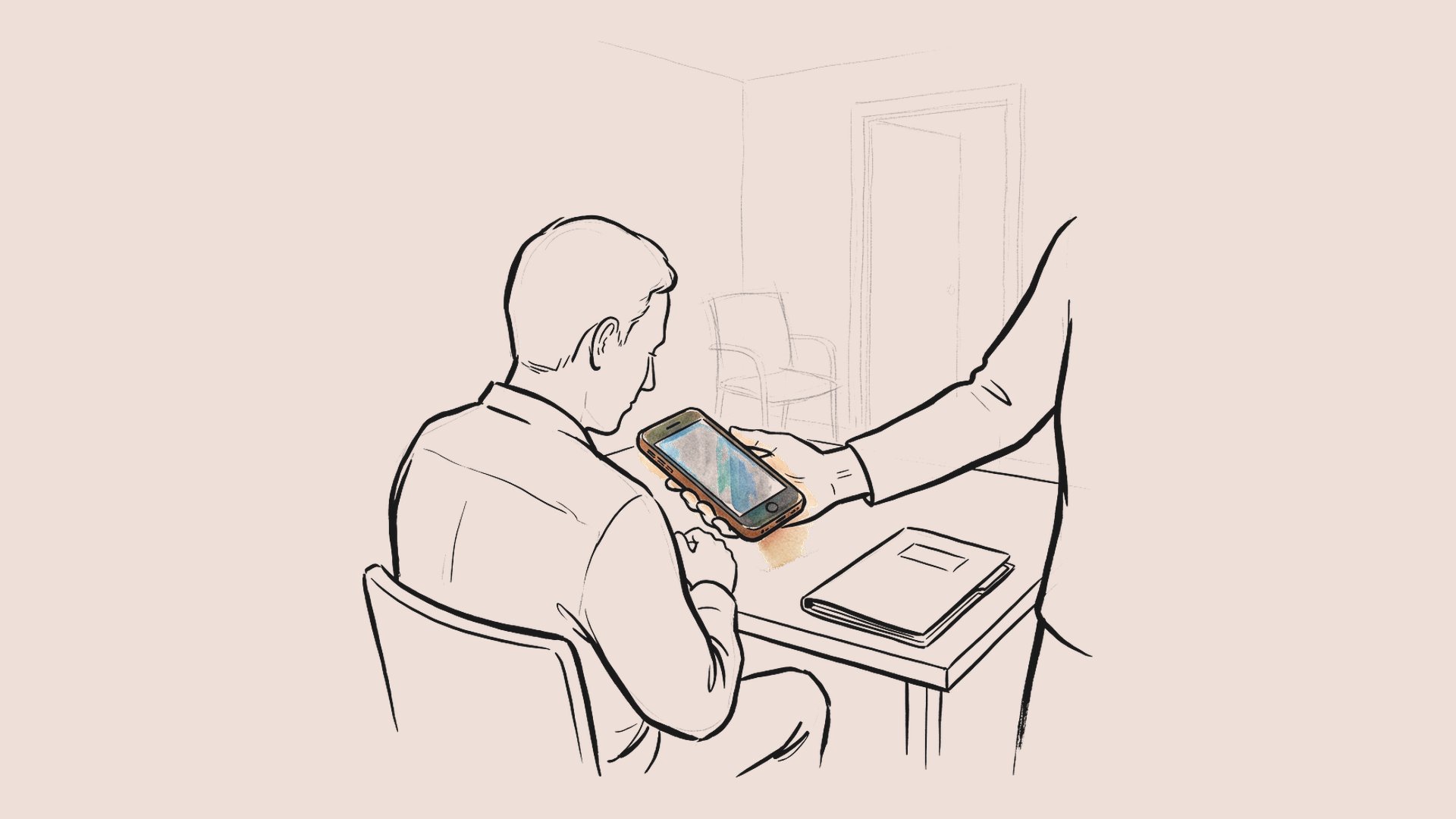
Entre febrero y mayo de 2025, investigadores de la Facultad de Medicina Weill Cornell entrevistaron por video a representantes de once empresas que usan la inteligencia artificial sobre la voz. Las entrevistas duraron menos de treinta minutos. Las condiciones que más buscaban detectar eran el alzhéimer, la diabetes tipo 2 y la depresión. Se acercaron a veintisiete empresas y once aceptaron participar.
Los representantes describieron cómo recogen las voces. Cada empresa lo hace a su manera, sin una norma común. Un teléfono graba distinto que otro teléfono, y una computadora distinta que un teléfono. Eso mete ruido en los datos. Además, a veces un médico dice que un paciente tiene asma y otro dice que no, y esa duda en la etiqueta puede arruinar el sistema.
La revisión ética varió. Dos de las once empresas no habían buscado ninguna para sus propios estudios. Las empresas con vínculos con universidades pasaron por comités de ética de varios sitios. El consentimiento también varió: desde casillas marcadas una por una hasta permisos que se daban por hecho y explicaciones muy breves.
Cuatro de las once empresas recogieron datos en países de ingresos bajos y medios, tres de ellas en India. Una empresa informó de unos 50,000 participantes en India y 10,000 en cuatro países africanos, frente a menos de 1,000 en Europa. Sus productos estaban pensados sobre todo para países de ingresos altos. Una de ellas dijo que Canadá sería el primero.
Un representante dijo que la voz no se puede anonimizar del todo, y otro dijo que si cambian la voz, el dato ya no sirve. Siete de las once ya habían hecho productos comerciales con sus datos, y tres más estaban en eso. Varias mantenían sus datos privados.
Los investigadores advierten que entrevistaron a once de veintisiete empresas y que las contactaron por la lista de contactos de un consorcio académico. Es probable que hayan participado las empresas que ya estaban en contacto con el mundo académico y la ética. Lo que contaron son sus propias palabras, sin verificación independiente.
El estudio no dice qué permite ni qué prohíbe la ley de ningún país. Para quien reciba la invitación de grabar su voz para una aplicación de salud, queda una cosa que mirar: quién pide la grabación, dónde va a quedar guardada y si alguien independiente revisó el estudio.
Qué significa para usted
El estudio no le dice qué permite la ley de su país, porque solo recogió lo que contaron once empresas. Si alguna vez le piden grabar su voz para una aplicación de salud, usted puede preguntar quién lo pide, dónde quedará guardada la grabación y si un comité independiente revisó el estudio antes de empezar.
Yuhan, A., Swain, S., Zhao, R. et al. (2026). The epistemic economy of vocal biomarker startups: a qualitative interview study of data practices and governance. Frontiers in Digital Health. https://doi.org/10.3389/fdgth.2026.1895383
Quién pagó: AR recibió apoyo de un Paul B. Beeson Emerging Leaders Career Development Award in Aging (K76 AG079040) del National Institute on Aging y del premio Bridge2AI (OT2 OD032720) del NIH Common Fund; el artículo no dice si los financiadores tuvieron alguna injerencia en el estudio, y no menciona equipos ni programas informáticos cedidos para el trabajo.
No tome esto como consejo médico profesional.
Versión detalladaLos pasajes copiados del artículo, las ilustraciones y cada fuente con cuánto leímos de ella · 1454 palabras · unos 7 minLeerla →Cerrar
Grabaron voces en India y África para productos que se venderán en Canadá y Estados Unidos
Once empresas de biomarcadores vocales contaron cómo recogen, guardan y usan su voz. Dos no pidieron revisión ética de ningún tipo.
Un grupo de investigadores entrevistó a representantes de once empresas que usan inteligencia artificial para analizar la voz y detectar enfermedades. Las entrevistas se hicieron por videollamada entre febrero y mayo de 2025, y cada una duró menos de media hora. De veintisiete empresas contactadas, once aceptaron participar.
Los biomarcadores vocales son rasgos de la voz que, solos o combinados, se validan como indicadores de resultados clínicos1. El artículo describe un estudio en el que la inteligencia artificial permite explorar, diagnosticar y vigilar enfermedades como el párkinson, el alzhéimer, la depresión o la insuficiencia cardíaca, y la voz se puede recoger sin invadir el cuerpo con la tecnología de un teléfono inteligente.
El problema es que esa promesa choca con la forma en que se recogen los datos. Los investigadores encontraron seis patrones repetidos. El primero: no existen estándares compartidos para grabar la voz. Cada empresa usa sus propios protocolos, y eso introduce ruido, confusión y etiquetas poco fiables que socavan la validez científica.
El segundo patrón es la revisión ética. Dos de las once empresas no buscaron ninguna revisión de sus propios estudios2. Una de ellas era un negocio cuyo fundador no conocía el proceso de revisión institucional y planeaba hacerlo solo a través de una futura colaboración universitaria; la otra sostuvo que sus miembros en instituciones académicas "no requieren esa información"2.
El tercer patrón es el consentimiento. Una empresa obtuvo exenciones de consentimiento argumentando que sus estudios eran de "riesgo no significativo", una categorización que merece escrutinio dado el carácter biométrico de la voz3. Otra explicó que quería que el formulario fuera corto mientras su responsable de protección de datos quería que fuera largo, y buscó un punto medio4.
El cuarto patrón es que la voz no se puede anonimizar de verdad. Los propios representantes lo reconocieron: "La desidentificación de la voz es muy problemática… no puedo cambiar la voz porque… entonces no sirve"5. La misma señal que lleva valor diagnóstico lleva identidad, y las dos no se pueden separar sin destruir el dato.
El quinto patrón es el más incómodo para esta región. Cuatro de las once empresas recogieron datos en países de ingreso bajo y medio, tres de ellas en India6. Una empresa informó aproximadamente 50,000 participantes en India y 10,000 en cuatro países africanos, frente a menos de 1,000 en Europa7. Y la compensación en esos lugares es menor: "En India, son unos pocos dólares al día. En Estados Unidos sería mucho más"6. Los productos, en cambio, apuntan a mercados de ingreso alto8.
El sexto patrón es comercial. Las empresas guardan sus datos como activos corporativos, y cuando cada una entrena y valida sus modelos con su propio conjunto cerrado de datos, no existe un mecanismo independiente que verifique si sus resultados son reales o solo particularidades de ese conjunto.
Los propios autores advierten sobre los límites. Solo once de veintisiete empresas aceptaron participar, y la convocatoria pasó por la red de un consorcio académico, lo que probablemente atrajo a las compañías más comprometidas con la ética9. Las entrevistas recogen lo que los representantes dijeron, no lo que se verificó de forma independiente. El estudio no puede establecer qué tan comunes son estas prácticas en todo el sector.
Conviene entender por qué la voz es un dato distinto a cualquier otro. El artículo describe un estudio en el que las huellas de voz están entre los dieciocho identificadores que la regla de privacidad de HIPAA enumera en su estándar de puerto seguro10. El artículo describe un estudio en el que, bajo el Reglamento General de Protección de Datos de la Unión Europea, las grabaciones de voz constituyen datos biométricos sujetos a protecciones especiales cuando se procesan para identificar a una persona10.
La voz es un dato poco común: puede ser un indicador clínico útil y a la vez una información que identifica mucho a la persona. La misma señal que lleva valor diagnóstico lleva identidad, y las dos no se pueden separar sin destruir el dato.
Otros trabajos que leímos apuntan en la misma dirección. Un estudio sobre conversaciones clínicas con inteligencia artificial encontró que eliminar identificadores en cada paso por separado puede no ser suficiente: la misma persona mencionada a lo largo de varios turnos acumula pistas que van estrechando el cerco hasta identificarla. Solo pudimos leer el resumen; el texto completo está detrás de una suscripción.
Otro trabajo sobre modelos médicos encontró que los ataques de privacidad que buscan determinar si los datos de una persona se usaron para entrenar un modelo pueden tener éxito casi perfecto para pacientes individuales, incluso cuando el desempeño general parece no ser mejor que el azar. También leímos solo el resumen.
Y un tercer trabajo sobre reutilización de datos de salud señala que los instrumentos de gobernanza —registros de procedencia, aprobaciones de repositorios, formularios de consentimiento amplio, acuerdos de uso de datos— son necesarios pero no suficientes para establecer que un uso presente siga siendo éticamente justificado. Solo el resumen estaba disponible.
Lo que estos trabajos sugieren, en conjunto, es que el problema no se resuelve simplemente cumpliendo con las normas existentes. Los autores del estudio sobre startups señalan que los marcos de procedencia, consentimiento y privacidad no están ausentes, sino mal adaptados a los datos de voz, y que deben ajustarse en lugar de descartarse.
Los autores del estudio sobre startups proponen varias cosas. Para los reguladores, recomiendan reevaluar la clasificación de riesgo de la voz bajo marcos como HIPAA y el reglamento europeo, y adjuntar expectativas de reparto de beneficios y participación comunitaria a la investigación hecha con datos de países de ingreso bajo y medio11. También piden que se exijan planes de disposición de datos biométricos, para que el destino de las grabaciones quede definido antes, no después, de que una empresa cierre12.
Ese último punto no es hipotético. Una empresa entrevistada había detenido operaciones tras no cerrar una ronda de financiamiento, y en ese momento tenía grabaciones de voz psiquiátricas recogidas bajo consentimientos que presuponían un custodio permanente. Ningún entrevistado describió un plan para el destino de esos datos al disolverse la empresa13.
Aquí es cómo lo leemos nosotros. Cuando un recurso valioso —en este caso, la voz— se produce en comunidades con menos poder y se administra desde centros con más poder, esas comunidades rara vez deciden qué se comparte, con quién y para qué. Lo común se declara abierto, pero su control queda en manos de quienes ya concentran los medios.
Eso nos lleva a esperar algo concreto en hogares como el suyo: si alguna vez le piden su voz para un estudio, una aplicación o un tamizaje en el trabajo, es probable que nadie le explique en su idioma quién será el dueño de la grabación, en qué país se almacenará ni cómo pedir que la borren. También esperaríamos que le ofrezcan un formulario corto y difícil de cuestionar, en lugar de una conversación que le permita negarse o poner condiciones.
¿Cómo sabríamos que nos equivocamos? Si las empresas pudieran mostrar convenios firmados con las comunidades donde graban, canales de reclamo accesibles en el país de origen y registros públicos de dónde quedan guardadas las grabaciones, nuestra sospecha no tendría base.
Lo que usted puede hacer con esto es sencillo. Antes de prestar su voz —para un estudio, una aplicación de salud o un examen ocupacional— pregunte por escrito tres cosas: quién es el dueño de la grabación, en qué país se almacenará y cuál es el procedimiento para pedir su eliminación. Pida también el nombre de la empresa responsable y bajo qué ley responde. Guarde copia de lo que firma.
Y cuando una empresa le diga que su sistema es "neutral" o "solo técnico", pregunte quién lo diseñó, con qué datos se entrenó y qué pasa si el resultado perjudica a alguien. Esa información, por escrito, es su registro.
Este estudio no le dice qué permite o prohíbe la ley en su país. No nombra ninguna norma nacional, ninguna decisión de autoridad y ninguna sentencia. Tampoco establece que las prácticas que describe sean las más comunes del sector: la muestra es pequeña y las empresas que aceptaron participar probablemente son las más cuidadosas, no las peores. Las entrevistas recogen lo que los representantes dijeron, no lo que se comprobó.
Lo que sí ofrece es una pregunta útil para la próxima vez que alguien le pida su voz para un producto de salud: ¿quién se quedará con ella, dónde vivirá y quién decidirá qué se hace con ella cuando la empresa que la recogió ya no exista?
De dónde sale cada dato de contexto, y cuánto leímos de cada documento
- Yuhan, A., Swain, S., Zhao, R. et al. (2026). The epistemic economy of vocal biomarker startups: a qualitative interview study of data practices and governance. Frontiers in Digital Health. https://doi.org/10.3389/fdgth.2026.1895383 - el artículo del que trata esta nota — el artículo completo — el pasaje: "Vocal biomarkers are defined as vocal features, alone or in combination, validated as indicators of clinical outcomes."
- Yuhan, A., Swain, S., Zhao, R. et al. (2026). The epistemic economy of vocal biomarker startups: a qualitative interview study of data practices and governance. Frontiers in Digital Health. https://doi.org/10.3389/fdgth.2026.1895383 - el artículo del que trata esta nota — el artículo completo — el pasaje: "At the other end, two of the eleven startups had sought no ethics review of their own: one, a business whose founder was unfamiliar with the IRB process entirely, planned review only through a future university collaboration (Q18); the other reasoned that its team members at academic institutions "do not require that information" (Q19)."
- Yuhan, A., Swain, S., Zhao, R. et al. (2026). The epistemic economy of vocal biomarker startups: a qualitative interview study of data practices and governance. Frontiers in Digital Health. https://doi.org/10.3389/fdgth.2026.1895383 - el artículo del que trata esta nota — el artículo completo — el pasaje: "At one end, one organization reported that its studies received waivers of consent on the grounds of being "non-significant risk," a categorization that warrants scrutiny given the biometric properties of voice data and the risk of re-identification."
- Yuhan, A., Swain, S., Zhao, R. et al. (2026). The epistemic economy of vocal biomarker startups: a qualitative interview study of data practices and governance. Frontiers in Digital Health. https://doi.org/10.3389/fdgth.2026.1895383 - el artículo del que trata esta nota — el artículo completo — el pasaje: "One startup revealed a potentially concerning attitude toward consent, explaining: "We wanted to make it short, and the data protection officer wanted to make everything long… we tried to make a compromise between explaining well to participants but also having it concise" (Q24)."
- Yuhan, A., Swain, S., Zhao, R. et al. (2026). The epistemic economy of vocal biomarker startups: a qualitative interview study of data practices and governance. Frontiers in Digital Health. https://doi.org/10.3389/fdgth.2026.1895383 - el artículo del que trata esta nota — el artículo completo — el pasaje: "Representatives described voice as inherently identifiable and pointed to the difficulty of stripping identity from it: "The de-identification of voice is very problematic… I can't change the voice because… then it's not useful" (Q30)."
- Yuhan, A., Swain, S., Zhao, R. et al. (2026). The epistemic economy of vocal biomarker startups: a qualitative interview study of data practices and governance. Frontiers in Digital Health. https://doi.org/10.3389/fdgth.2026.1895383 - el artículo del que trata esta nota — el artículo completo — el pasaje: "Four of the eleven startups collected data from low- and middle-income countries (LMICs), three of them in India. Startups noted that compensation in these settings is lower than it would be in high-income countries (HICs): "In India, it's a few dollars a day. In the U.S., it would be a lot more" (Q41)."
- Yuhan, A., Swain, S., Zhao, R. et al. (2026). The epistemic economy of vocal biomarker startups: a qualitative interview study of data practices and governance. Frontiers in Digital Health. https://doi.org/10.3389/fdgth.2026.1895383 - el artículo del que trata esta nota — el artículo completo — el pasaje: "For one startup the asymmetry was also quantitative: it reported approximately 50,000 research participants in India and 10,000 across four African countries, against fewer than 1,000 in Europe."
- Yuhan, A., Swain, S., Zhao, R. et al. (2026). The epistemic economy of vocal biomarker startups: a qualitative interview study of data practices and governance. Frontiers in Digital Health. https://doi.org/10.3389/fdgth.2026.1895383 - el artículo del que trata esta nota — el artículo completo — el pasaje: "This pattern, extracting biological data from countries with weaker regulatory protection and commercializing the resulting products in high-income markets, exemplifies the asymmetry at the heart of what Leonelli terms the epistemic economy of transnational data: the channeling of data collected from communities in the Global South into systems that are controlled by, and primarily benefit, powerful players in the Global North ( 11 )."
- Yuhan, A., Swain, S., Zhao, R. et al. (2026). The epistemic economy of vocal biomarker startups: a qualitative interview study of data practices and governance. Frontiers in Digital Health. https://doi.org/10.3389/fdgth.2026.1895383 - el artículo del que trata esta nota — el artículo completo — el pasaje: "Second, there is potential for selection bias: recruitment through the Bridge2AI-Voice Consortium's symposium networking list likely favored companies already engaged with the academic and ethics community, that is, those most likely to have considered IRB review, consent, and data provenance. The broader startup ecosystem in vocal biomarkers may exhibit weaker practices than those we document."
- Yuhan, A., Swain, S., Zhao, R. et al. (2026). The epistemic economy of vocal biomarker startups: a qualitative interview study of data practices and governance. Frontiers in Digital Health. https://doi.org/10.3389/fdgth.2026.1895383 - el artículo del que trata esta nota — el artículo completo — el pasaje: "Voiceprints are among the eighteen identifiers enumerated under the HIPAA. Privacy Rule's Safe Harbor standard ( 7 ). Under the European Union's General Data Protection Regulation (GDPR), voice recordings constitute biometric data subject to special-category protections when processed for the purpose of uniquely identifying a person ( 8 )."
- Yuhan, A., Swain, S., Zhao, R. et al. (2026). The epistemic economy of vocal biomarker startups: a qualitative interview study of data practices and governance. Frontiers in Digital Health. https://doi.org/10.3389/fdgth.2026.1895383 - el artículo del que trata esta nota — el artículo completo — el pasaje: "For regulators and funders, we recommend reassessing the risk classification of voice under HIPAA- and GDPR-style frameworks to reflect its non-anonymizability ( 7 , 8 ) and attaching benefit-sharing and community-engagement expectations to research and products built on data sourced from low- and middle-income settings (theme 5)."
- Yuhan, A., Swain, S., Zhao, R. et al. (2026). The epistemic economy of vocal biomarker startups: a qualitative interview study of data practices and governance. Frontiers in Digital Health. https://doi.org/10.3389/fdgth.2026.1895383 - el artículo del que trata esta nota — el artículo completo — el pasaje: "We also encourage regulators to require data-disposition plans for biometric datasets, so that the fate of voice recordings is defined before, not after, a company ceases operations."
- Yuhan, A., Swain, S., Zhao, R. et al. (2026). The epistemic economy of vocal biomarker startups: a qualitative interview study of data practices and governance. Frontiers in Digital Health. https://doi.org/10.3389/fdgth.2026.1895383 - el artículo del que trata esta nota — el artículo completo — el pasaje: "One interviewed company had halted operations after an unsuccessful fundraising round ("We were in the middle of fundraising and couldn't close the round… so we had to stop"), at which point it held psychiatric voice recordings collected under consent instruments that presupposed a continuing custodian. No interviewee described a plan for data disposition upon dissolution."
Yuhan, A., Swain, S., Zhao, R. et al. (2026). The epistemic economy of vocal biomarker startups: a qualitative interview study of data practices and governance. Frontiers in Digital Health. https://doi.org/10.3389/fdgth.2026.1895383
Quién pagó: AR recibió apoyo de un Paul B. Beeson Emerging Leaders Career Development Award in Aging (K76 AG079040) del National Institute on Aging y del premio Bridge2AI (OT2 OD032720) del NIH Common Fund; el artículo no dice si los financiadores tuvieron alguna injerencia en el estudio, y no menciona equipos ni programas informáticos cedidos para el trabajo.
No tome esto como consejo médico profesional.
Los hallazgos de otros estudios que aquí se mencionan los conocemos por este documento, que fue el que leímos; no abrimos cada uno de esos estudios.
interviews · Frontiers in digital health · the paper, 15 Sep 2026 · free
Two of Eleven Voice Startups Never Got Outside Ethics Review
The study interviewed 11 of 27 companies, all reached through an academic network, so the picture may be better than the field's average, not worse.
Short version · the longer version follows, about 7 min
Ask the weeklyAI chat
Ask me about this study: who was studied, what it found, and what it does not say.
Conversations are saved for as long as weeklyAI exists, to improve the publication. Answers come in the language you write in.
- The study at a glance
- Who
- representatives of vocal biomarker startups
- How many
- eleven of the 27 startups we contacted agreed to participate (41%)
- Where
- United States, Canada, United Kingdom, Luxembourg, Germany, France, Australia and Argentina
- When
- between February 2025 and May 2025
- Kind of study
- interviews
- Who did it
- Weill Cornell Medical College and SUNY Downstate College of Medicine
- The limit that matters
- Eleven companies cannot show how common any of this is
Research participants reported by one startup; the Europe figure is given as fewer than 1,000, and these are one company's own numbers, not the field's.
Where the voices come from and where the products are aimed
Four of the eleven startups collected data in low- and middle-income countries, three of them in India, while products were aimed at high-income markets; one company said Canada would be first.
One representative said pay in India is a few dollars a day, while in the U.S. it would be a lot more.
Two clinical researchers and a senior doctor who studies voice interviewed representatives of eleven companies that use artificial intelligence on voice to screen for Parkinson's disease, Alzheimer's disease, depression and other conditions. The calls took place by video between February and May 2025, and each lasted under 30 minutes.
The companies described recording voices through phones, laptops and web browsers. Different phones sample sound at different rates, and one company said recording on one laptop rather than another makes a big difference. Clinical labels were sometimes assigned inconsistently: one representative said that when one doctor calls a case asthma and another disagrees, the disagreement can ruin the algorithm trained on it.
Oversight varied from multi-site academic review to none at all. Two of the eleven had sought no ethics review. On consent, practices ran from item-by-item checkboxes to waivers of consent and a single-page form. One company said the consent process for its clinical trial work was handled by the drug company or the sponsor of the trial.
Four of the eleven collected data in low- and middle-income countries. One reported about 50,000 participants in India and 10,000 across four African countries, against fewer than 1,000 in Europe. A different company, based in Canada, said it would launch first in Canada.
Representatives repeatedly said voice cannot be fully anonymized. One explained that changing the voice would make it useless. Seven of the eleven had built commercial products from their research data, and three more were in the process of doing so. Several kept that data proprietary.
What the study cannot tell you: its authors say eleven companies cannot show how common any of this is, and recruitment ran through an academic group's contact list, which likely drew companies already thinking about ethics. The interviews record what representatives said about themselves, not independently checked facts about any named company.
The study is about what these companies described. It does not say what the law in your country allows.
If an app or a clinic asks you to record your voice for a health product, the study leaves one thing to look for: who is asking, where the recording will be kept, and whether anyone outside the company ever reviewed the study.
What this means for you
You have no way to check what any company does with your voice once you send it, and the study cannot tell you whether the law where you live covers it. So when an app or a clinic asks for a recording, ask who is keeping it, where, and whether anyone outside that company reviewed the study first.
Yuhan, A., Swain, S., Zhao, R. et al. (2026). The epistemic economy of vocal biomarker startups: a qualitative interview study of data practices and governance. Frontiers in Digital Health. https://doi.org/10.3389/fdgth.2026.1895383
Who paid: AR was supported by a Paul B. Beeson Emerging Leaders Career Development Award in Aging (K76 AG079040) from the National Institute on Aging and by the Bridge2AI award (OT2 OD032720) from the NIH Common Fund; the article does not say whether the funders had any say in the study, and it names no equipment or software lent to the work.
Do not take this as professional medical advice.
The longer versionThe passages copied from the paper, the pictures, and every source with how much of it we read · 1332 words · about 7 minRead it →Close
Startups Are Recording Voices in Poorer Countries to Build Health Tools for Richer Ones
A small interview study finds uneven ethics review, short consent forms, and no plan for what happens to a voice recording when the company closes.
Eleven companies are building health products that listen to your voice. Researchers interviewed one representative from each, and what they described was a field without shared rules. The companies were headquartered in the United States, Canada, the United Kingdom, Luxembourg, Germany, France, Australia and Argentina. The interviews ran between February and May 2025 and lasted under half an hour each. Twenty-seven companies were approached; eleven agreed to take part. The study was published on 15 September 2026.
The technology has a name: vocal biomarkers, defined in the study as vocal features, alone or in combination, validated as indicators of clinical outcomes1. In other words, a company records you speaking, feeds the recording to software trained to find patterns, and claims the pattern can flag a disease — the conditions most often named in this study were Alzheimer's disease, type 2 diabetes and depression. The study measured no clinical outcomes. It did not test whether any product works.
Here is the mechanism that makes this different from other health data. A voice recording is both a possible medical signal and a way of identifying you, and the study's authors put it bluntly: the same signal that carries diagnostic value also carries identity, and the two cannot be separated without destroying the data2. One representative said it plainly — "The de-identification of voice is very problematic… I can't change the voice because… then it's not useful"3. The article describes a study in which, under the United States HIPAA privacy rule, voiceprints are among the eighteen identifiers that must be removed under the Safe Harbor standard, and under the European Union's data protection regulation, voice recordings count as biometric data with special protections when they are processed to identify a person4.
The oversight was uneven. Two of the eleven companies had sought no ethics review of their own: one founder was unfamiliar with the process entirely and planned review only through a future university collaboration; the other reasoned that team members at academic institutions "do not require that information"5. Among the nine that did obtain review, three used commercial or central review boards. One company reported that its studies received waivers of consent on the grounds of being "non-significant risk" — a categorization the authors say deserves scrutiny, given that voice data can be used to identify someone6.
Consent forms varied just as widely. One representative described the tension directly: "We wanted to make it short, and the data protection officer wanted to make everything long… we tried to make a compromise between explaining well to participants but also having it concise"7. At the other end, one company used item-by-item checkboxes so participants could choose what they agreed to.
Then there is where the voices come from. Four of the eleven startups collected data in low- and middle-income countries, three of them in India8. One representative described the pay gap without prompting: "In India, it's a few dollars a day. In the U.S., it would be a lot more"8. For one company the imbalance was also a matter of scale: it reported roughly fifty thousand research participants in India and ten thousand across four African countries, against fewer than one thousand in Europe9. Picture a stadium of fifty thousand people in one country, and a small auditorium of under a thousand in another — that is the shape of the data. The products, meanwhile, were aimed at high-income markets: one company said Canada would be first8.
The article describes a study in which this pattern is given a name borrowed from the study of how plant data crosses borders: extracting biological data from countries with weaker regulatory protection and commercializing the results in high-income markets, so that data collected from communities in the Global South flow into systems controlled by, and mainly benefiting, powerful players in the Global North10. The article describes a study in which this is called a form of epistemic exploitation — the intellectual and commercial value flows away from the communities whose data made it possible11.
Ownership stays with the companies. Seven of the eleven had already built commercial products from their research datasets. One said its data is "not publicly available because we're an industry research lab, so it's proprietary." Another explained the negative incentives for sharing: if a partner institution leaked the data, "then I'm kind of partially responsible," and "people are not incentivized to share it because then it's like their research will be overtaken." When each company validates its own algorithm on its own closed dataset, no outside party can check whether the reported performance reflects a real biological signal or a quirk of that dataset.
And when a company fails? One interviewed company had halted operations after an unsuccessful fundraising round — "we were in the middle of fundraising and couldn't close the round… so we had to stop." At that point it was still holding psychiatric voice recordings collected under consent forms that assumed a continuing custodian. No interviewee described a plan for what happens to the recordings when the company dissolves12.
The study is careful about its own limits. Recruitment ran through an academic consortium's networking list, which likely favored companies already engaged with ethics review, consent and data provenance — the broader field may show weaker practices than these13. Eleven of twenty-seven contacted companies agreed to participate, and the researchers could not characterize those who declined14. The interviews record what representatives said, not independently verified facts, and people tend to present themselves favorably. The study names no country's statute, no regulator's decision, no court ruling. It cannot tell you what is legal where you live.
Here is how we read it. When outsiders take something a community already holds — its voices — and treat it as free raw material, the value tends to flow outward while the community keeps the risk and loses control of what it made. We would expect, in homes across the region, that recordings taken today will sit on servers abroad with no share of any profit and no result returned to the people recorded. What would show we are wrong is simple and checkable: a company that signs a benefit-sharing agreement with a source community, returns findings to it, or publishes a binding plan for deleting or handing over recordings if it closes. Before you agree to any voice recording, ask in writing who owns it, where it is stored, whether anything comes back to your community, and what happens to it if the company shuts down.
We also read the consent paper differently now. A form can be signed and still mean little, because the powerful side writes the terms, keeps the knowledge, and later says the weaker side agreed. Ask for the consent document before recording starts, in your own language, and check whether it names the specific uses, the buyers or partners, and a deletion route you can actually trigger. Keep a copy. Rights like these are rarely handed down on their own; they tend to get written after ordinary people organize, refuse and keep asking. Your country's data protection authority is a place to ask, in writing, what rules apply to a foreign company collecting voice recordings from residents.
The study's own recommendations point the same way: regulators should reassess how voice is classified under privacy frameworks to reflect that it cannot be made anonymous, attach benefit-sharing and community-engagement expectations to data sourced from low- and middle-income settings15, and require companies to define what happens to biometric recordings before, not after, they cease operations16.
That last one is the question to carry with you. The next time someone asks to record your voice for your health, ask them this: if your company closes next year, who deletes my recording — and can I watch?
Where each piece of context comes from, and how much of it we read
- Yuhan, A., Swain, S., Zhao, R. et al. (2026). The epistemic economy of vocal biomarker startups: a qualitative interview study of data practices and governance. Frontiers in Digital Health. https://doi.org/10.3389/fdgth.2026.1895383 - the article this story is about — the whole article — the passage: "Vocal biomarkers are defined as vocal features, alone or in combination, validated as indicators of clinical outcomes."
- Yuhan, A., Swain, S., Zhao, R. et al. (2026). The epistemic economy of vocal biomarker startups: a qualitative interview study of data practices and governance. Frontiers in Digital Health. https://doi.org/10.3389/fdgth.2026.1895383 - the article this story is about — the whole article — the passage: "Voice is an unusual piece of biomedical data: it may serve as a clinically meaningful biomarker while also functioning as a highly identifying piece of information ( 25 ). This dual character is the crux of the problem, because the same signal that carries diagnostic value also carries identity, and the two cannot be separated without destroying the data."
- Yuhan, A., Swain, S., Zhao, R. et al. (2026). The epistemic economy of vocal biomarker startups: a qualitative interview study of data practices and governance. Frontiers in Digital Health. https://doi.org/10.3389/fdgth.2026.1895383 - the article this story is about — the whole article — the passage: "Representatives described voice as inherently identifiable and pointed to the difficulty of stripping identity from it: "The de-identification of voice is very problematic… I can't change the voice because… then it's not useful" (Q30)."
- Yuhan, A., Swain, S., Zhao, R. et al. (2026). The epistemic economy of vocal biomarker startups: a qualitative interview study of data practices and governance. Frontiers in Digital Health. https://doi.org/10.3389/fdgth.2026.1895383 - the article this story is about — the whole article — the passage: "Voiceprints are among the eighteen identifiers enumerated under the HIPAA. Privacy Rule's Safe Harbor standard ( 7 ). Under the European Union's General Data Protection Regulation (GDPR), voice recordings constitute biometric data subject to special-category protections when processed for the purpose of uniquely identifying a person ( 8 )."
- Yuhan, A., Swain, S., Zhao, R. et al. (2026). The epistemic economy of vocal biomarker startups: a qualitative interview study of data practices and governance. Frontiers in Digital Health. https://doi.org/10.3389/fdgth.2026.1895383 - the article this story is about — the whole article — the passage: "At the other end, two of the eleven startups had sought no ethics review of their own: one, a business whose founder was unfamiliar with the IRB process entirely, planned review only through a future university collaboration (Q18); the other reasoned that its team members at academic institutions "do not require that information" (Q19)."
- Yuhan, A., Swain, S., Zhao, R. et al. (2026). The epistemic economy of vocal biomarker startups: a qualitative interview study of data practices and governance. Frontiers in Digital Health. https://doi.org/10.3389/fdgth.2026.1895383 - the article this story is about — the whole article — the passage: "At one end, one organization reported that its studies received waivers of consent on the grounds of being "non-significant risk," a categorization that warrants scrutiny given the biometric properties of voice data and the risk of re-identification."
- Yuhan, A., Swain, S., Zhao, R. et al. (2026). The epistemic economy of vocal biomarker startups: a qualitative interview study of data practices and governance. Frontiers in Digital Health. https://doi.org/10.3389/fdgth.2026.1895383 - the article this story is about — the whole article — the passage: "One startup revealed a potentially concerning attitude toward consent, explaining: "We wanted to make it short, and the data protection officer wanted to make everything long… we tried to make a compromise between explaining well to participants but also having it concise" (Q24)."
- Yuhan, A., Swain, S., Zhao, R. et al. (2026). The epistemic economy of vocal biomarker startups: a qualitative interview study of data practices and governance. Frontiers in Digital Health. https://doi.org/10.3389/fdgth.2026.1895383 - the article this story is about — the whole article — the passage: "Four of the eleven startups collected data from low- and middle-income countries (LMICs), three of them in India. Startups noted that compensation in these settings is lower than it would be in high-income countries (HICs): "In India, it's a few dollars a day. In the U.S., it would be a lot more" (Q41)."
- Yuhan, A., Swain, S., Zhao, R. et al. (2026). The epistemic economy of vocal biomarker startups: a qualitative interview study of data practices and governance. Frontiers in Digital Health. https://doi.org/10.3389/fdgth.2026.1895383 - the article this story is about — the whole article — the passage: "For one startup the asymmetry was also quantitative: it reported approximately 50,000 research participants in India and 10,000 across four African countries, against fewer than 1,000 in Europe."
- Yuhan, A., Swain, S., Zhao, R. et al. (2026). The epistemic economy of vocal biomarker startups: a qualitative interview study of data practices and governance. Frontiers in Digital Health. https://doi.org/10.3389/fdgth.2026.1895383 - the article this story is about — the whole article — the passage: "This pattern, extracting biological data from countries with weaker regulatory protection and commercializing the resulting products in high-income markets, exemplifies the asymmetry at the heart of what Leonelli terms the epistemic economy of transnational data: the channeling of data collected from communities in the Global South into systems that are controlled by, and primarily benefit, powerful players in the Global North ( 11 )."
- Yuhan, A., Swain, S., Zhao, R. et al. (2026). The epistemic economy of vocal biomarker startups: a qualitative interview study of data practices and governance. Frontiers in Digital Health. https://doi.org/10.3389/fdgth.2026.1895383 - the article this story is about — the whole article — the passage: "We extend Leonelli's framework by characterizing this specific asymmetry in voice data as a form of epistemic exploitation: the intellectual and commercial value generated flows away from the communities whose data made it possible ( 31 )."
- Yuhan, A., Swain, S., Zhao, R. et al. (2026). The epistemic economy of vocal biomarker startups: a qualitative interview study of data practices and governance. Frontiers in Digital Health. https://doi.org/10.3389/fdgth.2026.1895383 - the article this story is about — the whole article — the passage: "One interviewed company had halted operations after an unsuccessful fundraising round ("We were in the middle of fundraising and couldn't close the round… so we had to stop"), at which point it held psychiatric voice recordings collected under consent instruments that presupposed a continuing custodian. No interviewee described a plan for data disposition upon dissolution."
- Yuhan, A., Swain, S., Zhao, R. et al. (2026). The epistemic economy of vocal biomarker startups: a qualitative interview study of data practices and governance. Frontiers in Digital Health. https://doi.org/10.3389/fdgth.2026.1895383 - the article this story is about — the whole article — the passage: "Second, there is potential for selection bias: recruitment through the Bridge2AI-Voice Consortium's symposium networking list likely favored companies already engaged with the academic and ethics community, that is, those most likely to have considered IRB review, consent, and data provenance. The broader startup ecosystem in vocal biomarkers may exhibit weaker practices than those we document."
- Yuhan, A., Swain, S., Zhao, R. et al. (2026). The epistemic economy of vocal biomarker startups: a qualitative interview study of data practices and governance. Frontiers in Digital Health. https://doi.org/10.3389/fdgth.2026.1895383 - the article this story is about — the whole article — the passage: "Third, eleven of the 27 startups we contacted agreed to participate (41%) and we were unable to systematically characterize non-responders, and companies that declined may differ from participants in their data governance practices."
- Yuhan, A., Swain, S., Zhao, R. et al. (2026). The epistemic economy of vocal biomarker startups: a qualitative interview study of data practices and governance. Frontiers in Digital Health. https://doi.org/10.3389/fdgth.2026.1895383 - the article this story is about — the whole article — the passage: "For regulators and funders, we recommend reassessing the risk classification of voice under HIPAA- and GDPR-style frameworks to reflect its non-anonymizability ( 7 , 8 ) and attaching benefit-sharing and community-engagement expectations to research and products built on data sourced from low- and middle-income settings (theme 5)."
- Yuhan, A., Swain, S., Zhao, R. et al. (2026). The epistemic economy of vocal biomarker startups: a qualitative interview study of data practices and governance. Frontiers in Digital Health. https://doi.org/10.3389/fdgth.2026.1895383 - the article this story is about — the whole article — the passage: "We also encourage regulators to require data-disposition plans for biometric datasets, so that the fate of voice recordings is defined before, not after, a company ceases operations."
Yuhan, A., Swain, S., Zhao, R. et al. (2026). The epistemic economy of vocal biomarker startups: a qualitative interview study of data practices and governance. Frontiers in Digital Health. https://doi.org/10.3389/fdgth.2026.1895383
Who paid: AR was supported by a Paul B. Beeson Emerging Leaders Career Development Award in Aging (K76 AG079040) from the National Institute on Aging and by the Bridge2AI award (OT2 OD032720) from the NIH Common Fund; the article does not say whether the funders had any say in the study, and it names no equipment or software lent to the work.
Do not take this as professional medical advice.
The findings of other studies mentioned here are known to us through this document, which is the one we read; we did not open each of those studies.