interviews · Cambio · la publicación, 1 jul 2026 · gratis
Un estudio italiano entrevistó a 12 actores institucionales sobre la desinformación y no midió su impacto en el voto.
Versión breve · la versión detallada sigue, unos 4 min
Pregunte al chat de weeklyAI
Pregúnteme por este estudio: a quiénes se estudió, qué encontró y qué no dice.
Las conversaciones se guardan mientras exista weeklyAI, para mejorar la publicación. Se responde en el idioma en que usted escribe.
- El estudio, de un vistazo
- Quiénes
- actores institucionales italianos de política, defensa, comunicación e investigación
- Cuántos
- 12 entrevistas
- Dónde
- Italia
- Cuándo
- 2023 y 2025
- Tipo de estudio
- entrevistas
- Quién lo hizo
- Universidad de Calabria y Centro Alti Studi Difesa
- El límite que importa
- No midió exposición, persuasión, segmentación de audiencias ni participación electoral.
No se midió cuántas personas la vieron ni cuántos votos cambió.
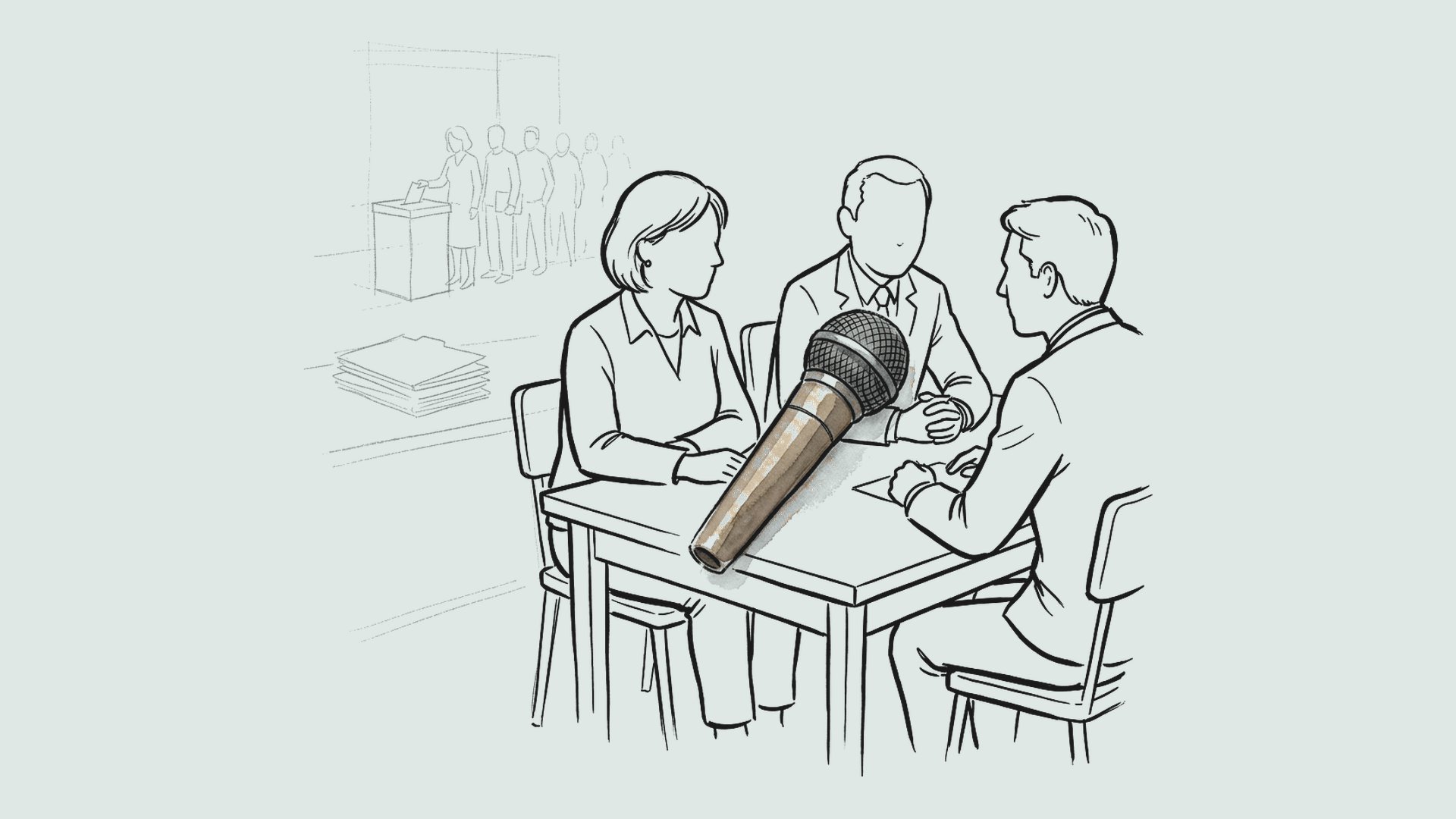
La investigación fue encargada a Antonella Coco por la oficina del ministro de Defensa italiano en 2023. En total se hicieron 12 entrevistas. En 2023 se hicieron 3 entrevistas exploratorias a académicos e investigadores, y 6 a actores institucionales que observan o combaten la desinformación. En 2025 se hicieron 3 entrevistas a periodistas, divulgadores y analistas involucrados en el fenómeno. Les preguntaron cómo ven la desinformación extranjera contra Italia. La investigación fue encargada a Antonella Coco por la oficina del ministro de Defensa italiano en 2023. Los entrevistados describieron la desinformación como una amenaza permanente y difícil de atribuir, que busca minar la confianza en las instituciones y entre ciudadanos. No se midió cuántas personas la vieron ni cuántos votos cambió.
Este documento no nombra ninguna forma de que usted verifique por su cuenta un video, un anuncio o un resultado electoral. No contiene auditorías, resoluciones ni informes de observación electoral de ningún país.
Tampoco dice qué autoridad electoral revisó algo, ni qué regla está vigente. No hay ninguna resolución o auditoría fechada en este documento. Si tiene una duda sobre el registro, el conteo o un resultado, pregunte directamente a su autoridad electoral local qué revisó y qué encontró.
Qué significa para usted
Si usted es votante, trabaje en una mesa o dé clases, no puede saber por este estudio si alguien cambió su voto ni qué revisó su autoridad electoral. El estudio entrevistó a 12 personas en Italia sobre cómo ven la desinformación extranjera, y no midió su impacto en la votación. Cuando llegue una elección, pida a su autoridad electoral local sus auditorías e informes, y mire qué encontraron.
Coco, A., Affuso, O. (2026). La disinformazione come minaccia per la democrazia in Italia. Crisi della fiducia e rischi della società digitale. Cambio. Rivista sulle Trasformazioni Sociali. https://doi.org/10.36253/cambio-19242
Quién pagó: El artículo no dice quién financió el estudio; dice que la investigación (Gab 1/2023) fue encargada a Antonella Coco por la Oficina de Gabinete del Ministro de Defensa italiano en 2023, y el artículo no dice si el financiador tuvo alguna influencia ni si se prestó algún equipo o software.
Versión detalladaLos pasajes copiados del artículo, las ilustraciones y cada fuente con cuánto leímos de ella · 815 palabras · unos 4 minLeerla →Cerrar
La regla y la evidencia: un estudio italiano entrevistó a 12 actores institucionales sobre la desinformación y no midió su impacto en el voto
### EL ACTO
Esta semana no hay un acto que citar: el documento no es una resolución, un fallo, una auditoría ni un proyecto de ley, sino un estudio cualitativo sobre cómo los actores institucionales italianos perciben la desinformación, y no dice qué está en vigor, para quién, desde cuándo, quién lo hace cumplir, ni qué puede hacer una persona y para cuándo1.
### EL CASO QUE RESPONDE
Esta semana no se encontró ningún caso real que contar.
### LO QUE SE MIDIÓ
El estudio no midió ningún efecto en las unidades del lector: no midió exposición, persuasión, segmentación de audiencias ni participación electoral, sino que recogió las percepciones de doce entrevistados italianos en entrevistas semiestructuradas2. Lo que sí ofrece es un dato de contexto: la desinformación es reconocida como problema público por el 54% de los países examinados, que han puesto en marcha políticas y acciones institucionales específicas1. Ese 54% quiere decir que, de cada cien países mirados, cincuenta y cuatro reconocían la desinformación como un problema público y habían puesto en marcha políticas y acciones institucionales específicas. Hay, además, estudios experimentales recientes que sí miden cosas parecidas a lo que usted se pregunta: en un experimento de encuesta preregistrado, las personas, en promedio, no son sustancialmente mejores que el azar para distinguir imágenes generadas por inteligencia artificial de imágenes auténticas, sin importar el contexto de la imagen3. Los más jóvenes, los muy analíticos y los usuarios experimentados de inteligencia artificial generativa muestran mejor discernimiento, pero ningún grupo demográfico aparte de los menores de 25 años rinde sustancialmente mejor que el azar4. Aun así, ese experimento se hizo con personas que ya habían sido advertidas de antemano y que evaluaban imágenes de calidad relativamente baja5.
### LA RESPUESTA DE OTRA REGIÓN A LO MISMO
Esta semana no encontramos ningún fallo, ley o autoridad de otra región sobre este mismo método.
### LA LECTURA DE LA BIBLIOTECA
Así lo leemos nosotros. Un rumor falso sobre un candidato, en la semana antes de la elección, siempre ha hecho lo mismo: no busca que usted crea una tesis concreta, busca que deje de creer en cualquiera. Lo que cambia ahora no es el propósito, sino el costo: antes hacía falta una imprenta, un periódico o una radio; hoy basta una computadora y una tarde. Lo que un público puede aprender a verificar solo es limitado. Puede preguntar quién publica, puede buscar la misma noticia en dos lugares distintos, puede notar si el mensaje le pide miedo o prisa. Lo que no puede verificar sin ayuda es si un video existió, si una voz es de quien dice ser, si una imagen salió de una cámara o de un programa. Para eso hace falta una autoridad electoral, un medio local o alguien con herramientas que usted no tiene en el teléfono. En nuestra región ya hemos visto campañas que sembraron dudas sobre el registro, sobre las máquinas y sobre el conteo, y hemos visto cómo esas dudas sobreviven a la elección. Por eso le pedimos que no lea esto como algo lejano: la pregunta que trae es la misma que usted se hará frente a la pantalla.
### LO QUE NO SE SABE
El estudio no evaluó la eficacia de ninguna intervención ni tecnología concreta contra la desinformación, no midió la prevalencia de la desinformación ni su impacto directo en la opinión pública o en la conducta electoral, no comparó resultados entre países ni poblaciones, no estableció un vínculo causal entre desinformación y caída de la confianza, y no evaluó el beneficio neto de usar inteligencia artificial para contrarrestarla. El artículo no informa de ninguna auditoría, hallazgo de autoridad electoral ni informe de misión de observación, así que no puede decirle si algún registro, conteo o resultado electoral concreto se vio afectado. La investigación fue encargada a Antonella Coco por la Oficina de Gabinete del Ministro de Defensa italiano en 2023, lo que puede moldear cómo se enmarcan la amenaza y la respuesta. Los entrevistados son actores institucionales italianos de la política, la defensa, la comunicación y la investigación, y sus percepciones pueden no describir lo que usted ve en el entorno informativo de su propio país. El artículo fue aceptado para publicación pero no pasó por corrección de estilo ni diagramación, así que la versión final puede diferir. La sección sobre inteligencia artificial es una discusión conceptual, no un nivel adicional de análisis empírico. Otros trabajos que leímos sugieren que un hallazgo de este tipo no se ha demostrado que se traslade a otro lugar, otra población u otro sistema, y eso es sobre el traslado, no sobre este resultado.
Antes de votar, pregúntese: ¿puedo verificar yo mismo lo que acabo de ver, o necesito que alguien con autoridad electoral me lo confirme?
De dónde sale cada dato de contexto, y cuánto leímos de cada documento
- Coco, A., Affuso, O. (2026). La disinformazione come minaccia per la democrazia in Italia. Crisi della fiducia e rischi della società digitale. Cambio. Rivista sulle Trasformazioni Sociali. https://doi.org/10.36253/cambio-19242 - el artículo del que trata esta nota — el artículo completo — el pasaje: "La disinformazione è riconosciuta quale problema pubblico dal 54% dei Paesi esaminati, i quali hanno implementato specifiche policies e azioni istituzionali."
- Coco, A., Affuso, O. (2026). La disinformazione come minaccia per la democrazia in Italia. Crisi della fiducia e rischi della società digitale. Cambio. Rivista sulle Trasformazioni Sociali. https://doi.org/10.36253/cambio-19242 - el artículo del que trata esta nota — el artículo completo — el pasaje: "Gli intervistati, inoltre, riconoscono la sfiducia non soltanto come effetto della disinformazione, ma anche come uno dei principali obiettivi degli attori avversari."
- Hove MF, Hjorth F, Golovchenko Y, Adler-Nissen R, Bechmann A, van Dalen A, et al. (2026). Seeing Is Believing? Most People Struggle to Detect AI-Generated Images. Social Media + Society. https://doi.org/10.1177/20563051261483376 — solo el resumen - no se pudo obtener el texto completo — el pasaje: "In a preregistered survey experiment, we find that, on average, people are not substantially better than chance at discerning AI-generated images from authentic images, regardless of the context of the image."
- Hove MF, Hjorth F, Golovchenko Y, Adler-Nissen R, Bechmann A, van Dalen A, et al. (2026). Seeing Is Believing? Most People Struggle to Detect AI-Generated Images. Social Media + Society. https://doi.org/10.1177/20563051261483376 — solo el resumen - no se pudo obtener el texto completo — el pasaje: "While younger people, highly analytical-thinking individuals, and experienced users of generative AI have better discernment abilities, no demographic group other than young individuals (<25) performs substantially better than chance."
- Hove MF, Hjorth F, Golovchenko Y, Adler-Nissen R, Bechmann A, van Dalen A, et al. (2026). Seeing Is Believing? Most People Struggle to Detect AI-Generated Images. Social Media + Society. https://doi.org/10.1177/20563051261483376 — solo el resumen - no se pudo obtener el texto completo — el pasaje: "As generative AI technology likely advances and the realism of AI-generated images continues to improve, these findings are concerning, as people already struggle to discern between AI-generated and authentic images, even in an experiment where they have been primed and are assessing images of relatively low quality."
Coco, A., Affuso, O. (2026). La disinformazione come minaccia per la democrazia in Italia. Crisi della fiducia e rischi della società digitale. Cambio. Rivista sulle Trasformazioni Sociali. https://doi.org/10.36253/cambio-19242
Quién pagó: El artículo no dice quién financió el estudio; dice que la investigación (Gab 1/2023) fue encargada a Antonella Coco por la Oficina de Gabinete del Ministro de Defensa italiano en 2023, y el artículo no dice si el financiador tuvo alguna influencia ni si se prestó algún equipo o software.
Los hallazgos de otros estudios que aquí se mencionan los conocemos por este documento, que fue el que leímos; no abrimos cada uno de esos estudios.
interviews · Cambio · the paper, 1 Jul 2026 · free
A study interviewed 12 people in Italy about disinformation. It did not count votes or test machines.
Short version · the longer version follows, about 5 min
Ask the weeklyAI chat
Ask me about this study: who was studied, what it found, and what it does not say.
Conversations are saved for as long as weeklyAI exists, to improve the publication. Answers come in the language you write in.
- The study at a glance
- Who
- Italian institutional actors in politics, defence, communication and research
- How many
- 12
- Where
- Italy
- When
- 2023 and 2025
- Kind of study
- interviews
- Who did it
- Università degli Studi della Calabria and Centro Alti Studi Difesa
- The limit that matters
- Records perceptions of a threat, not whether any vote or count was affected
Italian researchers interviewed 12 people in 2023 and 2025. Three were academics or researchers, six worked in institutions, and three were journalists, communicators or analysts. The interviewees described disinformation from foreign states as a permanent threat that is hard to trace to its source. They said it damages trust in the news, in institutions and between people. They wanted responses built on education and critical thinking, not security measures. The study measured no votes and no audience, so it cannot tell you how many voters saw anything or whether any count changed.
The article names no way for a voter to check a specific video, ad or result. The article reports no electoral authority audit and no observation mission report.
The article states no rule in force and no ruling. It notes that Italy's 2022 security report described foreign disinformation campaigns as hard to attribute, and that the research behind the study was commissioned by the Italian Minister of Defence's office in 2023.
What this means for you
The study can tell you that some Italians who watch this closely see disinformation as permanent, hard to trace, and aimed at trust in the news, in institutions and between neighbors. It counted no votes and tested no machine, so for your own ballot it says nothing about what reached you or whether your count was sound. Ask your electoral authority for its audits and the observers' reports, and read those before you weigh any video.
Coco, A., Affuso, O. (2026). La disinformazione come minaccia per la democrazia in Italia. Crisi della fiducia e rischi della società digitale. Cambio. Rivista sulle Trasformazioni Sociali. https://doi.org/10.36253/cambio-19242
Who paid: The article does not say who funded the study; it says the research (Gab 1/2023) was commissioned to Antonella Coco by the Cabinet Office of the Italian Minister of Defence in 2023, and the article does not say whether the funder had any say or whether any equipment or software was lent.
The findings of other studies mentioned here are known to us through this document, which is the one we read; we did not open each of those studies.
The longer versionThe passages copied from the paper, the pictures, and every source with how much of it we read · 1002 words · about 5 minRead it →Close
The rule and the evidence: A study interviewed 12 people in Italy about disinformation
### THE ACT
This article is not a resolution, a ruling, an audit, a bill or any other act in force: it is a qualitative study of how Italian institutional actors perceive disinformation, accepted for publication but not yet copyedited or typeset, and it names no rule, no enforcement body, no obligation on any person and no deadline1.
The only thing in it that resembles a measure in force is a European Commission definition it quotes: disinformation is information that is "created, presented and diffused for economic gain or to intentionally deceive the public" and that "can cause public harm"1.
The research behind it was commissioned to Antonella Coco by the Cabinet Office of the Italian Minister of Defence in 2023, and the article does not state who evaluated it or any conflicts of interest1.
### THE CASE IT ANSWERS
No real instance was found this week.
### WHAT WAS MEASURED
The study measured nothing in the reader's units: it is a qualitative analysis whose empirical base is 12 semi-structured interviews, of which 3 were exploratory interviews with scholars, 6 were with institutional actors involved in observing or countering disinformation, and 3 were with journalists, communicators and analysts1.
The article reports no sample of voters, no exposure rate, no persuasion effect, no targeting figure and no turnout figure, and it says the research design distinguishes the institutional level of identifying the risk of disinformation from the dynamics of content production and from their effects on public opinion1.
It has never been measured in an election in this study, because the study measured no election: it asked 12 people in politics, defence, communication and research what they think the threat is1.
The one number the article offers about the size of the problem is that disinformation is recognised as a public problem by 54% of the countries examined, which have implemented specific policies and institutional actions1 — a little more than half of the countries looked at, and nothing about any single vote.
### THE OTHER REGION'S ANSWER TO THE SAME THING
We found none this week.
### THE LIBRARY'S READING
Here is how we read it. A false story about a candidate has always done the same work: it does not need to be believed to do damage, only repeated, because once a charge is in the air the accused carries the smell of it. What is new is the speed and the reach, not the trick.
What a public can learn to check is limited and specific: whether a source is named, whether it is independent, whether it answers for what it says, whether the same claim appears anywhere outside the circle that already agrees with it. What it cannot check alone is whether the thing it is looking at was made by a machine, and that is the part that now decides what people forward to each other.
So expect this in homes like yours: the argument after a vote will not be about a fact but about whom to believe, and each side will bring its own account of the same ballot and treat the other's as invented. You would know we are wrong if people who cannot verify a claim still sorted true from false by going to the electoral authority's own published record, and if their trust in the count followed the audits rather than the noise.
What you can do with it: before you vote, ask which body actually vouches for the claim in front of you, and whether that body publishes its evidence where you can open it. When a rumour about the count goes around, point people to the authority's own audit rather than to whoever repeated it loudest — and ask what single document both sides would accept as settling it, then notice if the answer is nothing.
### WHAT IS NOT KNOWN
The article does report one specific deepfake: the BuzzFeed News video of April 2018 in which Barack Obama appears to say things he never said, made with the actor Jordan Peele, and used to show how easily a false message can look real and spread2.
The article discusses the possible role of artificial intelligence in countering disinformation, and it says the study did not evaluate any intervention or weigh any technology's overall benefit1.
It is not known whether what the 12 Italian interviewees describe holds in your country, because the study's subjects are Italian institutional actors in politics, defence, communication and research1.
What the record is silent on is whether any register, count or result was affected, and how many voters were ever reached: the study records perceptions of a threat, not its occurrence, and it describes disinformation as a factor that erodes institutional trust1.
The one thing the interviewees do say about the mechanism is that the aim is not to plant doubt about a particular claim or person but to leave behind distrust itself3 — and that the distrust is both an effect of disinformation and one of the attackers' main objectives4.
The article also says the threat is described as permanent and continuous, without a real distinction between peacetime and wartime5, and that its cross-border character makes it very hard to say where a message came from and therefore very hard to counter6.
On what to do instead, the article says fact-checking, debunking and pre-bunking appear largely reactive and insufficient1, and that the answer preferred by those interviewed is not security measures but an approach built on shared responsibility, schooling, media literacy and critical thinking1.
And here is the last thing worth carrying to the polling station: the study tells you what people who watch this threat believe about it, not what happened to a single vote. So when someone tells you the count was stolen, ask them for the one document they would accept as proof either way — and if they have none, you already know what you are standing in.
Where each piece of context comes from, and how much of it we read
- Coco, A., Affuso, O. (2026). La disinformazione come minaccia per la democrazia in Italia. Crisi della fiducia e rischi della società digitale. Cambio. Rivista sulle Trasformazioni Sociali. https://doi.org/10.36253/cambio-19242 - the article this story is about — the whole article — the passage: "La disinformazione è riconosciuta quale problema pubblico dal 54% dei Paesi esaminati, i quali hanno implementato specifiche policies e azioni istituzionali."
- Coco, A., Affuso, O. (2026). La disinformazione come minaccia per la democrazia in Italia. Crisi della fiducia e rischi della società digitale. Cambio. Rivista sulle Trasformazioni Sociali. https://doi.org/10.36253/cambio-19242 - the article this story is about — the whole article — the passage: "Dall’esterno, l’obiettivo è quello di destabilizzare contesti nazionali e/o istituzionali “non amici”, minandone la coesione interna, delegittimandone le istituzioni politiche, alimentando le divisioni interne, estremizzando le contrapposizioni esistenti, per influenzare i processi decisionali."
- Coco, A., Affuso, O. (2026). La disinformazione come minaccia per la democrazia in Italia. Crisi della fiducia e rischi della società digitale. Cambio. Rivista sulle Trasformazioni Sociali. https://doi.org/10.36253/cambio-19242 - the article this story is about — the whole article — the passage: "Le campagne disinformative, infatti, non mirano esclusivamente a persuadere rispetto a specifici temi, ma anche a generare una condizione più ampia di delegittimazione: «l'obiettivo non è creare un dubbio su questa tesi o questa notizia o questa personalità, l'obiettivo è segnare sfiducia» (TP 06)."
- Coco, A., Affuso, O. (2026). La disinformazione come minaccia per la democrazia in Italia. Crisi della fiducia e rischi della società digitale. Cambio. Rivista sulle Trasformazioni Sociali. https://doi.org/10.36253/cambio-19242 - the article this story is about — the whole article — the passage: "Gli intervistati, inoltre, riconoscono la sfiducia non soltanto come effetto della disinformazione, ma anche come uno dei principali obiettivi degli attori avversari."
- Coco, A., Affuso, O. (2026). La disinformazione come minaccia per la democrazia in Italia. Crisi della fiducia e rischi della società digitale. Cambio. Rivista sulle Trasformazioni Sociali. https://doi.org/10.36253/cambio-19242 - the article this story is about — the whole article — the passage: "Quella della disinformazione appare dunque come una minaccia permanente, continuativa nel tempo, seppure con livelli di intensità diversa, senza una vera e propria distinzione fra periodi di pace o di guerra, inscritta stabilmente nell’ambiente informativo contemporaneo."
- Coco, A., Affuso, O. (2026). La disinformazione come minaccia per la democrazia in Italia. Crisi della fiducia e rischi della società digitale. Cambio. Rivista sulle Trasformazioni Sociali. https://doi.org/10.36253/cambio-19242 - the article this story is about — the whole article — the passage: "La caratteristica di extraterritorialità rende difficile capire da dove viene, da dove si origina la comunicazione quindi fare un'attività che possa essere di carattere di contrasto effettivo a qualche informazione è difficilissima. (TP07)"
Coco, A., Affuso, O. (2026). La disinformazione come minaccia per la democrazia in Italia. Crisi della fiducia e rischi della società digitale. Cambio. Rivista sulle Trasformazioni Sociali. https://doi.org/10.36253/cambio-19242
Who paid: The article does not say who funded the study; it says the research (Gab 1/2023) was commissioned to Antonella Coco by the Cabinet Office of the Italian Minister of Defence in 2023, and the article does not say whether the funder had any say or whether any equipment or software was lent.
The findings of other studies mentioned here are known to us through this document, which is the one we read; we did not open each of those studies.