experiment · Mayo Clinic proceedings. Digital health · la publicación, 10 jun 2026 · gratis
Un análisis de sangre podría ordenar las urgencias oncológicas en Inglaterra
En un estudio del NHS, cinco pruebas identificaron mejor el riesgo de cáncer. Nadie fue tratado con base en ellas, y solo se hicieron en Inglaterra.
Versión breve · la versión detallada sigue, unos 7 min
Pregunte a weeklyAI
Pregúnteme por este estudio: a quiénes se estudió, qué encontró y qué no dice.
Las conversaciones se guardan mientras exista weeklyAI, para mejorar la publicación. Se responde en el idioma en que usted escribe.
- El estudio, de un vistazo
- Quiénes
- Pacientes derivados por sospecha urgente de cáncer en el sistema público inglés
- Cuántos
- 16,481 pacientes inscritos; 13,255 en el análisis final
- Dónde
- Inglaterra, en West Yorkshire y Harrogate
- Cuándo
- Entre diciembre de 2020 y julio de 2025
- Tipo de estudio
- analysis of what people did
- Quién lo hizo
- PinPoint Data Science y universidades y hospitales públicos de Inglaterra
- El límite que importa
- Los resultados de la prueba nunca se usaron para decidir la atención de nadie.
Puntaje de cada una de las cinco pruebas que los autores consideran de posible utilidad, sobre una escala de 0 a 1; más alto significa mejor separación entre pacientes con y sin cáncer, y estas cifras provienen de un estudio observacional en el que los resultados no se usaron para tratar a nadie.
Lo que se comparó dentro del estudio
Habría hecho falta investigar entre 2.6 y 6.1 veces menos personas para encontrar un caso de cáncer
Cuatro de las cinco pruebas lograron que menos de 1 de cada 100 de esos pacientes de bajo riesgo quedara fuera
En todas las rutas la prueba dio un beneficio igual o mayor que la atención estándar
Ninguno de esos resultados llegó a los médicos.
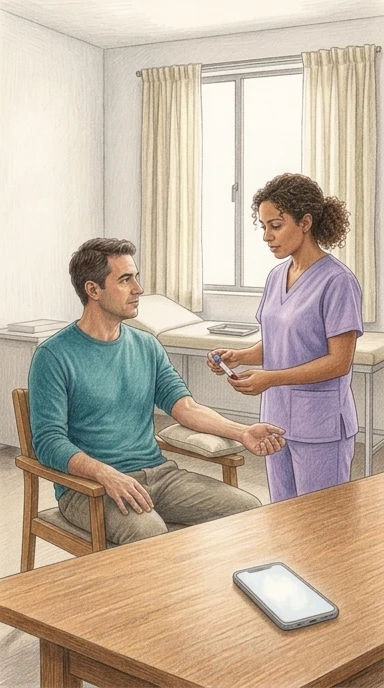
El artículo recoge un estudio en el que cada año se envían más de 3 millones de pacientes con una referencia urgente por sospecha de cáncer en Inglaterra. Solo alrededor de 6 de cada 100 resultan tener cáncer.
Ese embudo es el problema que un grupo de investigadores quiso estudiar en el sistema público de salud inglés, el NHS. Durante cinco años, entre diciembre de 2020 y julio de 2025, inscribieron a 16,481 pacientes ya referidos por esa vía urgente, de los cuales 13,255 quedaron en el análisis final. Les tomaron sangre al inicio del recorrido, en 5 hospitales y 170 consultorios de medicina general. Las muestras se procesaron en un laboratorio del NHS y el resultado lo calculó un programa de cómputo entrenado, llamado PinPoint, que combina la edad, el sexo y análisis de sangre de uso común.
Ninguno de esos resultados llegó a los médicos. El personal clínico no los vio y la atención de cada paciente siguió su curso normal.
De las nueve pruebas, cinco mostraron un desempeño que los autores consideran de posible utilidad: las de vías digestiva alta, ginecológica, pulmonar, cabeza y cuello, y digestiva baja. En estas, si se hubiera usado la prueba para poner al frente al 10 por ciento de pacientes con mayor riesgo, habría hecho falta investigar entre 2.6 y 6.1 veces menos personas para encontrar un caso de cáncer. Cuatro de esas cinco pruebas identificaron como bajo riesgo al 20 por ciento de los pacientes sin cáncer con tal precisión que menos de 1 de cada 100 de ellos quedó fuera.
Los autores reportan sus resultados con márgenes de error. Por ejemplo, la prueba digestiva alta obtuvo 0.86 sobre 1, con un rango de 0.81 a 0.90; la ginecológica, 0.81; la pulmonar, 0.79; cabeza y cuello, 0.73; y digestiva baja, 0.72.
El estudio fue una observación, no un ensayo. Los resultados de las pruebas nunca se usaron para decidir. Lo que se midió fue qué tan bien separaban a los pacientes con y sin cáncer.
El trabajo se hizo únicamente dentro del NHS inglés, en West Yorkshire y Harrogate.
Las pruebas de mama y piel no mejoraron de forma sustancial lo que ya se usa, como la edad; la de vías urinarias no superó de forma sustancial al análisis de PSA; y el desempeño de la prueba hematológica aún no está claro porque se inscribieron pocos pacientes. Varios autores trabajan para la empresa que desarrolló la prueba o tienen participación en ella.
Los pacientes de alto riesgo podrían ser diagnosticados más rápido y los de bajo riesgo podrían evitar exámenes invasivos innecesarios.
Qué significa para usted
Si usted solo escucha la alarma, esto todavía no cambia su consulta: nadie recibió tratamiento guiado por estas pruebas y no se midió si salvan vidas. Lo que puede preguntar es si su país estudia ordenar así sus referencias urgentes; por ahora, la única respuesta segura la da un profesional de salud.
Neal, M., Dean, M., Duffy, S. et al. (2026). Real-World Validation of PinPoint Blood Tests in the NHS: Multivariable Machine Learning to Predict Cancer Risk in Primary Care Urgent Referrals. Mayo Clinic Proceedings: Digital Health. https://doi.org/10.1016/j.mcpdig.2026.100382
Quién pagó: El artículo no indica quién financió el estudio; dice que varios autores trabajan para PinPoint Data Science y poseen acciones u opciones en la empresa, y que la Universidad de Leeds y el Leeds Teaching Hospitals Trust tienen un acuerdo de regalías con la compañía.
No tome esto como consejo médico profesional.
Los hallazgos de otros estudios que aquí se mencionan los conocemos por este documento, que fue el que leímos; no abrimos cada uno de esos estudios.
Versión detalladaLos pasajes copiados del artículo, las ilustraciones y cada fuente con cuánto leímos de ella · 1476 palabras · unos 7 minLeerla →Cerrar
Un análisis de sangre con inteligencia artificial ordenó la fila del cáncer en Inglaterra. Nadie fue tratado con él todavía.
En cinco de nueve rutas de derivación urgente, la prueba separó el riesgo alto del bajo mejor que el azar. Los resultados nunca llegaron al médico.
Más de tres millones de personas son derivadas cada año en Inglaterra desde su médico de cabecera por sospecha de cáncer, y esa cifra crece un 10 % anual desde hace quince años, mientras solo un 6 % de esas derivaciones termina en un diagnóstico de cáncer12. Esa es la escala del problema que un grupo de investigadores y de la empresa PinPoint Data Science quiso atacar: una fila enorme donde la mayoría de los que esperan no tienen cáncer, y unos pocos con cáncer esperan junto a ellos.
La tecnología se llama PinPoint Tests. Son análisis de sangre que combinan la edad, el sexo y un panel de análisis de laboratorio de rutina —hemograma completo, pruebas de función hepática, urea y electrolitos, perfil óseo, marcadores de inflamación y algunos marcadores tumorales— con modelos de aprendizaje automático que estiman el riesgo de cáncer de una persona con síntomas34. No requiere equipos nuevos: es software, y según el artículo puede desplegarse rápido sobre la infraestructura que ya existe5. El trabajo se hizo en el sistema público inglés, el NHS, en West Yorkshire y Harrogate, con cinco hospitales y 170 consultorios de medicina general6.
El estudio siguió a 16,481 pacientes derivados por sospecha urgente de cáncer entre diciembre de 2020 y julio de 2025, y analizó a 13,255 de ellos, de los cuales 871 (6,6 %) tenían cáncer y 12,384 (93,4 %) no7. Cinco pruebas mostraron un desempeño que los autores consideran de posible utilidad clínica: la de vías digestivas altas, la ginecológica, la de pulmón, la de cabeza y cuello, y la de vías digestivas bajas, con puntajes que van de 0,72 a 0,868. Si el sistema hubiera priorizado al 10 % de mayor riesgo, habría hecho falta investigar entre 2,6 y 6,1 veces menos pacientes para encontrar un caso de cáncer9, y cuatro de esas cinco pruebas dejaron fuera al 20 % de menor riesgo con una probabilidad de acierto superior al 99 %10.
Conviene detenerse en lo que esto no es. Los resultados de la prueba se calcularon y se enviaron al laboratorio central para acumularlos, pero nunca se usaron para decidir nada en la atención del paciente11. Nadie fue diagnosticado antes ni se libró de una prueba invasiva gracias a este análisis. Lo que el estudio midió es la capacidad de la prueba de ordenar el riesgo, no su efecto sobre la vida de nadie. Además, casi una de cada cinco personas inscritas quedó fuera del análisis, lo que puede sesgar los resultados7; faltaban datos de etnia en una proporción grande de pacientes, así que nada puede afirmarse sobre el desempeño entre grupos étnicos12; y los criterios de derivación cambiaron durante el estudio, lo que afectó algunas rutas.
Aquí es donde el asunto se agranda. Lo que se evaluó es un tipo de herramienta, no un aparato aislado: clasificar pacientes según su riesgo antes de gastar recursos escasos. En Colombia, un grupo de investigación probó algo parecido con imágenes de colposcopía para el cáncer de cuello uterino en un hospital público de Cali, entre 650 mujeres, según el resumen de ese estudio; solo pudimos leer el resumen, el texto completo está detrás de una suscripción1314. El sistema alcanzó una exactitud reportada de 94,3 % y un área bajo la curva de 0,9815. La lógica es la misma que la de PinPoint: no reemplazar al médico, sino ordenar quién pasa primero por un recurso limitado.
Otro trabajo, también leído solo en su resumen, probó una aplicación móvil que ayuda a personal de salud general —no dermatólogos— a clasificar lesiones de piel en cinco niveles de prioridad según el riesgo de malignidad1617. Participaron 131 profesionales de la salud en nueve ciudades, y en una segunda fase, con 57 trabajadores comunitarios en zonas rurales, la asistencia de la inteligencia artificial aumentó la efectividad del triaje en un 17 % y redujo las derivaciones innecesarias en un 30 %1819. El detalle importa: la herramienta llegó a donde no hay especialistas, y funcionaba sin conexión20. Un tercer trabajo, sobre apnea del sueño, comparó modelos de inteligencia artificial aplicados a la oximetría con el estudio de sueño completo, y encontró que se desempeñaban mejor o de forma comparable a las pruebas tradicionales21. Los tres comparten un patrón: la herramienta no crea el recurso que falta, lo reparte mejor.
Ese patrón tiene un costo que conviene nombrar. Cuando un servicio público decide quién entra primero a un examen invasivo y quién vuelve a su casa con una recomendación de vigilancia, está tomando una decisión sobre personas. La prueba de PinPoint, en este estudio, no fue usada para eso: fue un ejercicio de medición con médicos cegados a los resultados11. Pero el paso siguiente —usarla de verdad— ya no sería un experimento. Sería una política.
Así lo leemos nosotros. Cuando una institución tiene que repartir algo escaso, tiende a esconder esa decisión detrás de un procedimiento técnico que parece neutral, para no tener que responder por el criterio que usó. Si pruebas como esta se adoptan en un servicio de salud, lo más probable es que el puntaje de riesgo ordene la fila sin que el paciente sepa qué datos suyos entraron en el cálculo ni cuánto pesó cada uno. Sabríamos que nos equivocamos si el servicio publica de antemano qué variables usa, con qué umbral decide y ofrece una vía para que el paciente pida revisión humana de su puntaje. Mientras eso no exista, usted puede preguntar, cuando le ofrezcan una prueba así, qué datos suyos se usan, quién fija el punto de corte y si puede pedir que un médico revise su caso si el resultado lo deja fuera de la vía rápida.
Hay una segunda cosa que nos preocupa, y es más terrenal. En lugares donde la atención médica ya es escasa, la llegada de herramientas automáticas no borra esa escasez: la reorganiza, y suele dejar a los mismos de siempre con el acceso más difícil. Aunque la prueba funcione bien en un estudio inglés, en la práctica quienes viven lejos de un laboratorio o no tienen transporte para llegar a la toma de sangre podrían quedar fuera justo del beneficio que promete. Lo sabríamos si un programa demuestra que la prueba llega y se completa en las mismas proporciones en zonas rurales y urbanas, y que la distancia al laboratorio no predice quién queda sin resultado. Usted puede preguntar dónde exactamente se toma la muestra y si el resultado vuelve al centro de salud de su barrio o solo al hospital grande.
Quedan los límites que el propio artículo reconoce. El trabajo es observacional y no puede probar que usar la prueba cambie el desenlace de nadie11. Las pruebas de mama, piel, hematológica y urológica no mostraron una mejora sustancial sobre lo que ya existe, así que esto no es un examen general de cáncer. En la ruta urológica, el análisis de sensibilidad sugiere que, en el peor caso razonable, el desempeño podría caer hasta 0,08 por los pacientes excluidos. La ruta de pulmón mostró una caída modesta a lo largo del tiempo, posiblemente porque un programa nuevo de tamizaje empezó a derivar cánceres detectados por tomografía. Y sobre la etnia, como se dijo, no hay conclusiones posibles12.
Sobre quién pagó y quién firma: varios de los autores trabajan en PinPoint Data Science y son accionistas o tenedores de opciones de la empresa; la Universidad de Leeds y el Leeds Teaching Hospitals Trust tienen un acuerdo de regalías con PinPoint, y el profesor Richard Neal figura como inventor en ese acuerdo22. El diseño de la evaluación de servicio fue aprobado formalmente por el equipo de investigación y desarrollo de West Yorkshire, en el Integrated Care Board de West Yorkshire. Esto no invalida los resultados, pero es información que el lector tiene derecho a tener.
Aquí es donde esto puede importarle a usted, hoy, en su país. La prueba no está disponible ni validada en América Latina, Estados Unidos ni Canadá: se evaluó solo en Inglaterra. Lo que sí puede hacer es usar la pregunta. La próxima vez que un servicio de salud le ofrezca una prueba nueva para decidir si lo mandan rápido o lo dejan esperando —sea de sangre, de imagen o de una aplicación—, pregunte tres cosas: qué datos suyos se usan, quién fija el punto de corte, y si puede pedir que un médico revise su caso si el resultado lo deja fuera de la vía rápida. Esas preguntas no dependen de que la tecnología llegue mañana. Dependen de que usted las haga.
¿Qué le preguntaría usted a su servicio de salud si mañana le ofrecieran una prueba así?
De dónde sale cada dato de contexto, y cuánto leímos de cada documento
- Neal, M., Dean, M., Duffy, S. et al. (2026). Real-World Validation of PinPoint Blood Tests in the NHS: Multivariable Machine Learning to Predict Cancer Risk in Primary Care Urgent Referrals. Mayo Clinic Proceedings: Digital Health. https://doi.org/10.1016/j.mcpdig.2026.100382 - el artículo del que trata esta nota — el artículo completo — el pasaje: "Urgent referrals from primary care are a major route for cancer diagnosis in the National Health service (NHS), with more than 3 million patients referred annually in England alone."
- Neal, M., Dean, M., Duffy, S. et al. (2026). Real-World Validation of PinPoint Blood Tests in the NHS: Multivariable Machine Learning to Predict Cancer Risk in Primary Care Urgent Referrals. Mayo Clinic Proceedings: Digital Health. https://doi.org/10.1016/j.mcpdig.2026.100382 - el artículo del que trata esta nota — el artículo completo — el pasaje: "The annual referral rate has increased 10% year-on-year for the last 15 years, 1 and the urgent suspected cancer (USC) pathways have an average conversion rate of only 6%, meaning that improved methods of triage are urgently needed."
- Neal, M., Dean, M., Duffy, S. et al. (2026). Real-World Validation of PinPoint Blood Tests in the NHS: Multivariable Machine Learning to Predict Cancer Risk in Primary Care Urgent Referrals. Mayo Clinic Proceedings: Digital Health. https://doi.org/10.1016/j.mcpdig.2026.100382 - el artículo del que trata esta nota — el artículo completo — el pasaje: "The PinPoint Tests are a set of United Kingdom Conformity Assessed-marked multi-cancer early detection blood tests for predicting the cancer risk of symptomatic patients."
- Neal, M., Dean, M., Duffy, S. et al. (2026). Real-World Validation of PinPoint Blood Tests in the NHS: Multivariable Machine Learning to Predict Cancer Risk in Primary Care Urgent Referrals. Mayo Clinic Proceedings: Digital Health. https://doi.org/10.1016/j.mcpdig.2026.100382 - el artículo del que trata esta nota — el artículo completo — el pasaje: "The predictors are age, sex, and a panel of standard blood analytes, including full blood count, liver function tests, urea and electrolytes, bone profile, inflammatory markers, and a set of tumor markers."
- Neal, M., Dean, M., Duffy, S. et al. (2026). Real-World Validation of PinPoint Blood Tests in the NHS: Multivariable Machine Learning to Predict Cancer Risk in Primary Care Urgent Referrals. Mayo Clinic Proceedings: Digital Health. https://doi.org/10.1016/j.mcpdig.2026.100382 - el artículo del que trata esta nota — el artículo completo — el pasaje: "The software can be deployed rapidly across the NHS, without the need for additional hardware."
- Neal, M., Dean, M., Duffy, S. et al. (2026). Real-World Validation of PinPoint Blood Tests in the NHS: Multivariable Machine Learning to Predict Cancer Risk in Primary Care Urgent Referrals. Mayo Clinic Proceedings: Digital Health. https://doi.org/10.1016/j.mcpdig.2026.100382 - el artículo del que trata esta nota — el artículo completo — el pasaje: "The evaluation demonstrated that such a deployment is achievable, particularly around challenges relating to integrating with pathology services and requesting systems, use of existing phlebotomy infrastructure, and engagement with clinicians across 5 secondary care Trusts and 170 General Practitioner (GP) surgeries."
- Neal, M., Dean, M., Duffy, S. et al. (2026). Real-World Validation of PinPoint Blood Tests in the NHS: Multivariable Machine Learning to Predict Cancer Risk in Primary Care Urgent Referrals. Mayo Clinic Proceedings: Digital Health. https://doi.org/10.1016/j.mcpdig.2026.100382 - el artículo del que trata esta nota — el artículo completo — el pasaje: "The exclusion of 3,197 (19.4%) patients from the analysis for various reasons (see Figure 1 ) could be a source of bias for this work."
- Neal, M., Dean, M., Duffy, S. et al. (2026). Real-World Validation of PinPoint Blood Tests in the NHS: Multivariable Machine Learning to Predict Cancer Risk in Primary Care Urgent Referrals. Mayo Clinic Proceedings: Digital Health. https://doi.org/10.1016/j.mcpdig.2026.100382 - el artículo del que trata esta nota — el artículo completo — el pasaje: "Five tests have performance indicating potential clinical utility. Receiver operating characteristic area-under-curve scores (95% CI) for these were: Upper gastrointestinal=0.86 (0.81-0.90), Gynecological=0.81 (0.77-0.85), Lung=0.79 (0.74-0.84), Head & Neck=0.73 (0.68-0.78), and Lower gastrointestinal=0.72 (0.67-0.78),"
- Neal, M., Dean, M., Duffy, S. et al. (2026). Real-World Validation of PinPoint Blood Tests in the NHS: Multivariable Machine Learning to Predict Cancer Risk in Primary Care Urgent Referrals. Mayo Clinic Proceedings: Digital Health. https://doi.org/10.1016/j.mcpdig.2026.100382 - el artículo del que trata esta nota — el artículo completo — el pasaje: "Prioritization of the 10% of highest-risk patients would reduce the number needed to investigate to detect one cancer by a factor of 2.6-6.1."
- Neal, M., Dean, M., Duffy, S. et al. (2026). Real-World Validation of PinPoint Blood Tests in the NHS: Multivariable Machine Learning to Predict Cancer Risk in Primary Care Urgent Referrals. Mayo Clinic Proceedings: Digital Health. https://doi.org/10.1016/j.mcpdig.2026.100382 - el artículo del que trata esta nota — el artículo completo — el pasaje: "Four of these five tests achieved an negative predictive value >0.99 when used to rule-out 20% of the lowest-risk patients."
- Neal, M., Dean, M., Duffy, S. et al. (2026). Real-World Validation of PinPoint Blood Tests in the NHS: Multivariable Machine Learning to Predict Cancer Risk in Primary Care Urgent Referrals. Mayo Clinic Proceedings: Digital Health. https://doi.org/10.1016/j.mcpdig.2026.100382 - el artículo del que trata esta nota — el artículo completo — el pasaje: "The evaluation was observational. PinPoint Test results were calculated and returned to the regional hub laboratory for aggregation but were not used clinically."
- Neal, M., Dean, M., Duffy, S. et al. (2026). Real-World Validation of PinPoint Blood Tests in the NHS: Multivariable Machine Learning to Predict Cancer Risk in Primary Care Urgent Referrals. Mayo Clinic Proceedings: Digital Health. https://doi.org/10.1016/j.mcpdig.2026.100382 - el artículo del que trata esta nota — el artículo completo — el pasaje: "Ethnicity data was missing for a large proportion of patients in most pathways, and so conclusions cannot be drawn for the ethnicity analysis."
- Arrivillaga M, Neira D, Rivero DS, Vargas-Cardona HD, Bermúdez PC, García-Cifuentes JP, et al. (2026). CITOBOT AI for real-world cervical cancer screening using colposcopy imaging. Frontiers in Public Health. 10.3389/fpubh.2026.1802494 — solo el resumen - no se pudo obtener el texto completo — el pasaje: "This study aimed to evaluate the internally validated screening performance of CITOBOT AI, an artificial intelligence system for real-world cervical cancer screening using colposcopy imaging, in a public hospital setting in Colombia."
- Arrivillaga M, Neira D, Rivero DS, Vargas-Cardona HD, Bermúdez PC, García-Cifuentes JP, et al. (2026). CITOBOT AI for real-world cervical cancer screening using colposcopy imaging. Frontiers in Public Health. 10.3389/fpubh.2026.1802494 — solo el resumen - no se pudo obtener el texto completo — el pasaje: "A cross-sectional study was conducted among 650 women screened at 'Siloé' Hospital in Cali, Colombia, between February 2023 and July 2025."
- Arrivillaga M, Neira D, Rivero DS, Vargas-Cardona HD, Bermúdez PC, García-Cifuentes JP, et al. (2026). CITOBOT AI for real-world cervical cancer screening using colposcopy imaging. Frontiers in Public Health. 10.3389/fpubh.2026.1802494 — solo el resumen - no se pudo obtener el texto completo — el pasaje: "CITOBOT AI achieved internally validated screening performance with an accuracy of 94.3%, sensitivity of 93.4%, specificity of 94.9%, and an area under the receiver operating characteristic curve of 0.98."
- Pacheco AGC, Magesk EP, Moreira LF, Souza LA, Martins RC, Comper B, et al. (2026). Towards a clinically integrated artificial intelligence tool for triage of skin cancer. npj Digital Medicine. 10.1038/s41746-026-02851-8 — solo el resumen - no se pudo obtener el texto completo — el pasaje: "This study presents a clinical validation of an artificial intelligence (AI)-based mobile application to assist generalist healthcare professionals in skin lesion triage."
- Pacheco AGC, Magesk EP, Moreira LF, Souza LA, Martins RC, Comper B, et al. (2026). Towards a clinically integrated artificial intelligence tool for triage of skin cancer. npj Digital Medicine. 10.1038/s41746-026-02851-8 — solo el resumen - no se pudo obtener el texto completo — el pasaje: "The tool classifies lesions into five priority levels according to malignancy risk, following a protocol developed by dermatologists."
- Pacheco AGC, Magesk EP, Moreira LF, Souza LA, Martins RC, Comper B, et al. (2026). Towards a clinically integrated artificial intelligence tool for triage of skin cancer. npj Digital Medicine. 10.1038/s41746-026-02851-8 — solo el resumen - no se pudo obtener el texto completo — el pasaje: "In clinical validation across two phases, 131 healthcare professionals from nine cities participated."
- Pacheco AGC, Magesk EP, Moreira LF, Souza LA, Martins RC, Comper B, et al. (2026). Towards a clinically integrated artificial intelligence tool for triage of skin cancer. npj Digital Medicine. 10.1038/s41746-026-02851-8 — solo el resumen - no se pudo obtener el texto completo — el pasaje: "In Phase 2, with 57 community health workers in rural areas, AI assistance increased triage effectiveness by 17% and reduced unnecessary referrals by 30%."
- Pacheco AGC, Magesk EP, Moreira LF, Souza LA, Martins RC, Comper B, et al. (2026). Towards a clinically integrated artificial intelligence tool for triage of skin cancer. npj Digital Medicine. 10.1038/s41746-026-02851-8 — solo el resumen - no se pudo obtener el texto completo — el pasaje: "The AI model, based on a fine-tuned MobileNet-V3 architecture, was trained on the PAD-UFES-20+ dataset (13,569 images) and integrated into an offline-capable mobile app."
- Yam KJM, Lim CYJ, Gao EY, Koh JH, Tan NKW, Ng ACW, et al. (2026). Artificial Intelligence Diagnosis of Obstructive Sleep Apnea Using Overnight Pulse Oximetry: A Systematic Review and Bayesian Meta-Analysis. Journal of Medical Internet Research. 10.2196/80349 — solo el resumen - no se pudo obtener el texto completo — el pasaje: "AI-oximetry models showed high diagnostic accuracy for OSA across models and AHI cutoffs, performing better than or comparably to traditional overnight oximetry and home sleep apnea tests."
- Neal, M., Dean, M., Duffy, S. et al. (2026). Real-World Validation of PinPoint Blood Tests in the NHS: Multivariable Machine Learning to Predict Cancer Risk in Primary Care Urgent Referrals. Mayo Clinic Proceedings: Digital Health. https://doi.org/10.1016/j.mcpdig.2026.100382 - el artículo del que trata esta nota — el artículo completo — el pasaje: "Drs Savage, Lloyd, Neal, Skinner, Sansom, Tully, Ferguson, and Duffy are employed by, and are shareholders or option holders in, PinPoint Data Science. Both the University of Leeds and Leeds Teaching Hospitals Trust have a royalty agreement with PinPoint Data Science; Prof Richard Neal is a named inventor in this royalty agreement."
Neal, M., Dean, M., Duffy, S. et al. (2026). Real-World Validation of PinPoint Blood Tests in the NHS: Multivariable Machine Learning to Predict Cancer Risk in Primary Care Urgent Referrals. Mayo Clinic Proceedings: Digital Health. https://doi.org/10.1016/j.mcpdig.2026.100382
Quién pagó: El artículo no indica quién financió el estudio; dice que varios autores trabajan para PinPoint Data Science y poseen acciones u opciones en la empresa, y que la Universidad de Leeds y el Leeds Teaching Hospitals Trust tienen un acuerdo de regalías con la compañía.
No tome esto como consejo médico profesional.
experiment · Mayo Clinic proceedings. Digital health · the paper, 10 Jun 2026 · free
AI Blood Test Spotted Cancer Risk in England. It Never Changed Anyone's Care.
A five-year NHS study found five of nine blood tests could sort high-risk patients from low-risk ones — but the results went into a file, not a doctor's hands.
Short version · the longer version follows, about 6 min
Ask weeklyAI
Ask me about this study: who was studied, what it found, and what it does not say.
Conversations are saved for as long as weeklyAI exists, to improve the publication. Answers come in the language you write in.
- The study at a glance
- Who
- adults referred by their doctor on urgent suspected cancer pathways
- How many
- 16,481 patients
- Where
- England (West Yorkshire and Harrogate)
- When
- December 2020 to July 2025
- Kind of study
- analysis of what people did
- Who did it
- PinPoint Data Science, UK universities and NHS trusts
- The limit that matters
- The test results were never used to guide anyone's care.
These are the five tests the authors say showed potential clinical utility; a higher score means the test separated people with cancer from those without more reliably. The results were never used to change anyone's care.
The benefit is predicted, not delivered.
In England, more than 3 million people a year are sent by their doctor on an urgent cancer referral. About 6 in 100 turn out to have cancer.
That leaves a lot of people waiting for invasive exams they may not need.
So researchers and the National Health Service ran a five-year study of nine blood tests, called PinPoint, on 16,481 of those patients. They enrolled people across 5 hospital trusts and 170 family doctor surgeries in West Yorkshire and Harrogate, from December 2020 to July 2025. The doctors ordering the tests did not see the results.
The tests use machine learning and blood measurements that clinics already take routinely — blood counts, liver and kidney tests, inflammation markers, some tumor markers — plus age and sex.
Five of the nine tests could pick out higher-risk patients well enough that prioritizing the top 10% would cut the number of people needing investigation to find one cancer by 2.6 to 6.1 times. The strongest was the upper gastrointestinal test; the gynecological, lung, head and neck and lower gastrointestinal tests also showed potential. Four of those five also scored the lowest-risk 20% as very unlikely to have cancer.
That is what could spare someone an invasive procedure — one day.
In this study, it did not. The results were calculated and sent to a regional laboratory for aggregation. They were never used to guide anyone's care. No one was diagnosed earlier, and no one was spared a test, because of this blood test. The benefit is predicted, not delivered.
The study was carried out in England's NHS.
The breast and skin tests did not clearly beat basic factors like age, and the urological test did not clearly beat the PSA test for prostate cancer. The performance of the hematological test is still unclear because few patients were enrolled for that test. This is not a general cancer screen for healthy people. Every patient in the study had already been referred by a doctor who suspected cancer.
The company behind the tests, PinPoint Data Science, employs several of the authors, and the University of Leeds and Leeds Teaching Hospitals Trust hold a royalty agreement with it. The evaluation was approved as an NHS service evaluation, not a trial.
If it reaches your clinic, this kind of test could one day mean a faster path to diagnosis for some, and fewer invasive exams for others. Ask your doctor: is a triage blood test part of my referral pathway, and what would my result change?
What this means for you
What this means for you, today, is mostly patience: the study measured how well these blood tests sorted risk in England's urgent referral pathways, and nothing was changed by them, so no one was diagnosed earlier. If a doctor ever mentions a triage blood test in your referral, ask whether it would actually change your care or just sit in a file, and let a professional weigh your result.
Neal, M., Dean, M., Duffy, S. et al. (2026). Real-World Validation of PinPoint Blood Tests in the NHS: Multivariable Machine Learning to Predict Cancer Risk in Primary Care Urgent Referrals. Mayo Clinic Proceedings: Digital Health. https://doi.org/10.1016/j.mcpdig.2026.100382
Who paid: The article does not state who funded the study; it says several authors are employed by and hold shares or options in PinPoint Data Science, and that the University of Leeds and Leeds Teaching Hospitals Trust have a royalty agreement with the company.
Do not take this as professional medical advice.
The longer versionThe passages copied from the paper, the pictures, and every source with how much of it we read · 1240 words · about 6 minRead it →Close
A Blood Test Sorted Cancer Referrals Into Fast and Slow Lanes. In England, It Was Never Used to Treat Anyone.
The PinPoint tests were run alongside standard care for nearly five years. What they measured was risk. What they changed was nothing — yet.
Imagine a waiting room with three million people in it. That is roughly the number of patients sent by family doctors in England each year on an urgent suspected cancer pathway, the route that decides who gets a scan or a scope quickly1. The queue keeps growing about ten percent a year and has done so for fifteen years, and on average only six in a hundred of those people turn out to have cancer — which is why the system is straining for a better way to sort them2.
Into that queue stepped a set of blood tests called PinPoint, made by a company of the same name. They are multi-cancer early detection tests — a phrase worth unpacking — registered in the United Kingdom, intended to estimate the cancer risk of people who already have symptoms and have already been referred3. That last part matters more than anything else in this story. These are not tests for healthy people going about their week.
How does a blood test guess at cancer? It does not look for cancer directly. It reads age, sex, and a panel of ordinary blood measurements — the same full blood count, liver and kidney readings, calcium and inflammatory markers a family doctor might already order, plus a set of tumor markers — and a machine-learning model weighs them together4. The software runs on existing hospital computers and needs no new hardware, which is why its makers say it can spread quickly through the health service5.
What did the evaluation actually find? Of 16,481 patients enrolled, 13,255 were left in the main analysis; 871 of them — 6.6 percent — were diagnosed with cancer. Five of the nine pathway tests showed what the authors call potential clinical utility, with discrimination scores of 0.86 for upper gastrointestinal, 0.81 for gynecological, 0.79 for lung, 0.73 for head and neck and 0.72 for lower gastrointestinal6. If the ten percent of patients with the highest scores were investigated first, the number of people a clinic would need to examine to find one cancer fell by a factor of between 2.6 and 6.17. Four of those five tests also achieved a negative predictive value above 0.99 when used to rule out 20% of the lowest-risk patients8.
Here is the sentence that has to travel with all of the above. The evaluation was observational, and the test results were calculated and sent to a regional laboratory for aggregation but were never used clinically9. Nobody was moved up a queue because of this test. Nobody was spared a procedure because of it. The benefit is predicted, not delivered.
This is, by the authors' own description, the first large prospective real-world evaluation in NHS England of such a technology, and it reports both accuracy and whether the thing can practically be deployed10. On that second question the news was good: the work ran across five hospital trusts and 170 family doctor surgeries, using existing blood-drawing services, and the authors report that deployment of this kind is achievable11. The algorithms were trained on data from one laboratory and validated on samples processed in a different one, and the tests held up — encouraging for any country thinking about where blood is actually analyzed12.
The limits are not small, and they are stated plainly. About 3,197 patients — 19.4 percent of those enrolled — were excluded from the analysis for various reasons, which the authors say could be a source of bias13. Ethnicity data was missing for a large share of patients in most pathways, so no conclusion can be drawn about how the tests perform across ethnic groups14. And the decision-curve analysis reported that for every pathway the test gave equal or higher net benefit than standard care at all thresholds displayed15 — a favorable result, but one that rests on the same blinded, unused test results.
Where does this sit among attempts like it? A different team, working on cervical cancer screening in a public hospital in Cali, Colombia, tested an AI system reading colposcopy images and reported very high accuracy in an internally validated sample of 650 women — though we could read only the summary of that study, and its performance figures came from validation within the same dataset rather than from a separate population161718. A Brazilian group built a phone app that sorts skin lesions by urgency and tested it with 131 health professionals across nine cities; in a second phase with 57 community health workers in rural areas, AI assistance increased triage effectiveness by 17 percent and reduced unnecessary referrals by 30 percent — again, a study we could read only in summary1920. And a review of AI models reading oxygen levels to detect sleep apnea pooled a sensitivity of 91.1 percent and specificity of 88.4 percent against the standard sleep-lab test that most clinics cannot offer — summary only2122.
Here is how we read it. The pattern across all of these is the same: a system that is already overwhelmed gets a scoring tool, and the tool's job is not to see more patients but to decide which ones are seen first. That is genuinely useful when the alternative is a blind queue. It is also how a shortage stops being discussed as a shortage. If this test arrives where you live, watch whether it adds appointments or only reorders the same ones — and if you or someone in your family is ever handed a low-risk score after a cancer referral, ask what happens next, who is responsible for following up, and what symptoms should bring you back before any scheduled date.
We also read that these tools carry their blind spots inside them. A score is only as fair as the people it was built and checked on, and here the data needed to check it across ethnic groups was largely missing. When a clinic or a ministry adopts a risk score, ask whether its accuracy has been measured separately for different communities — and if you are told it is neutral, ask to see the breakdown. And if a test ever tells you that you are low risk, treat that as information, not as permission to wait. Ask what should bring you back and how soon, and keep a note of anything that changes.
The tests were evaluated in England's health service. The breast and skin tests did not show a substantial improvement over baseline predictors such as age. The urological test did not show a substantial improvement over prostate specific antigen. The performance of the blood-cancer test is still unclear because few patients were enrolled. Nothing here suggests anyone should skip, delay or replace care they have been offered.
What this makes possible is narrower and more real than a headline: a future in which a blood draw your doctor already orders helps decide how fast you are seen, and in which the people who most need the scanner get it first. That future has not arrived. But the question to carry into your next appointment is a small one — if a test sorts you into a risk group, ask who is responsible for what happens to you next.
Where each piece of context comes from, and how much of it we read
- Neal, M., Dean, M., Duffy, S. et al. (2026). Real-World Validation of PinPoint Blood Tests in the NHS: Multivariable Machine Learning to Predict Cancer Risk in Primary Care Urgent Referrals. Mayo Clinic Proceedings: Digital Health. https://doi.org/10.1016/j.mcpdig.2026.100382 - the article this story is about — the whole article — the passage: "Urgent referrals from primary care are a major route for cancer diagnosis in the National Health service (NHS), with more than 3 million patients referred annually in England alone."
- Neal, M., Dean, M., Duffy, S. et al. (2026). Real-World Validation of PinPoint Blood Tests in the NHS: Multivariable Machine Learning to Predict Cancer Risk in Primary Care Urgent Referrals. Mayo Clinic Proceedings: Digital Health. https://doi.org/10.1016/j.mcpdig.2026.100382 - the article this story is about — the whole article — the passage: "The annual referral rate has increased 10% year-on-year for the last 15 years, 1 and the urgent suspected cancer (USC) pathways have an average conversion rate of only 6%, meaning that improved methods of triage are urgently needed."
- Neal, M., Dean, M., Duffy, S. et al. (2026). Real-World Validation of PinPoint Blood Tests in the NHS: Multivariable Machine Learning to Predict Cancer Risk in Primary Care Urgent Referrals. Mayo Clinic Proceedings: Digital Health. https://doi.org/10.1016/j.mcpdig.2026.100382 - the article this story is about — the whole article — the passage: "The PinPoint Tests are a set of United Kingdom Conformity Assessed-marked multi-cancer early detection blood tests for predicting the cancer risk of symptomatic patients."
- Neal, M., Dean, M., Duffy, S. et al. (2026). Real-World Validation of PinPoint Blood Tests in the NHS: Multivariable Machine Learning to Predict Cancer Risk in Primary Care Urgent Referrals. Mayo Clinic Proceedings: Digital Health. https://doi.org/10.1016/j.mcpdig.2026.100382 - the article this story is about — the whole article — the passage: "The predictors are age, sex, and a panel of standard blood analytes, including full blood count, liver function tests, urea and electrolytes, bone profile, inflammatory markers, and a set of tumor markers."
- Neal, M., Dean, M., Duffy, S. et al. (2026). Real-World Validation of PinPoint Blood Tests in the NHS: Multivariable Machine Learning to Predict Cancer Risk in Primary Care Urgent Referrals. Mayo Clinic Proceedings: Digital Health. https://doi.org/10.1016/j.mcpdig.2026.100382 - the article this story is about — the whole article — the passage: "The software can be deployed rapidly across the NHS, without the need for additional hardware."
- Neal, M., Dean, M., Duffy, S. et al. (2026). Real-World Validation of PinPoint Blood Tests in the NHS: Multivariable Machine Learning to Predict Cancer Risk in Primary Care Urgent Referrals. Mayo Clinic Proceedings: Digital Health. https://doi.org/10.1016/j.mcpdig.2026.100382 - the article this story is about — the whole article — the passage: "Five tests have performance indicating potential clinical utility. Receiver operating characteristic area-under-curve scores (95% CI) for these were: Upper gastrointestinal=0.86 (0.81-0.90), Gynecological=0.81 (0.77-0.85), Lung=0.79 (0.74-0.84), Head & Neck=0.73 (0.68-0.78), and Lower gastrointestinal=0.72 (0.67-0.78),"
- Neal, M., Dean, M., Duffy, S. et al. (2026). Real-World Validation of PinPoint Blood Tests in the NHS: Multivariable Machine Learning to Predict Cancer Risk in Primary Care Urgent Referrals. Mayo Clinic Proceedings: Digital Health. https://doi.org/10.1016/j.mcpdig.2026.100382 - the article this story is about — the whole article — the passage: "Prioritization of the 10% of highest-risk patients would reduce the number needed to investigate to detect one cancer by a factor of 2.6-6.1."
- Neal, M., Dean, M., Duffy, S. et al. (2026). Real-World Validation of PinPoint Blood Tests in the NHS: Multivariable Machine Learning to Predict Cancer Risk in Primary Care Urgent Referrals. Mayo Clinic Proceedings: Digital Health. https://doi.org/10.1016/j.mcpdig.2026.100382 - the article this story is about — the whole article — the passage: "Four of these five tests achieved an negative predictive value >0.99 when used to rule-out 20% of the lowest-risk patients."
- Neal, M., Dean, M., Duffy, S. et al. (2026). Real-World Validation of PinPoint Blood Tests in the NHS: Multivariable Machine Learning to Predict Cancer Risk in Primary Care Urgent Referrals. Mayo Clinic Proceedings: Digital Health. https://doi.org/10.1016/j.mcpdig.2026.100382 - the article this story is about — the whole article — the passage: "The evaluation was observational. PinPoint Test results were calculated and returned to the regional hub laboratory for aggregation but were not used clinically."
- Neal, M., Dean, M., Duffy, S. et al. (2026). Real-World Validation of PinPoint Blood Tests in the NHS: Multivariable Machine Learning to Predict Cancer Risk in Primary Care Urgent Referrals. Mayo Clinic Proceedings: Digital Health. https://doi.org/10.1016/j.mcpdig.2026.100382 - the article this story is about — the whole article — the passage: "This is the first large, prospective, real-world evaluation in NHS England of such a technology. It reports both the diagnostic accuracy of the tests and the practicality of deploying them in a health care setting."
- Neal, M., Dean, M., Duffy, S. et al. (2026). Real-World Validation of PinPoint Blood Tests in the NHS: Multivariable Machine Learning to Predict Cancer Risk in Primary Care Urgent Referrals. Mayo Clinic Proceedings: Digital Health. https://doi.org/10.1016/j.mcpdig.2026.100382 - the article this story is about — the whole article — the passage: "The evaluation demonstrated that such a deployment is achievable, particularly around challenges relating to integrating with pathology services and requesting systems, use of existing phlebotomy infrastructure, and engagement with clinicians across 5 secondary care Trusts and 170 General Practitioner (GP) surgeries."
- Neal, M., Dean, M., Duffy, S. et al. (2026). Real-World Validation of PinPoint Blood Tests in the NHS: Multivariable Machine Learning to Predict Cancer Risk in Primary Care Urgent Referrals. Mayo Clinic Proceedings: Digital Health. https://doi.org/10.1016/j.mcpdig.2026.100382 - the article this story is about — the whole article — the passage: "This work provides important evidence that the tests are robust to a change in laboratory setting; while the algorithms were trained on data from a Siemens laboratory at Leeds Teaching Hospitals NHS Trust, the work presented in this paper was carried out at a Roche/Sysmex laboratory at MYTT."
- Neal, M., Dean, M., Duffy, S. et al. (2026). Real-World Validation of PinPoint Blood Tests in the NHS: Multivariable Machine Learning to Predict Cancer Risk in Primary Care Urgent Referrals. Mayo Clinic Proceedings: Digital Health. https://doi.org/10.1016/j.mcpdig.2026.100382 - the article this story is about — the whole article — the passage: "The exclusion of 3,197 (19.4%) patients from the analysis for various reasons (see Figure 1 ) could be a source of bias for this work."
- Neal, M., Dean, M., Duffy, S. et al. (2026). Real-World Validation of PinPoint Blood Tests in the NHS: Multivariable Machine Learning to Predict Cancer Risk in Primary Care Urgent Referrals. Mayo Clinic Proceedings: Digital Health. https://doi.org/10.1016/j.mcpdig.2026.100382 - the article this story is about — the whole article — the passage: "Ethnicity data was missing for a large proportion of patients in most pathways, and so conclusions cannot be drawn for the ethnicity analysis."
- Neal, M., Dean, M., Duffy, S. et al. (2026). Real-World Validation of PinPoint Blood Tests in the NHS: Multivariable Machine Learning to Predict Cancer Risk in Primary Care Urgent Referrals. Mayo Clinic Proceedings: Digital Health. https://doi.org/10.1016/j.mcpdig.2026.100382 - the article this story is about — the whole article — the passage: "For all pathways the test provides equal or higher net benefit than standard care at all displayed thresholds."
- Arrivillaga M, Neira D, Rivero DS, Vargas-Cardona HD, Bermúdez PC, García-Cifuentes JP, et al. (2026). CITOBOT AI for real-world cervical cancer screening using colposcopy imaging. Frontiers in Public Health. 10.3389/fpubh.2026.1802494 — only the abstract - the full text could not be fetched — the passage: "This study aimed to evaluate the internally validated screening performance of CITOBOT AI, an artificial intelligence system for real-world cervical cancer screening using colposcopy imaging, in a public hospital setting in Colombia."
- Arrivillaga M, Neira D, Rivero DS, Vargas-Cardona HD, Bermúdez PC, García-Cifuentes JP, et al. (2026). CITOBOT AI for real-world cervical cancer screening using colposcopy imaging. Frontiers in Public Health. 10.3389/fpubh.2026.1802494 — only the abstract - the full text could not be fetched — the passage: "A cross-sectional study was conducted among 650 women screened at 'Siloé' Hospital in Cali, Colombia, between February 2023 and July 2025."
- Arrivillaga M, Neira D, Rivero DS, Vargas-Cardona HD, Bermúdez PC, García-Cifuentes JP, et al. (2026). CITOBOT AI for real-world cervical cancer screening using colposcopy imaging. Frontiers in Public Health. 10.3389/fpubh.2026.1802494 — only the abstract - the full text could not be fetched — the passage: "Performance estimates were stable across patient-level folds and consistent with the hold-out validation subset within the same dataset."
- Pacheco AGC, Magesk EP, Moreira LF, Souza LA, Martins RC, Comper B, et al. (2026). Towards a clinically integrated artificial intelligence tool for triage of skin cancer. npj Digital Medicine. 10.1038/s41746-026-02851-8 — only the abstract - the full text could not be fetched — the passage: "In clinical validation across two phases, 131 healthcare professionals from nine cities participated."
- Pacheco AGC, Magesk EP, Moreira LF, Souza LA, Martins RC, Comper B, et al. (2026). Towards a clinically integrated artificial intelligence tool for triage of skin cancer. npj Digital Medicine. 10.1038/s41746-026-02851-8 — only the abstract - the full text could not be fetched — the passage: "In Phase 2, with 57 community health workers in rural areas, AI assistance increased triage effectiveness by 17% and reduced unnecessary referrals by 30%."
- Yam KJM, Lim CYJ, Gao EY, Koh JH, Tan NKW, Ng ACW, et al. (2026). Artificial Intelligence Diagnosis of Obstructive Sleep Apnea Using Overnight Pulse Oximetry: A Systematic Review and Bayesian Meta-Analysis. Journal of Medical Internet Research. 10.2196/80349 — only the abstract - the full text could not be fetched — the passage: "AI-oximetry models demonstrated a pooled sensitivity of 91.1% (95% credible interval [CrI] 89.7%-92.4%) and specificity of 88.4% (95% CrI 85.3%-90.8%)."
- Yam KJM, Lim CYJ, Gao EY, Koh JH, Tan NKW, Ng ACW, et al. (2026). Artificial Intelligence Diagnosis of Obstructive Sleep Apnea Using Overnight Pulse Oximetry: A Systematic Review and Bayesian Meta-Analysis. Journal of Medical Internet Research. 10.2196/80349 — only the abstract - the full text could not be fetched — the passage: "The gold standard for diagnosis, polysomnography, requires specialized equipment and trained personnel, making it inaccessible in primary care and acute settings."
Neal, M., Dean, M., Duffy, S. et al. (2026). Real-World Validation of PinPoint Blood Tests in the NHS: Multivariable Machine Learning to Predict Cancer Risk in Primary Care Urgent Referrals. Mayo Clinic Proceedings: Digital Health. https://doi.org/10.1016/j.mcpdig.2026.100382
Who paid: The article does not state who funded the study; it says several authors are employed by and hold shares or options in PinPoint Data Science, and that the University of Leeds and Leeds Teaching Hospitals Trust have a royalty agreement with the company.
Do not take this as professional medical advice.