Weekly AI Watch
Every week, what changed and what it means for you. No hurry, no alarm.
Observatorio de la
Inteligencia Artificial
Cada semana, qué cambió y qué significa para usted. Sin prisa y sin alarma.
weeklyAI · Week of 6 November 2026weeklyAI · Semana del 6 de noviembre de 2026
Your mindSu mente
adults: attention, memory, judgement, attachmentadultos: atención, memoria, juicio, apego
Ask the weeklyAI chat
Ask me about AI in your life: I point you to the stories weeklyAI has published on it, this week and before.
Conversations are saved for as long as weeklyAI exists, to improve the publication. Answers come in the language you write in.
Pregunte al chat de weeklyAI
Pregúnteme sobre la IA en su vida: le señalo las notas que weeklyAI ha publicado sobre el tema, esta semana y antes.
Las conversaciones se guardan mientras exista weeklyAI, para mejorar la publicación. Se responde en el idioma en que usted escribe.
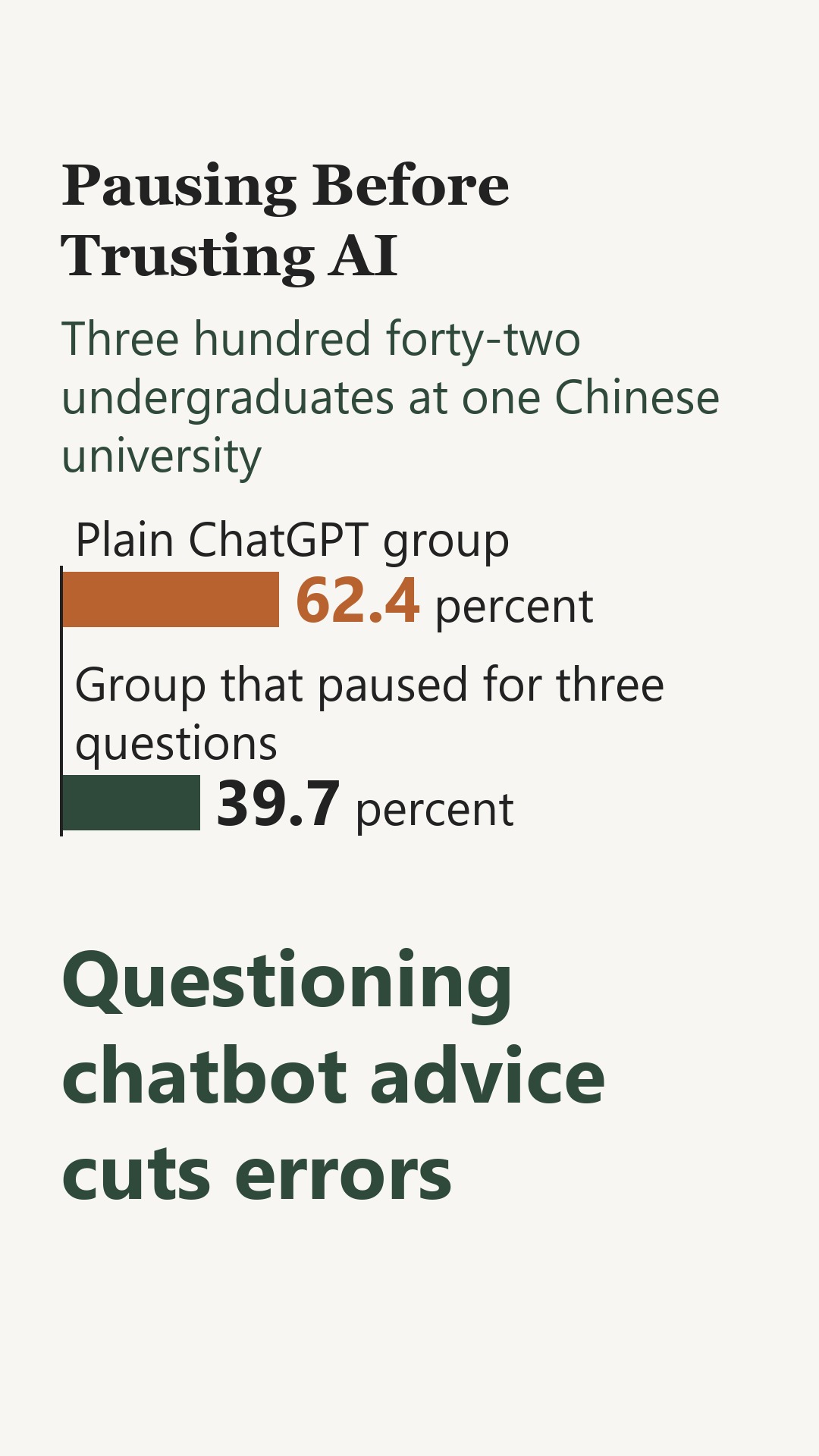
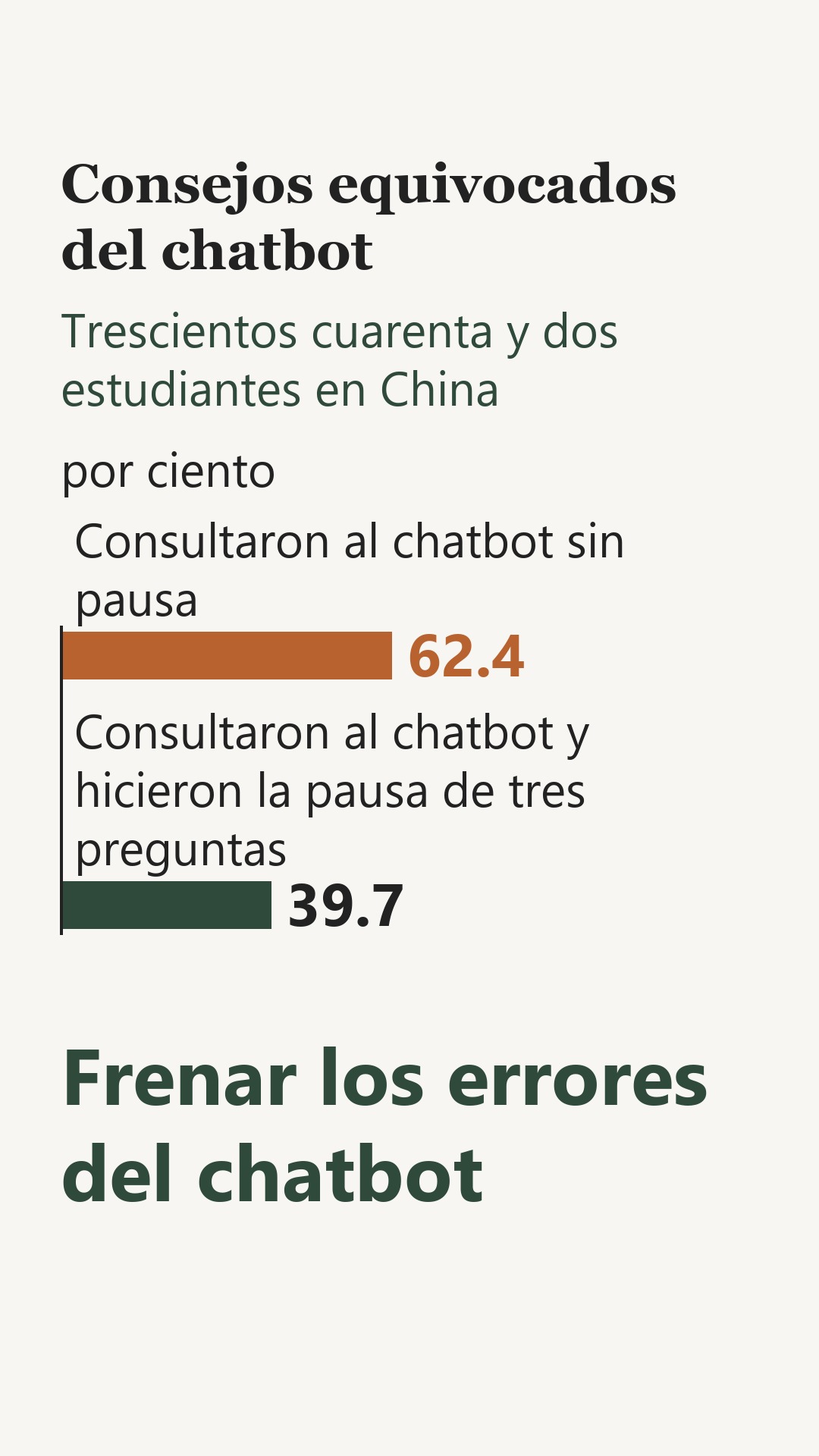
- A Three-Question Pause Cut How Often Students Followed Bad Chatbot Advice free short + detailed In a randomized experiment with 342 undergraduates at one Chinese university, a short reflection before deciding reduced acceptance of wrong AI answers from about 62 in 100 to about 40 in 100. The tasks were short, with one right answer, and the study cannot say whether the habit lasts. Researchers at Anhui University of Science and Technology in China put 342 undergraduates through short reasoning and information-checking tasks, each with one correct answer. Some students worked alone. Others could consult ChatGPT, asking up to two follow-up questions. A third group did the same, then answered three questions before committing to a final answer.Sigue el consejo equivocado del chatbot 6 de cada 10 veces. Tres preguntas antes de decidir lo bajan a 4 gratis breve + detallada En un experimento con 342 estudiantes de una universidad china, una pausa breve antes de responder redujo la aceptación de consejos erróneos de ChatGPT. No prueba nada sobre conversaciones largas ni sobre decisiones personales. Imagine que le pide a un chatbot que resuelva un problema y le contesta con seguridad. Usted lo copia. En un experimento con estudiantes de una universidad china, eso pasó con un consejo equivocado en 62 de cada 100 casos entre los que consultaron al chatbot sin hacer la pausa.
- "Like Chatting With a Real Person": What a Student Chatbot Showed, and What It Couldn't subscribe short + detailed In a Swiss feasibility study, students with more depressive symptoms opened up to the chatbot in 99% of sessions, though a machine judged what counted as opening up. A student in the study put it plainly. The chatbot "feels like chatting with a real person, but I don't see it as a replacement for coaching—rather, it's a good in-between option.""Es como chatear con una persona real, pero no lo veo como un reemplazo del acompañamiento" suscríbase breve + detallada En un estudio con 20 estudiantes de una universidad suiza que ya iban a consejería, quienes tenían más síntomas de depresión se abrieron más ante el chatbot. Ningún dato muestra que eso los haya hecho sentir mejor. Así describió la experiencia uno de los estudiantes que probó Safespace, una aplicación de chat con inteligencia artificial para apoyar la salud mental. Lo dijo con una condición: serviría como opción intermedia, no como sustituto del acompañamiento humano.
- She Talks to an App in Her Mother's Voice. The Bond Can Change Shape. subscribe short + detailed In interviews with 25 Chinese users who set up chatbots as parents, the ties they described came in three fluid forms. The study measured nothing about anyone's mind, and all of the users came from one country. One user said he made the chatbot with his mother's voice. He wrote its background story from their real life together.Construyeron a sus papás con un chatbot, y los tres vínculos que aparecieron se mueven suscríbase breve + detallada Un estudio entrevistó a 25 usuarios en China. Cuenta lo que dijeron sentir, sin comparar grupos y sin medir si la IA mejora o daña a nadie. Entre octubre y diciembre de 2025, investigadores de tres universidades chinas entrevistaron a 25 personas. Todas habían conversado con un chatbot configurado como padre o madre al menos dos veces por semana durante tres meses o más. Las conversaciones duraron entre 60 y 90 minutos. El artículo no dice cuántas veces se entrevistó a cada persona.
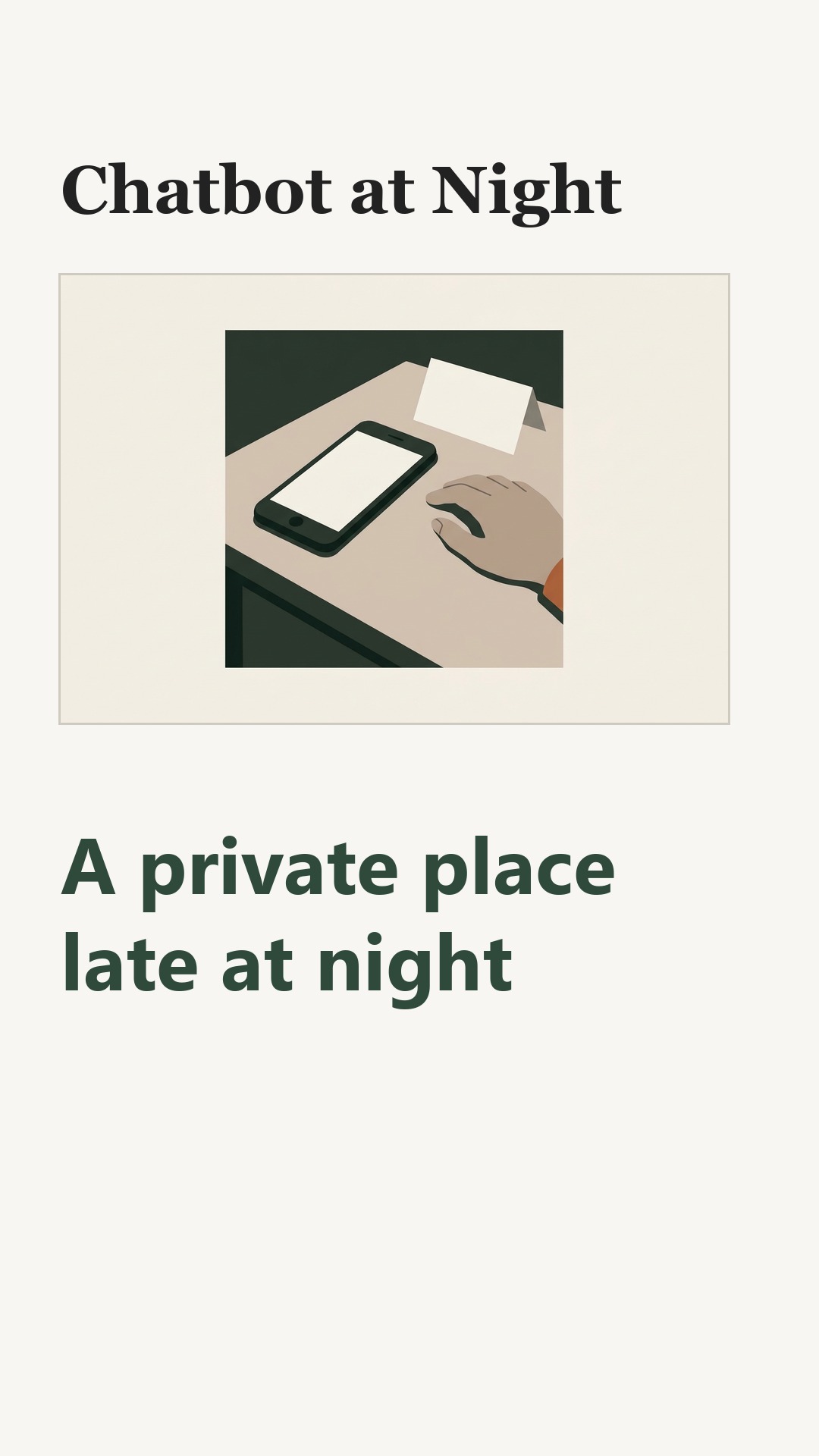
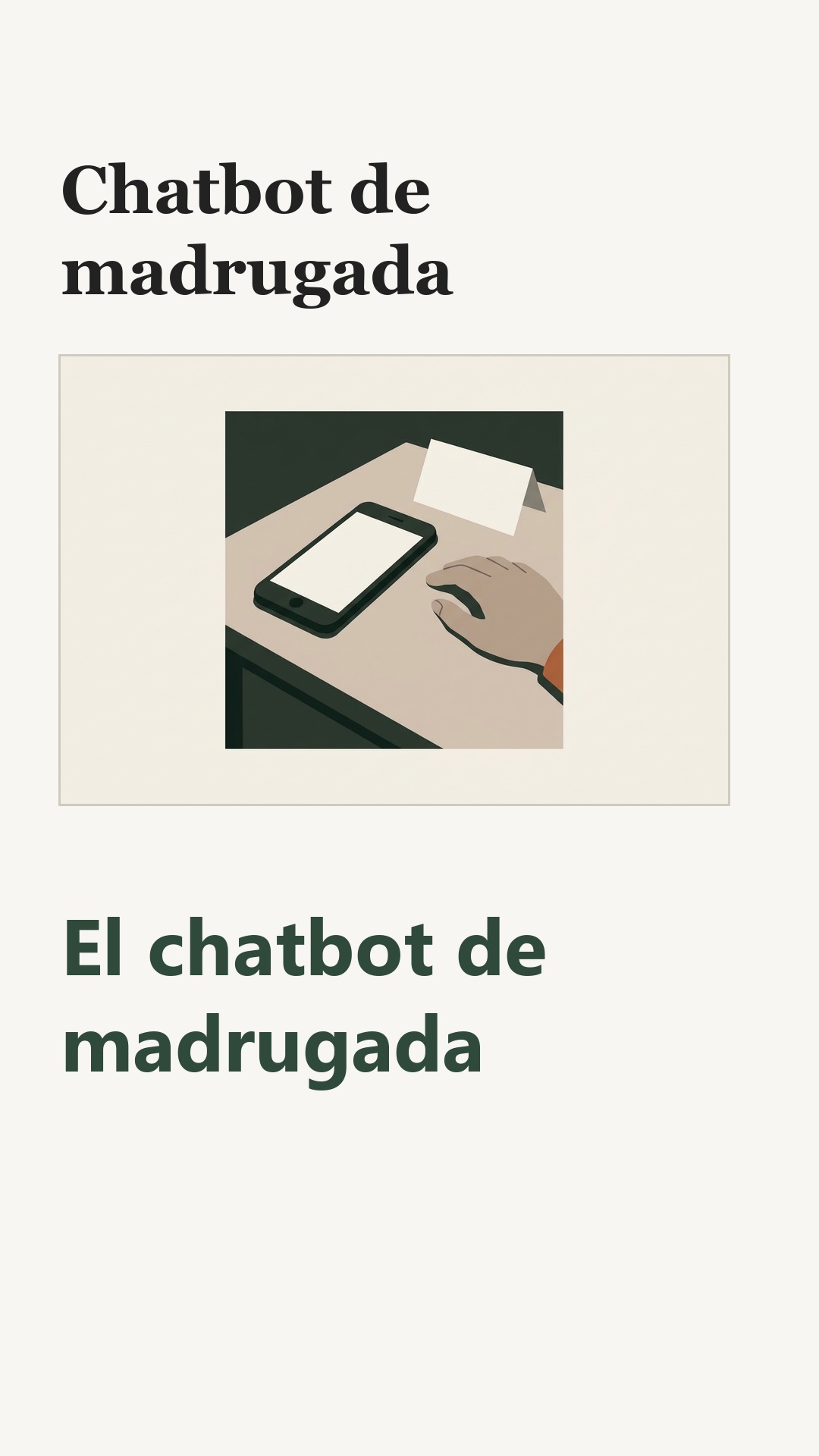
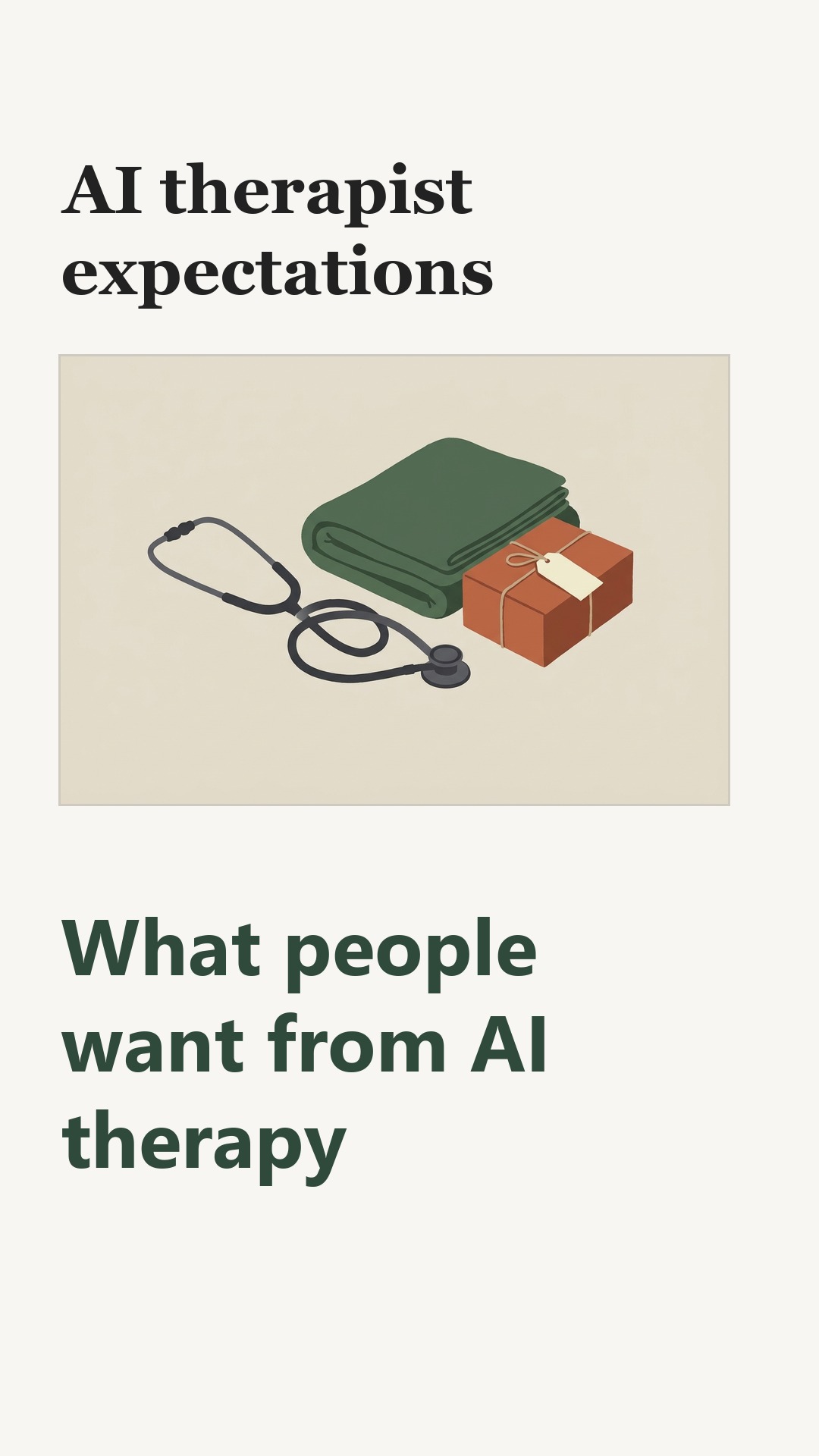
- What People Want From an AI Therapist: Competence, Warmth, and Proof Their Data Is Safe subscribe short + detailed In a survey of 452 people imagining a depression-treatment bot, the top wishes were professional grounding and a warm tone. Nobody in the study actually used one. You may already ask a chatbot for advice, or keep one open for company late at night. A new study asked a different question: if a program were offered to treat depression, what should it be like, and what should people fear?Lo que la gente le pide a un terapeuta de inteligencia artificial suscríbase breve + detallada En una encuesta, 452 personas describieron cómo se lo imaginan. Nadie lo usó de verdad. Usted le pregunta algo a un chatbot al día, quizá para ordenar una idea o para no sentir el silencio de la casa. Un grupo de investigadores quiso saber qué esperaría la gente de un terapeuta de inteligencia artificial para la depresión. No construyeron ninguno. Le describieron uno por escrito a 452 personas y les hicieron tres preguntas abiertas.
- Same Words, Two Languages, Two Different Verdicts subscribe short + detailed The chatbot read the same brief message as more serious in English than in Chinese. One short scene, two model versions on default settings, and the authors say real-life weight is untested. Someone types a private worry into a chatbot and asks what it makes of it.El mismo mensaje, dos idiomas: la respuesta del chatbot cambió suscríbase breve + detallada Usted escribe en un chatbot una preocupación privada y le pide su opinión. Ese momento, el de todos los días, es el que estos investigadores pusieron bajo la lupa. La preocupación era de un amigo: "Me cuesta concentrarme en cualquier cosa.
Todas las notas de todas las secciones, breves y detalladas, la edición completa por correo cada semana y todas las ediciones pasadas: 199 MXN al mes, cancele cuando quiera; o seis meses o un año en un único pago.
Vea lo que recibe¿Ya está suscrito? Entre aquí.
Every story of every section, short and detailed, the whole edition by email every week, and every past edition: $9.95 a month, cancel whenever you like; or six months or a year paid once.
See what you getAlready a subscriber? Sign in.